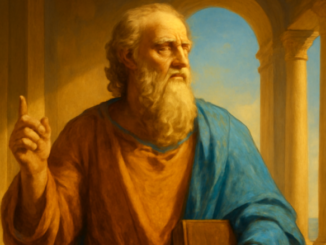
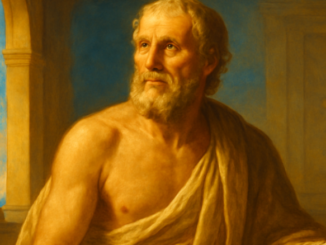
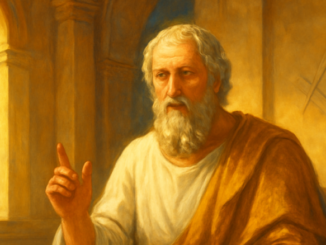
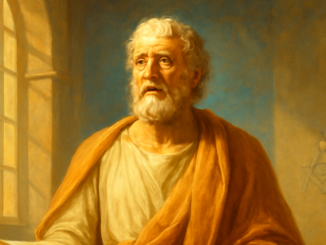
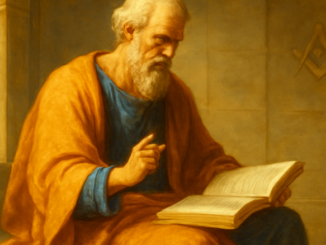
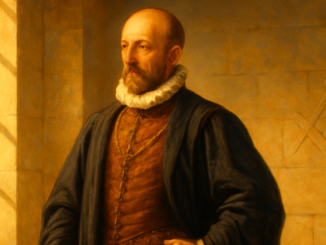
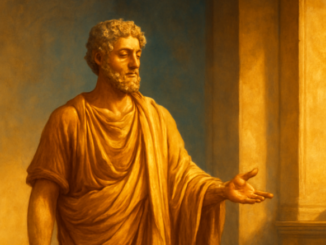
Ancient Greek temple columns symbolizing Plato's Gorgias and Freemasonry
Plato – Freemasonry & Connection

Plato’s Gorgias: Rhetoric, Justice and Freemasonry

In fifth-century Athens, a battle raged that remains profoundly relevant to this day. It was not fought over land or wealth, but over something far more fundamental: whether words should serve truth or merely serve the power to persuade. Plato captured this tension in his dialogue Gorgias, a work that strikes at the heart of what it means to live a just life. For Freemasons — who place the pursuit of truth and moral perfection at the center of their craft — this ancient conversation offers remarkably timely insights into authenticity, virtue, and the true nature of human connection. The Historical Context of a Philosophical Confrontation Around 380 BCE, Plato composed the Gorgias, named after the celebrated orator from Sicily who had visited Athens. The dialogue is set during a period when the Sophists — itinerant teachers of eloquence — wielded enormous influence over public life. They taught the art of defending any position persuasively, regardless of its truth. Gorgias himself was renowned for his ability to make the weaker argument appear the stronger. Socrates, Plato’s teacher and the protagonist of the dialogue, confronted this worldview head-on. Where the Sophists viewed rhetoric as a neutral technique, Socrates insisted that true […]
Open book with Masonic symbols representing Montaigne's philosophy on mortality
Michel de Montaigne – Freemasonry & Connection

Montaigne on Death: Philosophy as a Source of Brotherhood

In 1580, Michel de Montaigne published his nineteenth essay under a provocative title: That to Philosophize Is to Learn to Die. Borrowed from Cicero, these words were not born of morbid fascination but served as an invitation to live more deeply. For this sixteenth-century thinker, contemplating death was never an endpoint — it was a starting point for meaning, human connection, and moral growth. These are precisely the elements that lie at the heart of Freemasonry. The Historical Context of Montaigne’s Meditation Montaigne composed his essays during an era of religious wars, plague epidemics, and political upheaval. France was torn apart by violent conflicts between Catholics and Huguenots. Death was not an abstract concept but a daily reality knocking on everyone’s door. Against this turbulent backdrop, Montaigne retreated to the tower of his château and began writing about what occupied his mind most urgently: how to live when the end is uncertain yet inevitable. He drew inspiration from the Stoic philosophers — Seneca and Epictetus in particular — and from Cicero, who argued that philosophy is essentially a preparation for death. But Montaigne did not adopt this idea wholesale. He transformed it into something far more personal. The fear of […]

Voltaire meeting a Quaker in 18th-century England, symbolizing tolerance
Symbolism & Rituals

Voltaire on the Quakers: Philosophical Roots of Tolerance

Imagine stepping ashore in England in 1726 as a French writer, fresh from exile and the shadow of the Bastille, only to have your very first encounter be with a Quaker who refuses to remove his hat in your presence. No bow, no title — just a plain “thou.” For Voltaire, this moment was far more than a cultural oddity. It marked the beginning of a philosophical quest into the foundations of tolerance, one he would later weave into his celebrated Letters on the English. But what intellectual traditions shaped the lens through which he viewed this remarkable religious community? The Legacy of Skepticism When Voltaire composed his first letter on the Quakers, he was drawing from a deep well of philosophical skepticism. Two centuries earlier, Michel de Montaigne had already posed the essential question: who are we to pass judgment on the customs of others? In his famous essay on cannibals, Montaigne demonstrated how seemingly strange practices reveal their own internal logic upon closer inspection. Voltaire applied precisely this method to the Quakers. Rather than dismissing their refusal to swear oaths, their rejection of ecclesiastical hierarchy, or their austere dress as foolishness, he presented these as elements of a […]

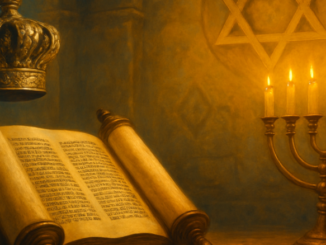
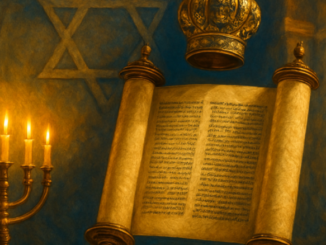
Open Torah scroll symbolising Devarim and the Masonic inner journey
Judaism

Devarim: The Book of Words and the Inner Journey

Imagine standing at the edge of a new beginning. Behind you lie years of growth, hard-won lessons, and sometimes painful detours. Ahead stretches unknown terrain. This is the moment when you must distill everything you have learned — not only for yourself, but for those who will follow. That profoundly human moment lies at the heart of Devarim, the fifth and final book of the Torah. In this concluding article of our series on the Torah, we explore how ancient words and the modern search for meaning continue to speak to one another. Words at the Threshold Devarim means literally “words,” and the book opens with Moses addressing his people at the border of the Promised Land. It is a book of looking back and looking forward at the same time. Moses knows he will not cross over. Yet instead of bitterness, he chooses to teach. He restates the law — not as a dry set of rules, but as living guidance for a people who must learn to stand on their own. Perhaps you recognise this feeling. There come moments in life when you realise that certain knowledge must not die with you. Whether you are an elder passing […]

Ancient philosophical manuscript symbolizing Seneca's teachings on shame and virtue
Lucius Annaeus Seneca – Letters to Lucilius

Seneca Letter XI: Philosophical Roots of Shame and Virtue

Have you ever felt a flush rise to your cheeks even though no one was watching? That inner warmth that surfaces when you do something at odds with who you aspire to be? Nearly two thousand years ago, Lucius Annaeus Seneca wrote about this very experience in a letter to his friend Lucilius — and his words still resonate. Letter XI of the Moral Letters to Lucilius explores shame and moral nobility through a rich philosophical tradition that runs far deeper than Stoicism alone. In this article, we trace the intellectual sources that inspired Seneca and discover why his insights remain so relevant for anyone committed to self-improvement and the pursuit of virtue. The Stoic Understanding of Shame When Seneca writes about shame, he draws on a tradition stretching back to the early Stoa in third-century Athens. Zeno of Citium, the founder of Stoicism, made a crucial distinction between emotions born from faulty judgments and those that arise naturally. Shame occupies a special category: it can be both a useful signal and an obstacle to growth. The Stoics viewed the soul as a unified whole with reason at its center. When you act against your rational nature, an inner conflict […]

Ancient Greek philosophical dialogue symbolizing truth and Masonic justice
Plato – Philosophical Background

Plato’s Gorgias: Truth, Power, and Freemasonry’s Quest

Imagine finding yourself in a debate where your opponent has no interest in truth — only in winning. How do you respond? This is precisely the situation Socrates faces in Plato’s dialogue Gorgias. It is a text that challenges you to confront a fundamental question: what matters more, persuasive speech or righteous action? This question has echoed through the centuries and strikes at the very heart of what Freemasons pursue in their rituals and labour. The Sophists and Their Challenge to Philosophy To understand Plato’s Gorgias, you need to transport yourself to fifth-century Athens. The city was alive with intellectual activity, and one group of thinkers commanded particular attention: the Sophists. These were itinerant teachers who, for a fee, instructed young Athenians in the art of speaking and persuading. Figures such as Protagoras, Hippias, and of course Gorgias of Leontini were celebrated for their eloquence. The Sophists represented a radically new perspective. Protagoras declared that “man is the measure of all things,” suggesting that truth is relative. For them, rhetoric was not a means of discovering truth but a technique for persuading others, regardless of the content. This relativism posed the direct intellectual challenge against which Plato, through the voice […]

Open book with Montaigne's essays surrounded by Masonic symbols and candlelight
Michel de Montaigne – Philosophical Background

Montaigne and Death: Philosophical Sources of a Timeless Essay

Imagine living in the sixteenth century, surrounded by plague epidemics, religious wars, and a life expectancy that barely reached forty. How would you relate to death? Michel de Montaigne chose not to avoid this question but to confront it head-on. In his celebrated essay “That to Philosophize Is to Learn to Die,” he drew upon a rich tradition of ancient wisdom. But which thinkers and philosophical currents whispered in his ear as he wrote? Let us descend together into the philosophical sources that shaped this masterwork — and discover why they still resonate deeply within Freemasonry today. The Stoic Legacy: Seneca as Guiding Light If there is one philosopher whose presence shimmers through every page of Montaigne’s essay, it is Seneca. The Roman statesman and philosopher wrote extensively about the art of dying in his Letters to Lucilius. For Seneca, death was not an enemy to be feared but a natural boundary that gives our lives meaning. He taught that we should live each day as though it could be our last — not out of gloom, but in order to be truly present. Montaigne absorbed this Stoic insight and made it deeply personal. Where Seneca sometimes remained abstract, Montaigne […]

Ancient Roman bust of Marcus Aurelius symbolizing Stoic inner retreat
Marcus Aurelius – Content & Summary

Marcus Aurelius Book IV: The Art of Retreating Into Yourself

Picture a Roman emperor — surrounded by court intrigues, military campaigns, and the endless demands of governing an empire — writing by candlelight about the art of inner stillness. Marcus Aurelius never sought refuge in mountain cabins or coastal villas. Instead, he discovered a sanctuary that no one could ever take from him: the retreat into his own mind. In the fourth book of his Meditations, he unfolds this insight with a clarity that still resonates nearly two thousand years later. The Inner Chamber as Sanctuary Marcus Aurelius opens Book IV with an observation that strikes at the heart of his philosophy: people seek retreats in the countryside, at the seashore, or in the mountains, yet the truest sanctuary is always within reach. The human mind, when properly trained, offers a space where external chaos cannot enter. This is not escapism — it is a deliberate choice to locate the source of peace within rather than without. The emperor compares this inner space to a citadel that stands firm regardless of what unfolds beyond its walls. The image of the citadel serves as a powerful symbol: not a fortress against the world, but a place of order and reflection. Those […]

Desert landscape symbolizing the Masonic journey of inner transformation
Judaism

Numbers: The Desert as an Inner School of Transformation

An empty plain. No trees, no rivers, no marked roads. Only sand, sky, and silence. At first glance, the desert seems like a place of absence — a space where nothing grows. Yet this very emptiness forms the backdrop of one of the most transformative narratives in the Torah. The fourth book, known in Hebrew as Bamidbar — literally meaning “in the desert” — invites us to see emptiness not as loss, but as a precondition for growth. For Freemasons, who regard the inward journey toward self-knowledge as the work of a lifetime, the symbolism of the desert passage resonates deeply. The Census as a Mirror The Book of Numbers opens with a census. Moses is commanded to count every able-bodied man of Israel, tribe by tribe, family by family. On the surface, this seems like a dry administrative exercise — a practical preparation for the journey through the wilderness. But in Jewish tradition, the act of counting carries a deeper meaning. To be counted is to be seen. Each individual is given a place within the greater whole, not as part of an anonymous mass, but as an irreplaceable member of the community. The Midrash teaches that God counts […]

Voltaire meeting a Quaker in a simple English home, symbolizing Enlightenment ideals
Symbolism & Rituals

Voltaire on the Quakers: Philosophy, Simplicity & Tolerance

When Voltaire set foot in England in 1726, he encountered a community that fascinated him profoundly: the Quakers. His first Philosophical Letter is far more than a traveler’s curiosity piece about an unusual religious group. It is a carefully constructed mirror held up to French society — and, by extension, to any society that confuses outward ceremony with genuine virtue. For anyone interested in the deeper currents of Freemasonry, Enlightenment thought, and the quest for authentic inner truth, Voltaire’s encounter with the Quakers remains remarkably relevant. The Encounter: A Philosopher Among the Quakers Voltaire opens his letter with a vivid scene. He visits an elderly Quaker at his home, perhaps expecting an exotic encounter with an eccentric. Instead, he finds a man of modest prosperity — calm, receptive, and entirely free of the customary social formalities. The Quaker does not remove his hat. He addresses Voltaire with the familiar “thou” rather than the formal “you.” There is no trace of deference or subservience. For Voltaire, accustomed to the rigid hierarchical etiquette of the French court, the experience is both refreshing and unsettling. These seemingly trivial details form the heart of Voltaire’s argument. The hat that stays on is not a […]

Symbolic threshold at the entrance of a Masonic lodge representing transformation
Symbolism & Rituals

Return and Reconciliation: The Ritual of the Threshold

A threshold is never just a threshold. When someone returns after years of absence to a place they once left behind, something far greater than a geographical journey takes place. A ritual unfolds — an act laden with meaning that reaches well beyond what the eye can see. While the circumstances leading to such a return may capture public attention, the deeper question is this: what does it truly mean to cross a threshold a second time? The Threshold as a Borderland In Freemasonry, the threshold holds a place of profound significance. Entering a lodge is not merely a matter of stepping through a door — it is the crossing of an inner boundary. The threshold marks the transition from the profane to the sacred, from the everyday to the deeply meaningful. This is no arbitrary architectural feature. Since time immemorial, the threshold has served as a symbol of transformation. The Romans even had a god of the threshold: Janus, the two-faced deity who gazed simultaneously toward the past and the future. His name lives on in our month of January — that collective moment when we all cross a threshold into a new year. What this symbolism tells us […]

Ancient rough stone being shaped by chisel symbolizing Stoic moral improvement
Lucius Annaeus Seneca – Content & Summary

Seneca Letter 11: On Blushing, Shame, and Moral Nobility

There comes a moment when the cheeks flush without permission. A wave of heat rises through the face, as uncontrollable as the tide. In his eleventh letter to Lucilius, the Stoic philosopher Seneca examines this remarkable phenomenon — the blush of shame. But beneath this physical reaction lies a far deeper inquiry: one about the nature of virtue, the inner voice that guides our conduct, and the presence of a wise witness within our minds. What does this blushing reveal about who we truly are? The Involuntary Blush as a Mirror of the Soul Seneca opens his letter with an observation that is both simple and profound: even the most seasoned orators can blush when they stand before a crowd. Even those accustomed to public performance sometimes feel that irresistible warmth rising to their faces. This is not a weakness, the Stoic philosopher insists, but a quality of nature that even the wisest person cannot entirely suppress. The body has its own language — a language that does not always obey the commands of reason. The blush reveals something essential about our humanity: that we are not purely rational beings, but also creatures of flesh with reactions rooted deep within […]

Ancient Greek columns symbolizing Plato's Gorgias and Masonic philosophy
Plato – Content & Summary

Plato’s Gorgias: Rhetoric, Justice, and the Good Life

What is the value of persuasion when it is not rooted in truth? This question lies at the beating heart of Plato’s dialogue Gorgias, a work in which the Greek philosopher examines the very foundations of rhetoric and exposes its relationship to justice. The dialogue invites us to reflect on a timeless dilemma: is it better to suffer injustice or to commit it? For those familiar with the symbolic language of Freemasonry, this ancient text opens a fascinating door to deeper reflection on inner righteousness and the architecture of the soul. The Setting and the Interlocutors The dialogue takes place in Athens, where Socrates engages with three distinctive figures: Gorgias, the famous orator from Leontini; Polus, his fiery student; and Callicles, an ambitious Athenian aristocrat. Each represents a different attitude toward power, persuasion, and morality. Gorgias presents himself as a master of the art of speaking, capable of convincing any audience regardless of the subject. Polus glorifies the power that rhetoric bestows. Callicles goes furthest of all, openly defending the right of the strongest to rule. Socrates assumes the role of the searching questioner — the one who, through apparent ignorance, systematically dismantles the certainties of his conversation partners. What […]

Skull and hourglass symbolizing Montaigne's philosophy on death and Freemasonry
Michel de Montaigne – Content & Summary

Montaigne: To Philosophize Is to Learn to Die

Why did Michel de Montaigne dedicate an entire essay to death in the sixteenth century? And what exactly did he mean when he declared that to philosophize is nothing other than to learn to die? In this nineteenth essay from the first book of his Essays, Montaigne tackles one of the most fundamental questions of human existence — not as a gloomy meditation, but as a practical lesson in wisdom for anyone who truly wishes to live freely. The Core Idea: Freedom Through Acceptance of Death Montaigne’s central thesis is as simple as it is unsettling: anyone who refuses to face death cannot truly live in freedom. As long as we suppress or deny our mortality, the fear of it governs our lives in invisible ways. By thinking through death and accepting it, we strip it of its threatening power. Montaigne draws upon the classical philosophers here, particularly Marcus Tullius Cicero, who argued that philosophy is nothing but preparation for death. But how does one prepare for something one has never experienced? Montaigne offers a surprisingly practical answer: by thinking about it daily. Not to fall into melancholy, but to sharpen our appreciation for every living moment. Death is not […]

Marcus Aurelius bust symbolizing Stoic philosophy and Masonic virtue
Marcus Aurelius – Freemasonry & Connection

Marcus Aurelius on the Good: Living According to Nature

What did Marcus Aurelius actually mean when he wrote about living in accordance with nature? And why does this ancient idea resonate so deeply with what Freemasons strive for? In the third book of his Meditations, the Roman emperor unfolds a vision of the good that remains strikingly relevant today. These are thoughts worth exploring together — as seekers of truth have always done. What Did Marcus Aurelius Mean by ‘Nature’? This is perhaps the first question that arises when reading Book III. Marcus Aurelius speaks constantly about living according to nature, but he does not mean the romantic ideal of untouched forests and flowing rivers. For the Stoics, nature carried a far deeper meaning: the rational order that permeates the universe, the logos that connects all things. The emperor saw each person as part of a greater whole. When we act in harmony with our rational nature, we act rightly — almost by definition. This may sound abstract, but its practical implication is remarkably clear: to live virtuously means to recognize and fulfill your role in the larger fabric of existence. Is this not precisely what a Freemason pursues when working on his rough ashlar? The Connection Between Stoic […]

Open Torah scroll with Masonic square and compasses symbolizing holiness
Judaism

Leviticus: The Call to Holiness and Masonic Symbolism

What does it mean to be called? This question opens the third book of the Torah, known in Hebrew as Vayikra — Leviticus. The book begins with the words “And He called,” a divine summons inviting Moses to draw near. But is this call reserved solely for a biblical prophet, or does it also speak to us — modern seekers of meaning and purpose? In this article, we explore the deeper layers of this remarkable book and discover how its themes of purification, sacrifice, and holiness resonate powerfully with the symbolism of Freemasonry. Why Does Leviticus Begin with a Call? The Hebrew word Vayikra literally means “And He called.” In Jewish tradition, great significance is attached to this opening word because it sets the tone for the entire book. The call is personal and intimate. God does not speak in abstract terms but addresses Moses directly with an invitation. According to rabbinical commentators, including the medieval scholar Rashi, this phrasing expresses affection. It is not a command from a distant authority but a loving summons to draw closer to the sacred. For Freemasons, this theme is immediately recognizable. In the Lodge, too, the journey begins with a call — an […]

A sunlit garden symbolizing Voltaire's Candide and Masonic ideals of shared labor
Symbolism & Rituals

Voltaire’s Candide: The Garden as a Masonic Ideal

What did Voltaire really mean by that famous closing line? “Il faut cultiver notre jardin” — we must cultivate our garden. Is it a call to withdraw from the world, a retreat into comfortable isolation? Or does it point to something deeper, something that touches the very heart of what Freemasons strive for: connection through shared labor? Let’s sit with this question as if gathered around a table with a good glass of wine and an open mind. Why Does Candide End in a Garden? Candide has crossed the entire world. He has witnessed wars, survived earthquakes, listened to philosophers, and won and lost fortunes. And where does he ultimately end up? On a small farm on the outskirts of Constantinople, tilling the earth alongside his companions. Voltaire — who was deeply connected to Enlightenment thinkers and moved in circles where Freemasons were well represented — chose this ending deliberately. No triumph, no palace, no philosophical certainty. Just a garden. This raises an essential question: is the garden a retreat, or is it actually a starting point? For Voltaire, the answer seems carefully nuanced. The garden is not an escape from the world but a redefinition of what meaningful action […]

Ancient Stoic philosophy meeting Freemasonry symbolism of true connection
Lucius Annaeus Seneca – Freemasonry & Connection

Seneca on the Crowd: Freemasonry and True Connection

Why did Lucius Annaeus Seneca so emphatically warn his student Lucilius against the crowd? And what does this two-thousand-year-old wisdom have to do with the way Freemasons shape their brotherhood? In his seventh letter to Lucilius, the Roman philosopher writes something that seems, at first glance, to contradict the very idea of human connection: withdraw from the masses. But is that truly what he means — or does a deeper truth lie beneath the surface, one that speaks directly to how we can live together authentically? What Does Seneca Actually Mean by ‘the Crowd’? When Seneca writes about the crowd, he is not simply talking about large groups of people. He is pointing to a specific phenomenon: the unthinking mass in which individual judgment dissolves. In the Roman arena, he watched civilized citizens transform into bloodthirsty spectators. The crowd, he argues, amplifies our worst impulses and weakens our best. His warning is not against gathering together as such, but against surrendering your own moral compass to the whims of the group. This distinction is crucial. Seneca is not calling for hermitage. He is calling for awareness. Who do you spend your time with? What influence does that company have on […]

Ancient Greek philosophical dialogue symbolizing Masonic search for virtue
Plato – Freemasonry & Connection

Plato’s Protagoras: Can Virtue Be Taught? A Masonic View

Picture yourself sitting across from a wise teacher. You ask him whether becoming a good person is something you can learn, or whether it’s something you must be born with. He looks at you and says: that depends on what you mean by learning. This is precisely the question Plato posed over two thousand years ago in his dialogue Protagoras. And it is the same question Freemasons ask themselves every time they enter the lodge. What Did Plato Actually Mean by Teachability? In the Protagoras, Plato stages a conversation between his teacher Socrates and the renowned Sophist Protagoras. The central question seems straightforward enough: can virtue be taught? Protagoras insists it can. After all, he makes his living selling wisdom, teaching young Athenians how to become better citizens. Socrates isn’t so sure. If virtue can truly be taught, why do so many excellent fathers fail to pass their virtue on to their sons? But here’s the crucial nuance: Socrates does not deny that people can grow in virtue. What he challenges is the method. Can you transmit virtue the way you teach someone arithmetic? Or does moral growth demand something different — something deeper? This distinction matters enormously for anyone […]

Symbolic Masonic tools with light representing Montaigne's philosophy of connection
Michel de Montaigne – Freemasonry & Connection

Montaigne on Laughter and Tears: Connection in Freemasonry

A tear can express joy. A smile can conceal sorrow. Michel de Montaigne understood this paradox of the human soul when he observed that we do not laugh and cry about the same thing. Hidden within this sixteenth-century essay lies a timeless truth that resonates deeply with Masonic thought: genuine connection between people requires us to look beyond the surface of expressions and gestures, into one another’s inner landscape. The Surface Deceives Montaigne opens his essay with a seemingly simple observation: the same event can evoke opposite emotions in different people. More than that, within the same person, laughter and tears can lie remarkably close together — sometimes even occurring simultaneously. What does this mean for how we understand one another? Montaigne suggests that we judge far too quickly based on what we see. The tear on someone’s cheek does not tell the whole story. The smile on someone’s lips may well be a mask. This insight touches on a fundamental Masonic principle: the distinction between the exoteric and the esoteric, between the outer form and the inner truth. In the lodge, we learn that symbols carry multiple layers of meaning. A square is not merely a tool. A level […]