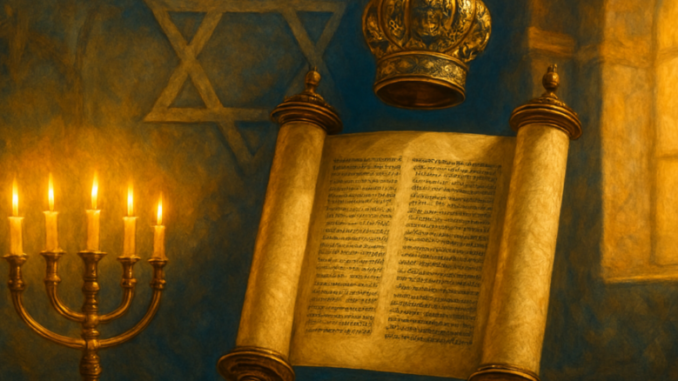
What does it mean to be called? This question opens the third book of the Torah, known in Hebrew as Vayikra — Leviticus. The book begins with the words “And He called,” a divine summons inviting Moses to draw near. But is this call reserved solely for a biblical prophet, or does it also speak to us — modern seekers of meaning and purpose? In this article, we explore the deeper layers of this remarkable book and discover how its themes of purification, sacrifice, and holiness resonate powerfully with the symbolism of Freemasonry.
Why Does Leviticus Begin with a Call?
The Hebrew word Vayikra literally means “And He called.” In Jewish tradition, great significance is attached to this opening word because it sets the tone for the entire book. The call is personal and intimate. God does not speak in abstract terms but addresses Moses directly with an invitation. According to rabbinical commentators, including the medieval scholar Rashi, this phrasing expresses affection. It is not a command from a distant authority but a loving summons to draw closer to the sacred.
For Freemasons, this theme is immediately recognizable. In the Lodge, too, the journey begins with a call — an invitation to leave the profane world behind and embark on a path of self-development. The candidate is not coerced but called. Just like Moses, he or she must choose to take the step and respond.
What Do the Offerings Teach Us About Inner Transformation?
At first glance, Leviticus can seem like a dry enumeration of ritual prescriptions: burnt offerings, peace offerings, purification rites. But behind these detailed instructions lies a deeper message. In Hebrew, the word for offering — korban — derives from a root meaning “to draw near.” An offering, therefore, is not so much something that is destroyed; it is a means of coming closer to the Divine.
The Jewish philosopher Maimonides wrote extensively in the twelfth century about the spiritual significance of these offerings. He viewed them as a pedagogical instrument — a way to help human beings overcome their baser inclinations and orient themselves toward higher values. This idea of transformation through ritual is central to Freemasonry. The rough ashlar that is shaped into a perfect cube symbolizes exactly this process: the shedding of imperfections in order to become a better person.
What Does Holiness Mean in Practice?
One of the key verses in Leviticus reads: “Be holy, for I, the Lord your God, am holy.” But what does holiness actually entail? In the Jewish tradition, kadosh (holy) literally means “set apart” or “separated.” It is not about moral perfection but about making distinctions — consciously choosing certain actions and avoiding others.
Holiness is not a final destination but a daily choice to live with attention and intention.
This concept of conscious separation finds a clear parallel in Freemasonry. The Lodge is a space set apart from the outside world, a place where different rules apply. Within that space, Brethren practice virtue — not because the outside world is inherently bad, but because concentration and separation are necessary to truly build upon oneself. The temple is not an escape from the world but a workshop for the soul.
How Does Purification Relate to Moral Growth?
Leviticus devotes considerable attention to ritual purity. Certain states — such as contact with death or particular illnesses — render a person temporarily impure. This may sound archaic, but the underlying idea is timeless: life contains moments of imbalance that must be restored before we can fully participate in communal life once again.
In Freemasonry, we find comparable symbolism. The candidate undergoes ritual actions that mark a transition from an old state to a new one. Spinoza, whose philosophy was deeply rooted in the Jewish tradition, wrote about the importance of purifying the mind in order to arrive at true knowledge. He, too, saw purification not as an outward ritual but as an inward process of self-examination. This mirrors the Masonic understanding that initiation is not merely ceremonial — it is a genuine inner passage.
What Can We Still Learn from These Ancient Texts?
It would be easy to dismiss Leviticus as a relic from a distant past, relevant only to historians and theologians. But those who read with an open mind discover a treasure trove of wisdom about human growth, community, and the aspiration toward something higher. The question the book poses is ultimately not so different from the question every Freemason asks: How can I become a better person, and how can I contribute to a better world?
The Jewish tradition teaches that the call of Vayikra is not a one-time event. Every day, we are invited anew to respond, to draw nearer, to transform ourselves. In this sense, Leviticus is not a dusty legal code but a living invitation to sanctification — a call that still sounds today for all who are willing to listen.
The core themes that emerge from this ancient text remain strikingly relevant:
- The call to draw near as the beginning of spiritual growth
- Offerings as a symbol of inner transformation
- Holiness as conscious choice and separation
- Purification as a prerequisite for community
- The enduring relevance of ancient wisdom
Leviticus, the third book of the Torah, invites us on an inward journey. The call that Moses heard echoes across the centuries and finds resonance in the rituals and symbols of Freemasonry. Whether we are shaping the rough ashlar or answering the divine invitation to holiness, the path is the same: a continuous movement toward refinement, connection, and enlightenment. In this sense, the ancient words of Vayikra remain vibrantly alive — waiting for everyone who is ready to answer.
Copyright text & image: devrijmetselaar.nl
Texts are based on the ideas and content of the author of devrijmetselaar.nl, reviewed, corrected, and supplemented with the assistance of OpenAI. Images are created based on the ideas of the author of devrijmetselaar.nl using OpenAI/DALL-E.
Frequently Asked Questions
How does the concept of 'call' in Leviticus relate to Freemasonry?
Both Leviticus and Freemasonry begin with a personal call or invitation. Just as God calls Moses with the words 'And He called' (Vayikra), the Masonic journey begins when a candidate is invited to leave the profane world and embark on a path of self-development. In both traditions, the call is personal and intimate—not a command from a distant authority, but a loving summons that the individual must choose to answer.
What is the deeper spiritual meaning of offerings (korban) in Leviticus?
The Hebrew word korban, meaning 'offering,' derives from a root meaning 'to draw near.' Rather than simply being destroyed, offerings represent a means of coming closer to the Divine. Maimonides viewed them as pedagogical tools to help humans overcome their baser inclinations and orient themselves toward higher values—a concept that parallels Freemasonry's use of ritual symbolism, such as the rough ashlar being shaped into a perfect cube, to represent inner transformation and the shedding of imperfections.
How does the Masonic concept of purification connect to Leviticus?
Leviticus emphasizes themes of purification, sacrifice, and holiness that resonate powerfully with Masonic symbolism. Both traditions teach that through ritual, purification practices, and self-development, individuals can transcend their current state and move toward a higher spiritual purpose. The detailed instructions for purification in Leviticus and the Masonic emphasis on refining the individual through ritual practice share a common goal: helping seekers transform themselves and achieve greater spiritual awareness.


Be the first to comment