Ancient Greek columns symbolizing Plato's philosophy and Masonic education
Plato – Freemasonry & Connection

Plato on Education: Lessons for Freemasonry

What truly makes a person good? And who decides what ‘good’ even means? Plato posed these questions more than two thousand years ago in his celebrated dialogue The Republic, and they still echo through the lodge today. When we study the third book of this masterwork, we discover striking parallels with Freemasonry — not in dogmas or prescriptions, but in a shared conviction that human beings can be shaped through intentional education, through community, and through the pursuit of inner light. Why Did Plato Place Such Value on Education? For Plato, education was never a secondary concern — it was the key to a just society. In the third book of The Republic, he describes how young people should be formed through music, gymnastics, and stories that cultivate virtue. His interest was not in the transmission of facts, but in the shaping of character. The soul, he argued, must be trained just as the body is: through discipline, beauty, and truth. Plato believed that stories and art have the power to mold the soul. For this reason, he advocated telling only those myths that inspire courage, temperance, and justice. Bad examples, he reasoned, corrupt the young mind. This may sound […]
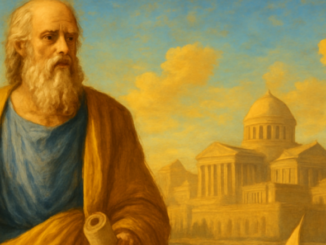
Symbolic illustration of Plato's ideal city connected to Masonic lodge imagery
Plato – Freemasonry & Connection

Plato’s Ideal City and Freemasonry: Building Connection

Imagine standing with a group of people before an empty plot of land. Your shared task: build a city from scratch — not just any city, but a community where everyone can thrive. Where do you begin? What values do you lay as the foundation? This is precisely the challenge Plato takes on in Book II of The Republic, and it is the very same question that Freemasons have been grappling with for centuries whenever they speak of building a better world. The City as a Mirror of the Soul In The Republic Book II, Plato makes a surprising move. Rather than diving straight into a debate about the nature of justice, he proposes designing an ideal city first. His reasoning is beautifully practical: justice is easier to recognize in a larger system than in a single individual, just as large letters are easier to read than small ones. The city becomes a magnifying glass for the human soul. For Freemasons, this approach feels immediately familiar. In the lodge, we work on two structures simultaneously: the inner temple of the self and the collective brotherhood. What we learn inside the lodge about cooperation, harmony, and virtue, we carry into the […]

Square and compasses on an open copy of Plato's Republic
Plato – Freemasonry & Connection

Plato’s Republic and Justice: A Masonic Dialogue

What is justice, really? Plato poses this question in the opening book of his masterwork The Republic, and it has echoed through the centuries with undiminished force. What makes this question especially compelling for Freemasons is that it lies at the very heart of their Craft. When a Brother enters the lodge, he embarks on a quest for truth and virtue — for right action in a complex world. Plato’s ancient inquiry and the Masonic tradition share far more common ground than one might expect at first glance. Why Does Plato Begin With a Conversation About Justice? The first book of The Republic takes place in the house of Cephalus, a wealthy old man who enters into conversation with Socrates. The setting may seem incidental, but nothing in Plato is accidental. He deliberately chooses a dialogue — a conversation among people with different backgrounds and perspectives. Socrates does not arrive to deliver answers; he comes to think together with others. This method of collectively seeking truth is precisely what Freemasons strive for in their meetings: not to claim wisdom, but to discover it together. Cephalus suggests that justice simply means speaking the truth and repaying your debts. Socrates challenges this […]

Ancient Greek temple columns symbolizing Plato's philosophy and Masonic ideals
Plato – Freemasonry & Connection

Plato’s Phaedrus: Beauty as a Gateway to the Soul

What actually happens when we perceive something truly beautiful? Does beauty merely please the eye, or does its influence reach far deeper — into the very core of who we are? In his dialogue Phaedrus, Plato has Socrates offer a striking answer: beauty is not a superficial phenomenon but a memory of a higher reality the soul once knew. For Freemasons, who are well-versed in using symbolism as a bridge between the visible and the invisible, this classical work opens a fascinating perspective on their own tradition. What Did Plato Actually Mean by ‘Beauty’? In the Phaedrus, Plato does not describe beauty as something subjective or as mere aesthetic pleasure. For him, beauty is a reflection of an eternal Idea — a Form that the soul recognizes from an existence before it entered a physical body. When we encounter something beautiful — a face, a landscape, a work of art — we experience, according to Plato, a glimpse of that original perfection. It is as though the soul awakens from a deep slumber. This immediately raises a question: is beauty, then, a teacher? Plato would answer with an emphatic yes. In the famous passage about the winged soul, Socrates explains […]

Vrijmetselarij - Plato's Symposium en vrijmetselarij: liefde als verbindende kracht
Plato – Freemasonry & Connection

Plato’s Symposium and Freemasonry: Love as a Unifying Force

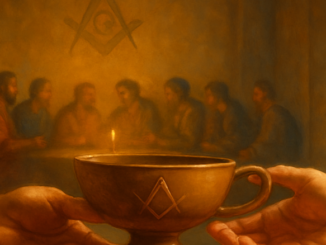
A drinking cup passed from hand to hand. A circle of men speaking about what truly moves them. In Plato’s Symposium, written around 385 BCE, guests gather to explore the nature of love. What initially appears to be a philosophical conversation about romance unfolds into a profound exploration of human connection, the longing for beauty, and the transformative power of community. For anyone familiar with both classical philosophy and Freemasonry, the parallels are striking — and deeply instructive. The Drinking Cup as a Symbol of Shared Wisdom The Symposium opens with an everyday ritual: the sharing of wine. The host, Agathon, receives his friends following his victory at a dramatic competition. The guests agree to drink moderately and instead deliver speeches in honor of Eros, the god of love. This seemingly simple scene carries deeper significance. The cup passed around the table symbolizes not mere conviviality, but the sharing of insight. Each speaker fills the evening with his own perspective, and from this multiplicity of voices a richer understanding slowly emerges. In Freemasonry, we recognize similar moments where sharing stands at the center of the experience. The lodge is a space where brethren exchange their thoughts, where every viewpoint contributes […]

Ancient Greek temple columns symbolizing Plato's philosophy and Freemasonry
Plato – Freemasonry & Connection

Plato’s Charmides and Freemasonry: What Is Temperance?

What does it truly mean to be temperate? And why does this concept seem so elusive, even to the sharpest minds? In Plato’s dialogue Charmides, Socrates and his interlocutors wrestle with precisely this question. The answer they seek turns out to be remarkably close to the heart of Masonic values: self-knowledge, inner balance, and the honest acknowledgment of what we do and do not know. What Is Temperance, Really? In the Charmides, Socrates meets the young Charmides, a man praised for both his beauty and his composed character. Socrates poses what seems like a straightforward question: what is temperance? But the answers that follow reveal just how complex this concept truly is. Charmides offers his first attempt: temperance is acting calmly and deliberately. But does that mean a quick, sharp mind is inherently intemperate? Surely not. Then perhaps temperance is a sense of modesty or shame? That, too, proves insufficient — shame can lead to both good and bad outcomes. Critias, the older cousin of Charmides, enters the conversation with a deeper suggestion: temperance is knowing yourself. This echoes the famous inscription at the Oracle of Delphi — “Know thyself.” Yet even this definition does not fully withstand the Socratic […]

Candle-lit Masonic lodge symbolizing Plato's dialogue on courage and virtue
Plato – Freemasonry & Connection

Plato’s Laches and Freemasonry: Courage as a Binding Virtue

It is late in the evening. The candles in the lodge burn low as a Brother, still in his work attire, rises to speak. He does not talk about great deeds or heroic battles. Instead, he recounts a moment earlier that day when he stayed silent while a colleague was treated unjustly. The question lingers in the room: was that cowardice, or was it wisdom? It is precisely this struggle that Plato captured more than two thousand years ago in his dialogue Laches — a conversation about the true nature of courage that remains strikingly relevant for anyone who has ever wondered what it truly means to be brave. The Search for a Definition of Courage In the Laches, Plato stages a conversation between Socrates and two Athenian generals: Laches and Nicias. Both men have proven their courage on the battlefield, yet when Socrates asks them to define what courage actually is, their answers fall short. Laches initially proposes that courage simply means holding your ground in battle and refusing to flee from the enemy. Socrates dismantles this definition effortlessly by pointing to situations where retreat is actually the braver choice. This search for a definitive answer is far from […]

Ancient Greek temple columns symbolizing Plato's Gorgias and Freemasonry
Plato – Freemasonry & Connection

Plato’s Gorgias: Rhetoric, Justice and Freemasonry

In fifth-century Athens, a battle raged that remains profoundly relevant to this day. It was not fought over land or wealth, but over something far more fundamental: whether words should serve truth or merely serve the power to persuade. Plato captured this tension in his dialogue Gorgias, a work that strikes at the heart of what it means to live a just life. For Freemasons — who place the pursuit of truth and moral perfection at the center of their craft — this ancient conversation offers remarkably timely insights into authenticity, virtue, and the true nature of human connection. The Historical Context of a Philosophical Confrontation Around 380 BCE, Plato composed the Gorgias, named after the celebrated orator from Sicily who had visited Athens. The dialogue is set during a period when the Sophists — itinerant teachers of eloquence — wielded enormous influence over public life. They taught the art of defending any position persuasively, regardless of its truth. Gorgias himself was renowned for his ability to make the weaker argument appear the stronger. Socrates, Plato’s teacher and the protagonist of the dialogue, confronted this worldview head-on. Where the Sophists viewed rhetoric as a neutral technique, Socrates insisted that true […]

Ancient Greek philosophical dialogue symbolizing Masonic search for virtue
Plato – Freemasonry & Connection

Plato’s Protagoras: Can Virtue Be Taught? A Masonic View

Picture yourself sitting across from a wise teacher. You ask him whether becoming a good person is something you can learn, or whether it’s something you must be born with. He looks at you and says: that depends on what you mean by learning. This is precisely the question Plato posed over two thousand years ago in his dialogue Protagoras. And it is the same question Freemasons ask themselves every time they enter the lodge. What Did Plato Actually Mean by Teachability? In the Protagoras, Plato stages a conversation between his teacher Socrates and the renowned Sophist Protagoras. The central question seems straightforward enough: can virtue be taught? Protagoras insists it can. After all, he makes his living selling wisdom, teaching young Athenians how to become better citizens. Socrates isn’t so sure. If virtue can truly be taught, why do so many excellent fathers fail to pass their virtue on to their sons? But here’s the crucial nuance: Socrates does not deny that people can grow in virtue. What he challenges is the method. Can you transmit virtue the way you teach someone arithmetic? Or does moral growth demand something different — something deeper? This distinction matters enormously for anyone […]

Ancient Greek philosophical dialogue symbolizing Masonic search for virtue
Plato – Freemasonry & Connection

Plato’s Meno and Freemasonry: Discovering Virtue by Asking

Picture yourself in lodge after an initiation ceremony. A brother turns to you and asks: what is virtue, really? You open your mouth to answer — and then realize you don’t quite know. This moment of not-knowing is exactly where Plato’s dialogue Meno begins, and where the Freemason’s most important work can take place. A Question That Changes Everything In the Meno, the Thessalian nobleman Meno poses a seemingly simple question to Socrates: can virtue be taught? Socrates responds with a counter-question that drives the entire dialogue: how can we teach something if we don’t even know what it is? This question isn’t meant to frustrate. It opens the door to deeper understanding. For the Freemason, this dynamic is deeply familiar. With every degree advancement, you encounter symbols and rituals whose meaning is never directly explained. You must search for yourself, ask questions, and discover that the question is often more important than the answer. Plato called this the method of elenchus — the systematic examination of what you think you know, until you discover what you truly know. Knowledge Already Within You One of the most celebrated passages in the Meno is the exchange between Socrates and a young […]

Ancient Greek philosopher in contemplation symbolizing Freemasonry and Plato
Plato – Freemasonry & Connection

Plato’s Phaedo and Freemasonry: A Shared Quest for Light

Imagine sitting in a room with your closest friends, knowing this conversation will be your last. What would you want to talk about? For Socrates, in the final hours before his death, the answer was clear: the immortality of the soul and the meaning of a life well lived. In Plato’s dialogue Phaedo, we find not only a philosophical masterpiece on life and death, but also a wellspring of insights that resonate remarkably with the core principles of Freemasonry. The Setting of a Final Farewell The Phaedo unfolds in Socrates’ prison cell on the day of his execution. His students — Phaedo, Simmias, Cebes, and others — gather around their teacher for one last conversation. What follows is neither a lament nor a bitter goodbye, but a calm, profound exploration of what it means to live and die as a philosopher. Socrates faces his own death with a serenity that both astonishes and inspires his companions. This composure is not indifference or denial. It is the fruit of a life devoted to self-reflection and the pursuit of truth. Socrates spent his entire existence examining the human condition, asking difficult questions, and challenging false certainties. Now, at the end, he reaps […]

Ancient Greek columns symbolizing duty and Masonic brotherhood
Plato – Freemasonry & Connection

Plato’s Crito: What Duty Teaches Us About Brotherhood

Imagine this: an old friend offers you a chance to escape your death sentence. The guards have been bribed, the plan is flawless, and everyone who loves you is begging you to flee. What do you do? This is precisely the situation Socrates faces in Plato’s dialogue Crito. His answer strikes at the very heart of what it means to be a person of integrity — and resonates deeply with values that Freemasons have cherished for centuries. Why Does Socrates Refuse to Flee? The dialogue opens in the early hours of morning, when Crito slips into Socrates’ prison cell with an urgent plea. The execution is drawing near, but there is still time to escape. Crito has arranged everything. He appeals to friendship, to Socrates’ responsibility toward his sons, to his own reputation. Yet Socrates refuses. His reasoning is as simple as it is immovable: it does not matter what others think of you — only whether your actions are just. Socrates has lived his entire life in Athens and accepted the city’s laws. To flee now would violate those laws and, in doing so, undermine his own life’s work. The question is not whether the laws are perfect, but […]

Ancient Greek temple columns symbolizing Socratic philosophy and Freemasonry
Plato – Freemasonry & Connection

Socrates’ Apology and Freemasonry: Two Paths to Truth

When a philosopher stood before his judges in 399 BC and chose death over abandoning his pursuit of truth, he touched something universal. Plato’s account of Socrates’ Apology is far more than the record of a trial. It is a manifesto on the value of self-examination, the courage to swim against the current, and an unwavering commitment to inner truth. For anyone familiar with the Masonic tradition, these themes strike a remarkably familiar chord. Both paths — that of Socrates and that of Freemasonry — lead toward the same destination: a person who knows themselves and lives accordingly. The Philosopher Before His Accusers In the Apology, Socrates defends himself against charges of impiety and corrupting the youth of Athens. His defense is no plea for mercy — it is a powerful articulation of his life’s mission. He explains that the Oracle at Delphi declared him the wisest of all people, not because he knew everything, but because he alone recognized the extent of his own ignorance. This paradox lies at the very heart of his philosophy: true wisdom begins with the awareness of how little one actually knows. To an outsider, this may seem bewildering. Why would anyone dedicate their […]