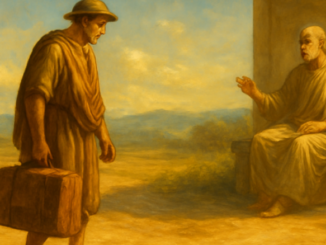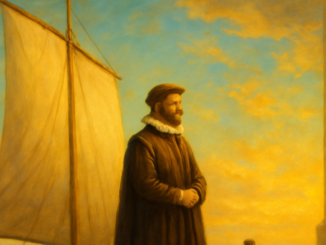
Montaigne essay on constancy and its connection to Masonic self-knowledge
Michel de Montaigne – Content & Summary

Montaigne on Constancy: What Essay 12 Teaches Us About Courage

Imagine standing at the threshold of a difficult decision. You feel the tension in your body, the doubt racing through your mind. How do you remain steadfast when circumstances seem to conspire against you? Michel de Montaigne wrestled with precisely this question when he wrote his twelfth essay. In ‘On Constancy,’ he examines what it truly means to be resolute — and why we should not be too quick to congratulate ourselves when we merely appear courageous. The Core Idea of the Essay In this brief but powerful essay, Montaigne poses a surprising question: is constancy really what we think it is? He argues that true constancy does not simply mean standing in the face of danger. What matters is how you respond inwardly to threat. You might appear brave as you stride toward a drawn sword, but if you are trembling with fear on the inside and only pressing forward out of shame, can that really be called courage? Montaigne draws a sharp distinction between outward behaviour and inner disposition. He observes that many people we regard as courageous actually act out of impulse, pride, or even ignorance of the danger they face. The true test of constancy lies […]

Crested mangabey symbolizing the Masonic journey of departure and return
Personal Development & Leadership

What an Escaped Monkey Teaches Us About Personal Growth

For a full month, a crested mangabey roamed the Dutch countryside, far from his familiar enclosure at the Beekse Bergen safari park. Eventually, he was captured and returned to his group. This small news item from July 2026 raises a timeless question that lies at the very heart of Freemasonry: what happens to our personality when we break free from the familiar — and what changes when we return? The Primal Urge to Escape In the eighteenth century, when modern Freemasonry was establishing its first lodges, the understanding of human nature was deeply intertwined with ideas about freedom and constraint. Philosophers of that era wrestled with a fundamental question: is man by nature a social creature, or does he possess a deep-rooted longing to escape every structure that binds him? The English thinkers who laid the foundations of the lodge were well acquainted with their contemporaries’ writings on the social contract. They understood that brotherhood can only exist when individuals voluntarily choose to be part of something greater than themselves. The crested mangabey who spent a month wandering through the Brabant countryside acted on an impulse we all recognize. There is something in every living being that wants to cross […]

Rough ashlar stone on a builder's workbench symbolizing Masonic self-knowledge
Personal Development & Leadership

Departure as Self-Knowledge: What Breaking a Contract Reveals

In the seventeenth century, breaking an oath was considered one of the gravest transgressions a person could commit. Guild brothers swore loyalty to their craft, knights to their lord, and apprentices to their master. Today, we read about a footballer having his contract terminated and departing with immediate effect. Reactions range from understanding to outrage. But those who look deeper will recognize an ancient question lurking beneath the surface: what does a rupture reveal about the character of the one who breaks away? The Historical Weight of the Broken Word In the medieval guilds, a contract was far more than a business arrangement. It was a sacred promise, sealed through a ritual in which the apprentice placed his hand upon the tools of his trade or a holy object. Historians of the craft guilds describe how a departing member didn’t just lose his profession — he lost his name and reputation. The collective had invested in his formation, and a premature departure was seen as theft of that shared capital. Yet even those strict times recognized exceptions. When a journeyman discovered that his calling lay elsewhere, when a master proved unjust, or when circumstances changed fundamentally, there existed rituals of […]

Rough ashlar stone symbolizing personal growth in Freemasonry
Personal Development & Leadership

Bologna and the Wounded Soul: On Rage and Personality

When dozens of officers are injured during protests, when streets burn with collective outrage, an uncomfortable question arises: what happens to the human personality when a sense of justice tips over into destruction? The events in Bologna following a fatal arrest compel us not only to reflect on social tensions, but also on the fragile architecture of our own character. The Paradox of Righteous Anger Here lies a paradox that has fascinated philosophers throughout the ages: the person who rises up for justice can, in that very pursuit, become unjust. Those who protest against violence can themselves become violent. Those who cry out for humanity can lose their own humanity in the heat of the moment. This is not a judgment on protesters or authorities — it is an observation about the human condition itself. The ancient Greeks had a concept called thumos, roughly translated as “spiritedness” or “wrath.” Plato placed this element of the soul between reason and appetite — a force that could be both constructive and destructive. Thumos could drive someone to courageous deeds, but also to blind fury. The question was never whether this force existed, but how it could be mastered. Personality as Architecture In […]

Open book with Masonic square and compasses symbolizing truth and self-reflection
Michel de Montaigne – The Essays

Montaigne on Liars: Philosophical Roots of Truthfulness

Have you ever wondered why a lie can sting so deeply, even when its content is entirely trivial? There’s something fundamentally violated when someone knowingly speaks an untruth — and you feel it in your bones. Michel de Montaigne, the sixteenth-century French essayist, grappled with the very same question. In his ninth essay, “On Liars,” he explores not merely what lying is, but why it is so reprehensible. To understand how he arrived at his insights, we need to look at the philosophical traditions that shaped his thinking: Stoicism, Skepticism, and Renaissance Humanism. The Stoic Legacy: Truth as Virtue Montaigne’s deep aversion to lying is firmly rooted in Stoic philosophy. Thinkers like Seneca and Epictetus regarded truthfulness not as a social convenience, but as a cardinal virtue. For the Stoics, human beings were fundamentally rational creatures, and lying represented a betrayal of that rationality. When you lie, they reasoned, you disturb the natural order of the logos — the universal reason that binds all things together. Seneca, whose letters Montaigne studied with great devotion, wrote extensively about the relationship between one’s words and one’s character. A man who lies, Seneca argued, cannot truly know himself. This is precisely the insight […]

A rough ashlar stone beside Masonic square and compasses symbolizing humility
Personal Development & Leadership

Humility as Strength: What Freemasons Know About Success

In the eighteenth century, when the first Grand Lodges in Europe opened their doors, an unwritten rule applied that remains relevant to this day: whoever enters leaves their social rank at the door. Whether you were a baker or a banker, your standing in the lodge was determined by your inner growth — not by your external achievements. This principle sheds a surprising light on a notion that still circulates in our culture: the belief that everything one touches turns to gold. The Alchemical Myth Debunked The expression “everything I touch turns to gold” traces back to King Midas from Greek mythology. His story ends tragically: he nearly starves to death because even his food transforms into gold. From the earliest philosophical traditions, thinkers understood the Midas myth as a warning against hubris — the dangerous overconfidence that arises when success goes to one’s head. Freemasonry, with its roots in the medieval stonemason guilds, understood this lesson centuries ago. The craftsmen who built the great cathedrals of Europe knew that every masterpiece was the result of countless failed attempts, broken stones, and endless patience. Their wisdom: true craftsmanship reveals itself not in perfection, but in the ability to learn from […]

Masonic rough ashlar and tools symbolizing self-knowledge and ethical choice
Philosophy & Ethics

When Saying No Is Right: The Masonic Ethics of Refusal

There is a curious paradox woven into the fabric of modern life: we celebrate those who say yes to challenges, yet we rarely acknowledge the courage it takes to say no. When a prominent football manager recently declined to take charge of a national team — a role most would consider a tremendous honor — it raised a question that reaches far beyond the back pages. What does it truly mean to turn down something the world expects you to accept? And what can Freemasonry teach us about the ethics of refusal? Refusal as an Act of Integrity Here is a thought worth sitting with: sometimes, declining an offer is ethically purer than accepting it. We live in a culture that glorifies ambition and distrusts modesty. Anyone who turns down a prestigious position is quickly suspected of harboring hidden motives or lacking drive. But what if the opposite is true? What if refusing a role that doesn’t fit you reveals deeper self-knowledge than eagerly seizing it ever could? In Freemasonry, we work with the metaphor of the rough ashlar — the unfinished stone that must be shaped into a perfect cube. This image does not suggest we should become everything […]

Rough ashlar stone beside a calm candle symbolizing Masonic inner strength
Personal Development & Leadership

Artificial Energy vs Inner Strength: A Masonic Perspective

As more people report heart palpitations, insomnia, and anxiety from stimulant supplements, a fundamental question emerges: where do we truly draw our energy from? The modern individual reaches for pills and powders to get through the day. The Freemason seeks something different — a force that doesn’t come from a bottle, but from within. Two paths, two views of human nature, yet both share the same search for vitality and meaning. The Modern Quest for Energy In a world that never stops, many feel the pressure to be perpetually switched on. Employers demand alertness, social media calls for constant engagement, and the body is simply expected to keep up. Stimulant supplements in powder or capsule form promise an easy fix: focus without effort, energy without rest. But reality tells a different story. Users increasingly report nervousness, a racing heart, or a restless mind. The promise of artificial energy carries a shadow side that no label warns you about. These complaints are not merely physical. They touch on something deeper: the feeling of losing control over one’s own body. When someone becomes dependent on external substances to function, they gradually lose contact with their natural rhythms. The question then shifts from […]

Rough ashlar stone symbolizing Montaigne's philosophy of the inconsistent self
Michel de Montaigne – The Essays

Montaigne and the Philosophy of the Inconsistent Self

A stone being worked bears the marks of many hammer blows. Some make it smoother; others leave cracks behind. This is precisely how the sixteenth-century thinker Michel de Montaigne viewed the human soul — as a piece of work that never quite reaches completion, continually shaped by contradictory forces. His essay on the inconsistency of our actions drew from a rich philosophical tradition reaching back to antiquity. Which thinkers whispered to him what it truly means to be human in all our inconsequence? The Rough Ashlar as Starting Point In Freemasonry, the rough ashlar is a well-known symbol: the unworked stone representing the apprentice at the beginning of his path. This stone is not flawed — it is simply unfinished. It awaits the work of reflection and experience. Montaigne would have recognized this image immediately. His essay on inconsistency opens with the observation that we human beings possess no fixed core, but instead consist of layers, fractures, and surprising turns. The philosopher treated himself as his own subject of study and discovered within a fundamental mutability that did not trouble him, but fascinated him. This view of the human being as a work in progress had deep roots in Renaissance […]

Rough ashlar stone symbolising human inconstancy and Masonic self-knowledge
Content & Summary

Montaigne on Inconstancy: Man as an Unfinished Symbol

There is an ancient symbol familiar to most Freemasons: the rough ashlar. It represents the human being in an unworked state — raw, unpolished, and full of contradictions. When we turn to the very first essay in Michel de Montaigne‘s celebrated Essais, that image becomes almost tangible. In his reflections on the inconstancy of our actions, the sixteenth-century philosopher holds up a mirror in which we recognise ourselves as beings who constantly shift, act in contradiction with themselves, and in doing so reveal something profoundly human. The Core Idea: Man as a Riddle to Himself Montaigne opens his essay with a sharp observation. Anyone who tries to judge another person by their actions runs into a fundamental problem: our deeds constantly contradict one another. The same individual who acts with courage today may prove a coward tomorrow. The person who gives generously now may cling to possessions later. For Montaigne, this is not a moral failing — it is simply the human condition laid bare. He resists the temptation to sort people into fixed categories. Labels like “brave” or “greedy” do not do justice to reality. We are not statues of virtue or vice, but living beings who move, stumble, […]

Open book with Montaigne essays and candlelight evoking quiet contemplation
Content & Summary

Montaigne on Idleness: An Essay on the Restless Mind

You may recognise this: a day off with no obligations, a chance to finally relax — and yet your thoughts race in every direction. Your mind feels busier than ever. The sixteenth-century philosopher Michel de Montaigne described exactly this phenomenon in his short but powerful essay On Idleness. He discovered that an empty mind does not lead to peace, but to chaos. What begins as a search for rest turns out to be a confrontation with ourselves. The Core Idea of the Essay In this eighth essay from his first book, Montaigne examines a paradox that remains strikingly familiar today: when we fail to engage our mind with purposeful activity, it does not settle into calm — it runs wild. Montaigne writes that an unoccupied mind gallops off in every direction, like a horse without a rider. Thoughts multiply, take on bizarre shapes, and produce what he calls “monsters” and “chimeras.” The essay is deeply personal in tone. Montaigne describes how, after retiring from public life, he settled on his country estate fully expecting his mind to find peace. The opposite happened. Without the discipline of daily obligations, his thoughts began to churn uncontrollably. This unsettling experience became the very […]

Jonah emerging from the whale as a symbol of Masonic transformation
Christianity

Jonah and the Whale: A Masonic Journey to Self-Knowledge

In the eighth century before the Common Era, a short but powerful story emerged within the Hebrew tradition: the Book of Jonah. Spanning just four chapters, it tells of a prophet who flees his divine calling, is swallowed by a great fish, and ultimately comes to a profound reckoning with himself. For centuries, this tale has captivated people not only as a religious text but as a timeless allegory about human resistance and the difficult path toward self-acceptance. For Freemasons, the Book of Jonah offers a surprisingly rich source of recognition and reflection. A Prophet in Flight The story opens with a clear command: Jonah must travel to Nineveh to warn its inhabitants about their moral decay. Nineveh was the capital of the Assyrian Empire at the time — a powerful and feared city notorious for its cruelty. Rather than obey, Jonah boards a ship sailing in the opposite direction, heading for Tarshish, believed to have been a trading port at the very edge of the known world. His flight is not mere cowardice. It is a deeper refusal to confront his own calling. Historically, the story reflects the tension that existed between the Israelites and their neighbors. The Assyrians […]

A rough ashlar stone symbolizing personal growth through crisis in Freemasonry
Personal Development & Leadership

What Our Crises Reveal About Who We Truly Are

Sometimes a person disappears — not just physically, but inwardly. A young athlete withdraws from the world, overwhelmed by pressure and expectations. When he returns, he speaks openly about regret and self-awareness. This kind of story raises questions that reach far deeper than the headline itself. What does a moment of crisis actually reveal about who we truly are? And how does a Freemason view such turning points in a human life? Why Do People Sometimes Vanish From the Stage? The outside world tends to see a disappearance as either a mystery or a scandal. A news article presents the facts, quotes bystanders, and searches for explanations. But anyone who looks at the story from the inside recognizes something different: a human being who could no longer function under the weight of the expectations placed upon him. Pressure, perfectionism, fear of failure — these are universal themes that can touch any one of us. For the outsider, such a disappearance is a news item. For the Freemason, it is a mirror. In the lodge, we learn that a person is never a finished work, and that every crisis contains the possibility of growth. Disappearing is not an ending — sometimes […]

A darkened chamber with Masonic symbols representing reflection and inner wisdom
Freemasonry & Society

The Power of Departure: Why Walking Away Can Be the Best Move

A race car sits idle in the pit lane. The driver climbs out, leaves the circuit, and seeks silence. Hours later, he returns and delivers the qualifying lap of his lifetime. The story made headlines around the world yesterday: sometimes you have to leave in order to truly arrive. For those familiar with the symbolism of Freemasonry, an ancient truth resonates here — one that reaches far deeper than any racetrack. The Circuit as a Mirror of Society A racing circuit is more than asphalt and crash barriers. It is a closed system where pressure, expectation, and performance converge in a relentless rhythm. Lap after lap, second after second — everything is measured, compared, and judged. In many ways, this mirrors the society in which we all operate: a world of deadlines, targets, and the unceasing demand for more, faster, better. The driver who chose to temporarily step away from this system did something that defies every rule of our performance-driven culture. He stopped when pushing forward was expected. He sought distance when proximity was demanded. And yet, it was precisely this departure that became the key to his finest performance. The Chamber of Reflection: The Symbolism of Withdrawal In […]

Symbolic representation of Freemasonry and Gnostic knowledge seeking
Personal Development & Leadership

Are Freemasons Gnostics? A Personal Reflection on Knowledge

It’s a question that surfaces regularly whenever people delve into the mysterious world of Freemasonry: are Freemasons actually Gnostics? Rather than offering a dry academic essay, this article is a personal exploration of the theme — written by someone who has wrestled with the same question and is still searching for answers. Because perhaps the truth lies not in a definitive answer, but in the way we search together. Why This Question Strikes a Nerve When I first encountered the idea that some people regard Freemasons as Gnostics, I felt a curious mixture of recognition and resistance. Recognition, because there is indeed something in Freemasonry that speaks of inner knowledge — a wisdom that comes not from books but from lived experience. Resistance, because I know how easily labels oversimplify reality. You may recognize the feeling. You come across an article claiming that Freemasons follow a secret Gnostic doctrine, or you hear someone insist categorically that there is no connection whatsoever. The truth, as so often, is more nuanced. And it’s that nuance I want to share — like a brother sitting across the table from you, thinking aloud. What Do We Actually Mean by Gnosis? Before we can answer […]

Open book with Montaigne Essays symbolizing vigilance and Masonic reflection
Content & Summary

Montaigne on the Dangerous Hours of Negotiation

In the sixth essay of the first book of his Essays, Michel de Montaigne issues a warning that remains strikingly relevant today: it is precisely when parties appear to be reaching agreement that danger can be at its greatest. This short but powerful essay examines the human tendency to let our guard down the moment peace seems within reach. Centuries later, the question remains — what can we still learn from this penetrating observation, and how does it speak to those who pursue not only worldly wisdom but also inner development? The Core Idea of the Essay Montaigne opens with a clear thesis: the moments when enemies enter into negotiation are often the most dangerous of the entire conflict. His reasoning is as simple as it is unsettling. As soon as people believe that peace is near, their attention slackens. Weapons are set aside, guards are reduced, and trust increases. It is in precisely this vulnerable state that an adversary may strike. It is not open warfare that poses the greatest threat, but rather the twilight zone where hope and danger converge. This insight extends far beyond the battlefield. Montaigne describes a universal human pattern: we tend to abandon our […]

Masonic square and compasses symbolizing self-knowledge and leadership
Personal Development & Leadership

Leadership Begins with Self-Knowledge: Lessons from Freemasonry

In an age that cries out for authentic leadership, the centuries-old tradition of Freemasonry offers surprisingly relevant insights. The Masonic lodge is not merely a place of brotherhood — it is, above all, a laboratory for personal development and self-knowledge. And as it turns out, that inner work may be exactly what modern leadership is missing. The Call for a New Kind of Leadership Everywhere you look — in politics, business, and civil society — there is a growing hunger for leaders who can provide direction in uncertain times. The conversations dominating public discourse make one thing clear: people are dissatisfied with the leadership they see. They long for something different, something genuine. But what truly makes someone a real leader? Is it charisma? Decisiveness? Or is there something deeper behind effective leadership? Freemasonry, a tradition that has guided individuals on their personal journeys for centuries, offers a remarkably timely perspective on this question. Know Thyself: The Foundation of Leadership Above the entrance to the ancient Temple of Delphi stood the words Gnothi seauton — Know thyself. This principle lies at the very heart of Freemasonry. Before a Freemason can lead or guide others, he must first undertake a journey […]

Montaigne philosophy and Freemasonry symbolism representing self-knowledge
Freemasonry & Connection

Montaigne and Freemasonry: Passions and True Connection

Why do we sometimes direct our deepest emotions at things that don’t actually matter? And more importantly, how do we recognize the moment our passions deceive us? These are questions the sixteenth-century philosopher Michel de Montaigne posed in his essay on how the soul projects its emotions onto false objects. They are also questions that resonate powerfully within the ritual space of the Masonic lodge, where brethren gather to examine themselves and seek authentic human connection. What Did Montaigne Mean by “False Objects”? Montaigne identified a peculiar yet universal human tendency. When we are overwhelmed by powerful emotions — anger, grief, frustration — we instinctively seek an outlet that has nothing to do with the real source of our distress. A man who receives bad news kicks a chair. A person in mourning lashes out at the messenger. The soul, Montaigne argued, simply cannot bear the full intensity of its passions, and so it desperately searches for something — anything — to direct them toward, even if that target is entirely innocent. This insight is not a judgment but an observation about human vulnerability. Montaigne draws our attention to the fact that we often deceive ourselves by pouring emotional energy […]

Open book with classical philosophy text symbolizing Montaigne and Freemasonry
Michel de Montaigne – The Essays

Montaigne on Passions and False Objects: Philosophical Roots

In the fourth essay of his first book, Michel de Montaigne investigates a curious phenomenon: how the human soul directs its emotions toward objects that are not the true cause of those feelings. This insight did not arise in a vacuum. Montaigne drew deeply from a long philosophical tradition reaching back to Greek and Roman thinkers. The question of how we handle our passions — and why we sometimes aim them at the wrong targets — had occupied philosophers for centuries before Montaigne ever picked up his pen in his tower library in Bordeaux. The Stoic Legacy: Mastery Over Emotion The influence of Stoicism on Montaigne‘s thinking is especially tangible in this essay. The Stoics — notably Seneca and Epictetus — argued that human suffering does not arise from external events, but from the judgments we form about them. When we feel anger toward an object that has hurt us, or when we direct grief at a symbol rather than the real cause, we are demonstrating precisely what the Stoics meant: our passions are often misplaced. Seneca wrote at length about how anger can seduce us into irrational behavior. In his treatise On Anger, he gave countless examples of people […]

Montaigne essay on misdirected emotions and Masonic self-knowledge
Content & Summary

Montaigne on False Objects: When Our Emotions Go Astray

Why do we slam a door after stubbing our toe? Why do we shout at a frozen computer as though it were deliberately conspiring against us? In the fourth essay of the first book of his Essays, Michel de Montaigne explores this peculiar human behavior: our tendency to direct emotions at objects that have absolutely nothing to do with what actually troubles us. It is a short but penetrating piece that reveals something essential about the human psyche — and offers surprising insights for anyone committed to genuine self-knowledge. The Core Idea: Emotions Cannot Hang in a Void Montaigne opens with a paradox most of us will recognize immediately. The human soul, he argues, cannot let its passions dangle in empty space. Once an emotion has been aroused, it insists on finding an outlet — a target, a destination, an object. But what happens when the real object of our anger, grief, or frustration is out of reach? The soul invents a surrogate. It fabricates a false object onto which it can project its feelings. Crucially, Montaigne does not treat this as a sign of weakness or irrationality. He suggests it is simply how human emotions work. Our passions demand […]