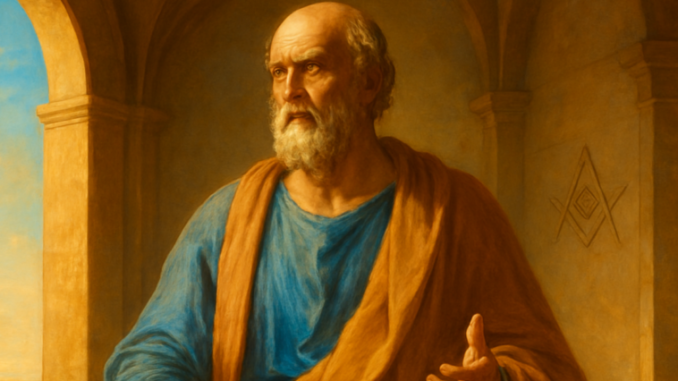
Picture a man in a simple toga, seated in the evening shadow of a Roman courtyard. While senators around him flaunt their estates and retinues of slaves, he picks up a wax tablet and writes to a friend that all such splendor is as fleeting as morning mist. That man is Lucius Annaeus Seneca, and what he commits to writing in his ninety-eighth letter to Lucilius touches on a question that still occupies many minds today: what is true wealth, and how do we distinguish it from mere appearance?
The Heart of the Letter: Possessions as Illusion
In Letter 98, Seneca addresses his student Lucilius with a direct message: material possessions offer no real security. He argues that most people anchor their happiness to what they own, while all of those things can be taken from them at any moment. Money, land, and luxury are gifts of fortune — and fortune is, by definition, unreliable. The Stoic philosopher urges Lucilius not to cling to what lies beyond his control, but instead to cultivate his inner faculties. There, in virtue and wisdom, lies the only wealth that no one can steal.
Seneca draws a sharp distinction between using possessions and serving them. There is nothing wrong with being prosperous, but it becomes a problem the moment prosperity begins to rule its owner rather than the other way around. A wise person, he writes, can enjoy good fortune without becoming dependent on it. He is like a guest who sits gratefully at the table but rises without protest when the meal is over.
Fortune as an Unreliable Lender
One of the most powerful images Seneca employs in this letter is that of fortune as an unreliable moneylender. Everything we possess, he explains, has not been given to us — it has merely been loaned. Fortuna can call in her debt at any arbitrary moment, without warning and without mercy. Whoever truly understands this prepares for loss without living in fear. Seneca’s point is not pessimism but spiritual freedom: the person who has already experienced the loss of external things in thought will not be broken when that loss actually occurs.
This idea of premeditated reflection on adversity — known in the Stoic tradition as premeditatio malorum, the pre-rehearsal of future hardships — is a recurring theme throughout Seneca’s letters. In Letter 98, it takes on a particularly personal quality as he references historical examples of powerful Romans who lost everything yet retained their dignity. Think of figures like Marcus Cato the Younger, whom Seneca frequently cites as a moral exemplar: a man who lost the Republic, lost his political standing, but never lost his character.
Virtue as Inalienable Wealth
Where material things come and go, virtue is, according to Seneca, the only possession that truly belongs to us. Justice, courage, temperance, and wisdom form an inner capital that cannot be lost to fire, theft, or political upheaval. Seneca places this idea within a long philosophical tradition. He refers indirectly to the teachings of Socrates, who reminded his students that the soul matters more than the body, and to the Stoic founders Zeno of Citium and Chrysippus, who regarded virtue as the highest good.
At the same time, Seneca is no naive ascetic. He openly acknowledges that he himself is a wealthy man. But, he emphasizes, his relationship to his riches is that of a master to his tools — not that of a slave to his master. The question is whether your possessions help you lead a good life, or whether they distract you from what truly matters. In his words, we hear the echo of Epicurus, a philosopher whom Seneca regularly quotes with admiration despite their different schools of thought: Epicurus, too, taught that simplicity is the key to peace of mind.
True wealth is not the possession of much, but the ability to need little while still living in inner abundance.
Vivid Imagery: Shipwrecks and Granaries
Seneca is at his finest when he translates abstract philosophy into recognizable images. In Letter 98, he uses the example of a rich man whose ships are lost at sea. Overnight, a merchant becomes a beggar. Seneca poses the question: was that man truly rich when he still had his ships? No, he argues, because his well-being depended on planks and sailcloth. True wealth would have accompanied him even after the shipwreck — like an inner compass undisturbed by waves.
Another image Seneca deploys is that of a full granary. No matter how impressive the harvest, it is always exposed to fire, vermin, and rot. Anyone who bases their happiness on the contents of the granary lives in permanent anxiety. The person who instead learns to be grateful for what is present — without taking it for granted — discovers a form of calm that no external circumstance can disturb.
Letter 98 in the Broader Context of Stoicism
Letter 98 does not stand alone but fits within the broader Stoic conviction that the universe is ordered and that human beings achieve their highest purpose by living in harmony with that order. Marcus Aurelius, the Roman emperor-philosopher who lived a generation after Seneca, would record remarkably similar reflections in his personal Meditations. The continuity of this thought reveals how deeply these ideas were rooted in the ancient world.
For Seneca, philosophy is not an intellectual exercise — it is the art of living. His letter is no dry lecture but an outstretched hand toward Lucilius. He writes as an older brother who has already walked the path and now shares his experiences, not from a place of superiority but out of genuine care. That tone of brotherly guidance is what makes his work remarkably accessible even now, nearly two thousand years later.
Why This Letter Still Matters Today
We live in an era of unprecedented material abundance, and yet dissatisfaction, anxiety, and a pervasive sense of emptiness seem more widespread than ever. Seneca’s ninety-eighth letter speaks directly to this paradox. The relentless pursuit of more — more possessions, more status, more comfort — often leaves people feeling less secure rather than more. Seneca’s antidote is both simple and profound: invest in what cannot be taken from you. Build character, practice wisdom, and develop the kind of inner resilience that remains steady whether fortune smiles or storms.
For those who walk a path of self-improvement and moral reflection — whether through philosophical study, fraternal fellowship, or contemplative practice — Seneca’s message resonates with particular force. The idea that true mastery lies not in controlling the external world but in governing oneself is a cornerstone of virtually every serious tradition of personal development. Letter 98 reminds us that this insight is not modern but ancient, not trendy but timeless.
Seneca’s Letter 98 is far more than a historical curiosity. It is a living invitation to re-examine our relationship with the material world and to rediscover the inner riches that no twist of fate can diminish. In a culture that constantly urges us to accumulate, Seneca quietly counsels us to let go — not out of indifference, but out of a deeper understanding that the most valuable things we possess are the ones that can never be taken away. True wealth, he reminds us, resides not in our vaults but in our virtues.
Copyright text & image: devrijmetselaar.nl
Texts are based on the ideas and content of the author of devrijmetselaar.nl, reviewed, corrected, and supplemented with the assistance of OpenAI. Images are created based on the ideas of the author of devrijmetselaar.nl using OpenAI/DALL-E.
Frequently Asked Questions
What is Seneca's main argument about material possessions in Letter 98?
Seneca argues that material possessions offer no real security and that most people mistakenly anchor their happiness to what they own. He emphasizes that all possessions can be taken away at any moment since they are gifts of fortune, which is inherently unreliable. True wealth, according to Seneca, lies instead in cultivating inner virtues and wisdom, which cannot be stolen from us.
What does Seneca mean by the distinction between 'using possessions' and 'serving them'?
Seneca draws a crucial distinction between being the master of one's possessions versus being enslaved by them. There is nothing wrong with being prosperous, but a problem arises when prosperity begins to rule its owner. A wise person can enjoy good fortune without becoming dependent on it, remaining in control of their relationship with material goods rather than allowing those goods to control them.
What is the concept of 'premeditatio malorum' that Seneca discusses in Letter 98?
Premeditatio malorum, or the pre-rehearsal of future hardships, is a Stoic practice where one mentally prepares for potential loss and adversity before they actually occur. Seneca explains that by contemplating the loss of external things in advance, a person develops spiritual resilience and freedom from fear. This mental preparation means that if such losses do happen, the person will not be broken by them since they have already mentally experienced and accepted the possibility.


Be the first to comment