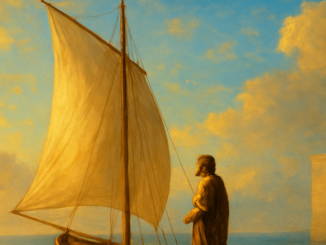
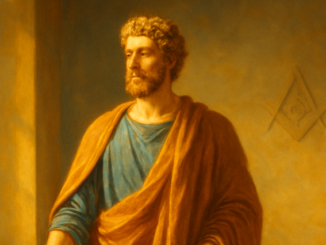
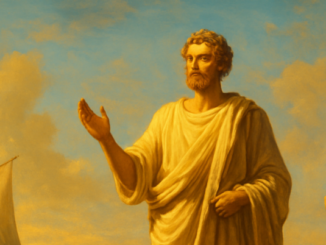
Ancient Roman oil lamp illuminating a writing tablet symbolizing reflection
Marcus Aurelius – Content & Summary

Marcus Aurelius Book VII: On the Fickleness of Fortune

Deep in the night, the emperor picks up his writing tablet. Outside, wind howls past the legion tents along the Danube frontier. Inside, by the flickering light of an oil lamp, Marcus Aurelius bends over a question every human being knows: how do you remain steadfast when fortune turns against you? His answers, recorded in Book VII of the Meditations, still speak to anyone searching for inner peace amid uncertainty — and they carry a particular resonance for those who walk the path of self-improvement through Freemasonry. The Core Idea of Book VII The central theme of Book VII revolves around how we deal with change and adversity. Marcus Aurelius argues that external events are, in themselves, neutral. It is our judgment that turns them into disasters or blessings. This foundational Stoic principle receives a deeply personal and practical treatment in this book. The emperor does not write as an abstract philosopher but as a man who contends daily with illness, war, and political intrigue. What sets Book VII apart from the other books of the Meditations is its emphasis on the transience of all things. Marcus Aurelius reminds himself repeatedly that fame is fleeting, that bodies decay, and that […]

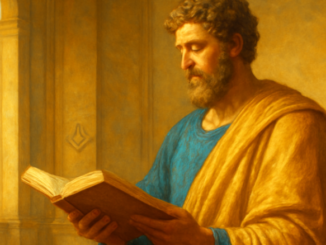
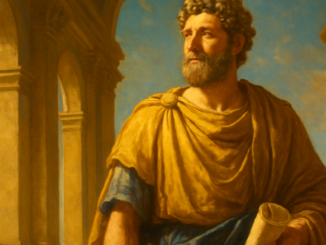
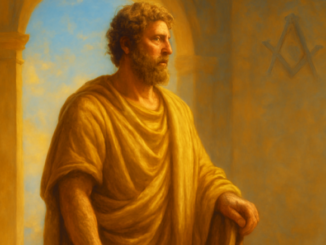
Marcus Aurelius statue symbolizing Stoic justice and Masonic inner temple
Marcus Aurelius – Content & Summary

Marcus Aurelius Book VII: On Evil and Justice

There may have been a moment in your life when someone wronged you and you felt anger rising like a tide. Or perhaps you recognize those times when your own thoughts tormented you more than the situation itself. Marcus Aurelius, the Roman emperor-philosopher, wrestled with exactly these questions. In Book VII of his Meditations, he examines what evil truly is, how justice guides our actions, and why inner peace never depends on the behavior of others. The Heart of Book VII: What Is True Evil? Marcus Aurelius opens Book VII with a radical proposition: the evil others inflict upon you does not damage your soul. What truly harms you is your own reaction to it. This is a foundational Stoic insight that he returns to again and again. When someone insults you, lies to you, or deceives you, the real danger lies not in the act itself but in how you choose to respond. If you allow yourself to be swept away by anger and resentment, you surrender your power. If you remain aligned with your inner compass, you preserve your freedom. The emperor wrote these reflections as private notes, never intended for publication. That is precisely what makes them […]

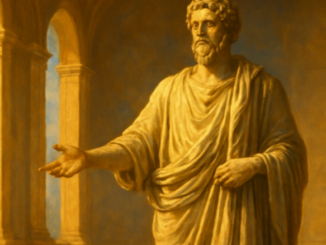
Statue of Marcus Aurelius representing Stoic brotherhood and philosophy
Marcus Aurelius – Content & Summary

Marcus Aurelius Book VI: On Brotherhood and Humanity

In the year 170 AD, amid grueling military campaigns along the Danube frontier, the Roman Emperor Marcus Aurelius sat down in the solitude of his army tent and wrote some of the most penetrating reflections ever composed on what it means to be connected to our fellow human beings. Book VI of his Meditations, nearly two thousand years later, still speaks powerfully to anyone who contemplates brotherhood, community, and the art of living together. The Historical Context of Book VI Marcus Aurelius ruled as emperor from 161 to 180 AD, a reign marked by wars, plagues, and political turmoil. Yet this philosopher-king found time to examine his inner life with remarkable honesty. Book VI was most likely composed during the Marcomannic Wars, when the emperor was confronted daily with the rawest dimensions of human existence — violence, betrayal, and death. It was precisely under these harsh conditions that he developed his deepest insights into human connection. The Stoic philosophy in which Marcus Aurelius had been educated by teachers such as Junius Rusticus and Apollonius of Chalcedon formed the bedrock of his thinking. The Stoics taught that all human beings are part of a single cosmic community, bound together by the […]

Ancient Roman bust of Marcus Aurelius symbolizing Stoic virtue and Freemasonry
Marcus Aurelius – Content & Summary

Marcus Aurelius Book VI: Virtue as Compass in a Faltering Empire

Somewhere around 173 AD, amid military campaigns along the Danube, a Roman emperor sat down by candlelight to write his thoughts. Not for publication, not for fame, but as an exercise in inner discipline. Marcus Aurelius knew that external circumstances could be stripped from him at any moment — his throne, his health, even his life. But one thing no one could take away: his character. In the sixth book of his Meditations, he distills this insight into a philosophical core that still resonates today, not least within Freemasonry. The Historical Context of Book VI To truly understand Book VI, we must transport ourselves to the Roman Empire in the second century. Marcus Aurelius ruled from 161 to 180 AD, a period marked by plague, frontier wars, and internal instability. Unlike the philosophers of his day, who could contemplate in relative tranquility, this Stoic emperor wrote his reflections quite literally on the battlefield. The Meditations are not a systematic treatise but a collection of personal notes, originally titled Ta eis heauton — “To Himself.” Book VI was most likely composed during the Marcomannic Wars, when the emperor confronted mortality on a massive scale. It is precisely within this chaos that […]

Open copy of Marcus Aurelius Meditations beside Masonic rough ashlar stone
Marcus Aurelius – Content & Summary

Marcus Aurelius Book V: Overcoming Obstacles as an Art

Imagine waking up and facing the day ahead like a mountain you must climb. Everything inside you resists. Your mind searches for excuses, and the warm blankets feel like a safe harbour. It is precisely in moments like these that the Roman Emperor Marcus Aurelius addressed himself with words that still resonate nearly two thousand years later. In the fifth book of his Meditations, he explores how we need not see obstacles as enemies — but as the path itself. The Context of Book V Marcus Aurelius never wrote his Meditations for publication. They were personal exercises in the art of living — private reflections set down during some of the most turbulent years of the Roman Empire. Book V was most likely composed during military campaigns along the Empire’s northern frontiers, amid war, plague, and personal loss. These circumstances make the text all the more powerful: this is not a philosopher speaking from an ivory tower, but a man confronting the harshest realities of existence on a daily basis. The book opens with a passage that almost everyone can relate to. Marcus describes the moment of waking, when the temptation to stay in bed is at its strongest. He […]

Ancient rock standing firm against ocean waves symbolizing Stoic resilience
Marcus Aurelius – Content & Summary

Marcus Aurelius Book V: Duty and Strength of Character

The fifth book of Marcus Aurelius’ Meditations opens with a remarkably intimate scene: the Roman emperor urging himself to get out of bed. This seemingly mundane moment carries a far deeper message. It is not about waking early — it is about the willingness to fulfill your duty, even when every fiber of your being resists. In Book V, Marcus Aurelius examines what it means to show true character when life pushes back, and how a sense of duty shapes us into who we are truly capable of becoming. The Morning as a Symbolic Starting Point Marcus Aurelius begins Book V with an inner dialogue that most of us will recognize instantly. He describes how the warmth of the bed beckons, how the mind invents reasons to stay lying down just a little longer. Yet he reminds himself that he was not born for comfort — he was born to act. The morning becomes a symbol for every new beginning, every choice where ease and duty stand in opposition. The moment of waking represents the awakening of consciousness to its responsibility. This image of the morning struggle touches on a universal human experience. It is not only the physical act […]

Ancient Roman bust of Marcus Aurelius symbolizing Stoic wisdom and change
Marcus Aurelius – Content & Summary

Marcus Aurelius Book IV: On Change and Constant Flow

Why do we cling so desperately to what is inevitably passing away? This question runs like a golden thread through Book IV of the Meditations of Marcus Aurelius. The Roman emperor and Stoic philosopher invites us to see the constant flow of existence not as a threat, but as a fundamental truth capable of bringing deep inner peace. In this article, we explore the core ideas of this timeless work and discover how its wisdom on change can still guide us today — particularly those walking the Masonic path. What Is the Central Message of Book IV? Marcus Aurelius wrote his Meditations as private reflections, never intended for publication. That very fact gives them a sincerity that few philosophical works can match. In Book IV, everything revolves around one fundamental insight: change is not something that happens to us — it is the very essence of existence itself. Everything flows; nothing remains. The emperor returns to this theme in various ways, as though he needs to convince himself that this truth must not only be understood intellectually but felt in the marrow of one’s bones. But why should this insight offer comfort rather than despair? Marcus Aurelius answers by pointing […]

Ancient Roman bust of Marcus Aurelius symbolizing Stoic inner retreat
Marcus Aurelius – Content & Summary

Marcus Aurelius Book IV: The Art of Retreating Into Yourself

Picture a Roman emperor — surrounded by court intrigues, military campaigns, and the endless demands of governing an empire — writing by candlelight about the art of inner stillness. Marcus Aurelius never sought refuge in mountain cabins or coastal villas. Instead, he discovered a sanctuary that no one could ever take from him: the retreat into his own mind. In the fourth book of his Meditations, he unfolds this insight with a clarity that still resonates nearly two thousand years later. The Inner Chamber as Sanctuary Marcus Aurelius opens Book IV with an observation that strikes at the heart of his philosophy: people seek retreats in the countryside, at the seashore, or in the mountains, yet the truest sanctuary is always within reach. The human mind, when properly trained, offers a space where external chaos cannot enter. This is not escapism — it is a deliberate choice to locate the source of peace within rather than without. The emperor compares this inner space to a citadel that stands firm regardless of what unfolds beyond its walls. The image of the citadel serves as a powerful symbol: not a fortress against the world, but a place of order and reflection. Those […]

Ancient Roman bust of Marcus Aurelius representing Stoic philosophy and wisdom
Marcus Aurelius – Content & Summary

Marcus Aurelius Book III: The Good and Nature Summarized

In the year 170 AD, somewhere along the northern frontier of the Roman Empire, an emperor wrote words that still resonate almost two millennia later. Marcus Aurelius — the philosopher on the throne — was not keeping a diary for posterity. He was writing for himself, as an exercise in self-discipline and wisdom. Book III of his Meditations offers a profound exploration of what it means to live well according to the laws of nature. This text provides not only a window into the mind of a Stoic emperor, but also a mirror for anyone searching for meaning and inner peace. The Historical Context of Book III Marcus Aurelius composed his Meditations during one of the most turbulent periods of his reign. The Marcomannic Wars raged along the empire’s borders, plague devastated the population, and the emperor found himself far from Rome, stationed at the Danube frontier. It was precisely amid this chaos and uncertainty that Book III came into being — a collection of reflections on the transience of life and the urgency of living each moment with full awareness. The Meditations were originally titled Ta eis heauton, which translates literally as “to himself.” This deeply personal character is […]

Ancient Roman statue of Marcus Aurelius symbolizing Stoic wisdom and inner life
Marcus Aurelius – Content & Summary

Marcus Aurelius Book III: On Reason and the Inner Life

In the year 167 AD, somewhere along the northern frontier of the Roman Empire, Emperor Marcus Aurelius sat down to write his most private reflections. Book III of his Meditations opens with a confronting truth: our bodies decay, but our minds can remain sharp until the very last moment. These thoughts, penned amid the chaos of military campaigns, still offer a compass for anyone seeking inner peace and wisdom — including those of us who walk the path of Freemasonry. The Historical Context of Book III Marcus Aurelius never intended his Meditations to be published as a philosophical treatise. They were personal exercises in the art of living — spiritual journal entries written for an audience of one. Book III was most likely composed during his stay at Carnuntum, a Roman legionary fortress on the Danube, where he directed the Marcomannic Wars. Surrounded by disease, death, and the crushing weight of empire, he turned to the Stoic philosophy he had learned as a young man from his teacher Junius Rusticus. The Stoics, whose intellectual lineage stretches back to Zeno of Citium and was later refined by Epictetus and Seneca, taught that the only thing we truly possess is our own […]

Hourglass and rough ashlar symbolizing Stoic philosophy and Freemasonry
Marcus Aurelius – Content & Summary

Marcus Aurelius Book II: The Art of Living in the Present

When you turn an hourglass, every grain of sand falls irreversibly downward. No single grain returns, no moment ever repeats itself. In the second book of his Meditations, Roman Emperor Marcus Aurelius confronts himself with this unforgiving truth. He wrote these reflections during a military campaign along the Danube, far from the comforts of Rome, surrounded by death and impermanence. It was precisely there, in those raw and unrelenting circumstances, that a philosophy crystallized — one that still resonates powerfully today: the art of being truly present in the only moment we ever possess. The Morning as a Mirror of Life Book II opens with a remarkable passage in which Marcus Aurelius mentally prepares himself for the day ahead. He warns himself that he will encounter difficult people — the meddlesome, the ungrateful, the jealous. But rather than arming himself with resentment, he chooses understanding. These people act the way they do out of ignorance about what is truly good and evil. With this morning reflection, Marcus sets the tone for the entire book: each new day is an exercise in conscious living. This morning ritual takes on a symbolic dimension. Just as the sun appears on the horizon each […]

Ancient Roman bust of Marcus Aurelius symbolizing Stoic philosophy and reflection
Marcus Aurelius – Content & Summary

Marcus Aurelius Book II: The Impermanence of Life

It is early morning on the northern frontier of the Roman Empire. The emperor sits alone in his tent, the fire nearly extinguished, while outside the legions prepare for another day of battle. Marcus Aurelius reaches for his writing tablet and begins to record the thoughts that keep him awake: reflections on the brevity of life, on what truly matters when everything passes away. These personal meditations, written amid war and immense responsibility, form the second book of his Meditations — a text that has confronted readers for nearly two thousand years with an uncomfortable yet liberating truth: everything is impermanent, and precisely for that reason, every moment counts. The Heart of Book II: Waking Up to Reality Book II of the Meditations opens with one of the most strikingly direct passages Marcus Aurelius ever wrote. He warns himself that during the day ahead, he will encounter people who are meddlesome, ungrateful, arrogant, and dishonest. But rather than treating this as grounds for resentment or contempt, he reminds himself that these people act out of ignorance about what is truly good and what is truly harmful. They are, just like him, part of the same human community. This opening sets […]

Ancient Roman bust of Marcus Aurelius symbolizing Stoic wisdom and gratitude
Marcus Aurelius – Content & Summary

Marcus Aurelius Book I: Gratitude to Teachers and Mentors

Why would a Roman emperor — the most powerful man in the known world — begin his private journal with a long list of everything he owes to other people? Book I of the Meditations of Marcus Aurelius reads as an extended letter of gratitude to family, teachers, and friends. This is not false modesty or diplomatic courtesy. It is a deliberate philosophical choice. And in that choice, an ancient vision of personal growth unfolds that remains remarkably relevant today: we are shaped by those who came before us. What Makes Book I So Remarkable? Unlike the remaining eleven books of the Meditations, which are filled with self-reflection and philosophical reasoning, Book I consists almost entirely of acknowledgments. Marcus Aurelius names seventeen individuals — from his grandfather to his philosophy tutors — and describes precisely which virtue or life lesson he learned from each one. This is no superficial politeness. It is a systematic accounting of moral debts. Why would a powerful ruler do this? The answer lies in the Stoic philosophy Marcus practiced. For the Stoics, wisdom is never a solo achievement. It is the result of a chain of transmission. Every master stands on the shoulders of those […]