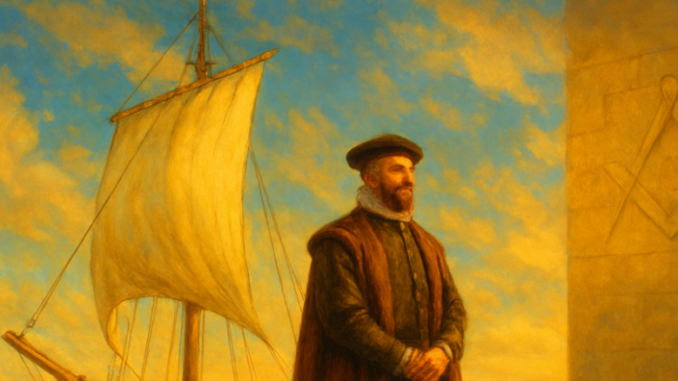
Imagine standing at a crossroads where a promise made to a friend collides with what the law or society expects of you. Which carries more weight — your personal word or the written rule? Michel de Montaigne posed exactly this question in his forty-third essay, ‘On the Laws of Duty.’ He did not write in a vacuum. He built on centuries of philosophical thinking about loyalty, conscience, and civic obligation. This article explores the thinkers and traditions that shaped his ideas, and shows how you can apply those insights today to make better moral decisions in your own life.
The Stoic Foundation: Duty as an Inner Compass
Montaigne’s thinking about duty is unimaginable without Stoicism. Seneca — who appears frequently on this site in connection with happiness and brotherhood — wrote repeatedly about the tension between personal integrity and social expectations. For Seneca, true duty was not what an external authority commanded, but what your inner reason recognized as right. Marcus Aurelius put it even more sharply in his Meditations: act according to your nature as a rational being, even when circumstances are unfavorable.
Montaigne adopted this Stoic starting point but pushed it further. Where the Stoics tended toward a universal moral law, Montaigne emphasized personal context. A promise made to a friend, in his view, carries a different weight than an abstract civic regulation. The practical lesson here is clear: when you face a moral dilemma, don’t simply ask what “the rule” says. Ask what your own conscience tells you. This is not a license for arbitrary behavior — it is a call for genuine self-reflection.
Plutarch and the Art of the Moral Example
Beyond the Stoics, Montaigne drew deeply from the work of Plutarch. In Parallel Lives, he found countless examples of statesmen and generals who wrestled with conflicting duties. Plutarch described how commanders had to choose between loyalty to their oath and the welfare of their soldiers, and how politicians sometimes sacrificed personal honor for the common good. Montaigne did not use these stories as decoration — he used them as tools. He showed that moral problems rarely have a purely theoretical solution. Reality is messy, and that is precisely why studying concrete situations from the past is so valuable.
You can apply this principle directly. When you find yourself stuck on an ethical question, look for a comparable example from history or your own experience. Not to copy it blindly, but to broaden your perspective. Studying the dilemmas of others sharpens your own judgment.
Skepticism: Doubt as a Virtue, Not a Weakness
Montaigne is often considered the father of modern skepticism. His personal motto — Que sais-je? (“What do I know?”) — was literally engraved on his seal. In Essay 43, that doubt resonates clearly when he demonstrates that the path of duty is never self-evident. The Pyrrhonist philosophers, particularly Sextus Empiricus, had taught him that certainties can be deceptive. If you cannot even establish whether your senses are reliable, how can you blindly trust a law drawn up by fallible human beings?
This skepticism is not nihilism. It is a call for caution and nuance. In daily practice, it means this: accept no moral prescription without thinking it through yourself. Ask who made the rule, in what context, and whether that context still applies. A healthy dose of doubt does not make you indecisive — it makes you deliberate.
Renaissance Humanism and the Value of the Individual
Montaigne lived at the heart of the French Renaissance, a time when the individual was once again placed at center stage. Thinkers like Erasmus and Pico della Mirandola had paved the way by arguing that human beings could shape themselves. Cicero, whose work De Officiis (“On Duties”) was a direct source of inspiration for Montaigne’s essay, had already argued in Roman times that duty and personal honor were inseparable. Montaigne gave this tradition his own twist: he turned the personal essay into the ultimate vehicle for exploring moral questions.
The practical insight here is powerful. Ethical growth begins with self-examination — not by following a rulebook, but by honestly setting down on paper what you think, feel, and believe. Montaigne did this in his essays. You can do the same in a journal, in a conversation with a trusted confidant, or in the stillness of a quiet moment of reflection.
The Connection to the Masonic Tradition
The ethical questions Montaigne raised resonate deeply within Freemasonry. The fraternity does not ask its members for blind obedience to dogma — it asks for personal moral development. The Masonic tradition places great emphasis on conscience as a guiding principle, exactly as Montaigne did. In the lodge, a brother is invited to test his own convictions, not to adopt them uncritically from someone else.
In concrete terms, Montaigne’s philosophical method offers a practical model for anyone committed to self-improvement. Following his approach, you can take these steps:
Articulate the dilemma clearly: What are the conflicting duties you experience?
Seek historical or personal parallels: Find comparable examples that can inform your thinking.
Challenge your own assumptions: Use Montaigne’s skeptical method to question what you take for granted.
Make a choice based on conscience: Decide not merely from habit or authority, but from genuine inner conviction.
Reflect afterward: Was your choice in line with the person you aspire to be?
From Theory to Action
The power of Montaigne’s forty-third essay does not lie in a neat definition or a tidy checklist. It lies in his insistence that moral life requires ongoing effort — an honest, sometimes uncomfortable dialogue between your duties to others and your duty to yourself. The Stoics gave him the conviction that reason must guide action. Plutarch provided the raw material of human experience. Skepticism kept him humble. And the humanist tradition reminded him that every individual carries the responsibility to think for themselves.
For Freemasons and anyone on a path of moral self-development, Montaigne’s approach is more than historical curiosity. It is a living practice. Every time you pause before a difficult decision, weigh conflicting obligations, and consult your conscience before acting, you are walking the same path Montaigne walked over four centuries ago. The tools are ancient, but their relevance has never faded.
True devotion to duty does not begin with the law — it begins with the honest conversation you have with your own conscience. Montaigne understood this, the Stoics taught it, and the Masonic tradition carries it forward. The next time you face a conflict between competing obligations, remember that the most important question is not what the world demands of you, but what you demand of yourself.
Copyright text & image: devrijmetselaar.nl
Texts are based on the ideas and content of the author of devrijmetselaar.nl, reviewed, corrected, and supplemented with the assistance of OpenAI. Images are created based on the ideas of the author of devrijmetselaar.nl using OpenAI/DALL-E.
Frequently Asked Questions
What is the main conflict that Montaigne explores in Essay 43 'On the Laws of Duty'?
Montaigne explores the tension between personal promises and obligations made to friends versus what law or society expects of you. He questions which carries more weight — your personal word or the written rule — and uses this dilemma to examine the philosophical foundations of duty and moral decision-making.
How did Stoic philosophers like Seneca and Marcus Aurelius influence Montaigne's thinking about duty?
Montaigne built his ideas on the Stoic foundation that true duty comes from inner reason and personal integrity rather than external authority. However, he pushed beyond the Stoics' universal moral law by emphasizing personal context. For Montaigne, a promise to a friend carries different weight than an abstract civic regulation, encouraging genuine self-reflection over blind rule-following.
Why did Montaigne value Plutarch's Parallel Lives, and how can readers apply this approach today?
Montaigne used Plutarch's historical examples of moral dilemmas as practical tools, recognizing that ethical problems rarely have purely theoretical solutions. Readers can apply this principle by looking for comparable examples from history or personal experience when facing ethical questions, not to copy them blindly but to gain insight into how real-world moral conflicts have been navigated.

Be the first to comment