Candle flame symbolizing intention and inner light in Masonic tradition
Content & Summary

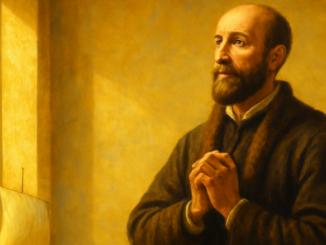
Montaigne on Intention: How Our Motives Define Our Actions

Imagine helping a friend move house, only for something valuable to break halfway through. Does that make your help worthless? Or does it matter that you showed up with the best of intentions? Michel de Montaigne wrestled with exactly these kinds of questions back in the sixteenth century. In his seventh essay from the first book, he explores how our inner motivation shapes the way our actions should be judged. Short but powerful, this essay offers surprisingly practical insights for anyone who reflects on the true value of what they do — and it resonates deeply with the symbolic traditions of Freemasonry. The Core Idea: Intention Over Outcome Montaigne argues that it is not the result of an action that determines its worth, but the intention behind it. An endeavor can fail due to circumstances entirely beyond our control, yet that does not make the underlying motive any less pure or praiseworthy. Conversely, someone might stumble into a good outcome without any noble intention whatsoever. In such cases, Montaigne insists, we must look at what the person truly intended to accomplish. This may sound obvious at first glance, but Montaigne demonstrates how often we do the opposite in practice. We […]

Scales of justice alongside Masonic square and compasses symbolizing balance
Freemasonry & Society

Justice Beyond Borders: Two Perspectives on Right and Law

When news breaks that suspects linked to a political assassination in a neighboring country have been arrested, it touches on fundamental questions about law, borders, and human dignity. A recent case involving the arrest of two individuals connected to the death of a critical voice in Poland invites deeper reflection — not about guilt or innocence, which belongs to the courts, but about the deeper layers of justice itself. How do the codified laws of nations relate to the unwritten laws of conscience? And what can we learn when we place two perspectives side by side: that of the secular legal order and that of the initiatory tradition? The Perspective of the Secular Order For the modern legal system, justice is a matter of procedures, burden of proof, and jurisdiction. When a crime is committed on the territory of one nation by individuals from another, a complex web of treaties, extradition agreements, and diplomatic negotiations comes into play. The rule of law operates according to written rules that are meant to apply equally to everyone. The suspect has rights, the victim has rights, and society has the right to protection. This system, imperfect as it may be, represents centuries of […]