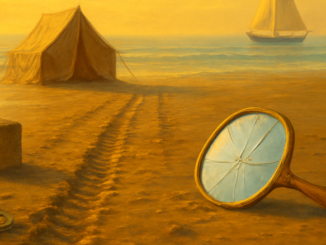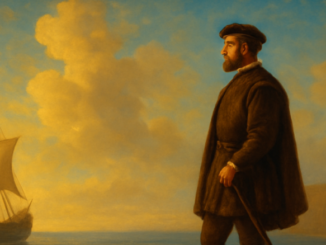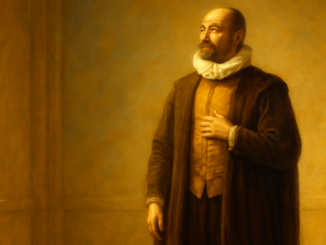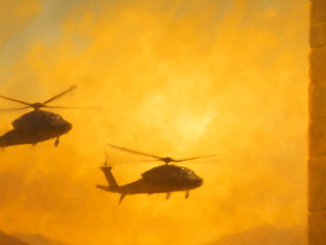
Firefighting helicopters over Athens illustrating Masonic themes of sacrifice and service
Spiritual Traditions

When Rescuers Fall: Spiritual Lessons from Athens

On a summer day above Athens, two firefighting helicopters collided while battling wildfires. A Danish and a Greek pilot lost their lives trying to save others. This tragic event touches something fundamental — the question of what it truly means to place yourself in service of a greater whole. For Freemasons, this moment of sacrifice raises spiritual questions deeply rooted in the tradition of the Craft. The Paradox of Sacrifice Firefighters, rescue workers, and pilots who battle wildfires live a daily reality most of us will never experience. They choose to run toward danger while everyone else runs away. That choice is not abstract. It is a concrete, physical act that demands courage, training, and something harder to name — an inner conviction that protecting others matters more than protecting yourself. In Freemasonry, we speak of shaping the rough ashlar. That shaping does not happen in isolation. It happens in relation to others, in the understanding that personal development gains meaning when it serves the community. The two pilots above Athens, each from a different country, worked together toward the same goal. Their nationality was irrelevant. What mattered was their shared commitment. What Service Really Means in Practice Spirituality in […]

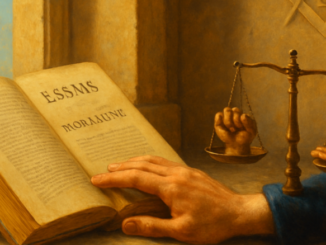
Open book of Montaigne's Essays with Masonic rough ashlar and square symbolism
Michel de Montaigne – Content & Summary

Montaigne on Good and Evil: The Power of Our Judgment

What if pain is not an objective evil, but merely what we make of it? In his fourteenth essay from the first book of the Essays, Michel de Montaigne examines a bold proposition: our perception of good and evil does not depend on things themselves, but on the judgments we form about them. Rooted in the Stoic philosophy of thinkers like Epictetus and Marcus Aurelius, this insight strikes at the very heart of human freedom. If we can truly become masters of our own judgments, a path opens toward inner peace — even in the midst of turmoil. The Core Idea of the Essay Montaigne opens this essay with a reference to a classical dictum he attributes to Epictetus: it is not things that disturb us, but our judgments about those things. This thought forms the backbone of the entire argument. Montaigne explores how the very same event can be experienced in completely different ways by different people. What is unbearable suffering for one person turns out to be a challenge — or even a source of pride — for another. The question then arises: where does evil truly reside? In the event itself, or in the lens through which […]

Dramatic sky with lightning and sunlight symbolizing Masonic inner balance
Spiritual Traditions

Heat and Storms: What Weather Extremes Teach About Balance

Scorching daytime heat, violent thunderstorms, and nights that finally bring relief — it’s a weather pattern most of us simply endure. We crank up the air conditioning, flee from the first rumble of thunder, and breathe a sigh of relief when the cool air arrives. But what if we looked at this cycle not merely as a meteorological event, but as a mirror for our inner lives? In Freemasonry, nature has served as a teacher for centuries, and extreme weather offers a perfect opportunity to put that ancient wisdom into practice. Heat as a Test of Patience We all know the feeling: once temperatures climb past ninety degrees, we become irritable, our patience thins, and minor annoyances suddenly feel monumental. Extreme heat has a way of testing character like few other things can. In Freemasonry, we speak of working the rough ashlar — the slow, deliberate process of smoothing away our sharp edges. Intense heat acts as a kind of trial by fire, exposing exactly those unfinished corners we’d rather not see. Next time the temperature soars, pay conscious attention to how you respond. Do you snap at your partner? Lose your composure in the checkout line? These moments aren’t […]

Mammoth bones exposed along the Danube River banks during low water levels
Freemasonry & Society

Mammoth Bones in the Danube: What the Depths Reveal About Us

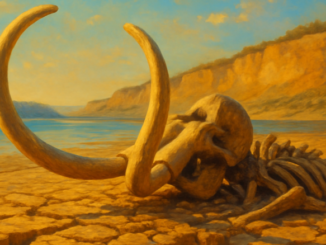
Imagine walking along the banks of the Danube River in Bulgaria and spotting something protruding from the mud — something that last saw the light of day tens of thousands of years ago. Mammoth bones, exposed by historically low water levels this summer. It’s the kind of discovery that stops you in your tracks and makes you wonder: what lies hidden beneath the surface of our world, our society, and ourselves? And what happens when those hidden layers are unexpectedly revealed? When the River Reveals Its Secrets The Danube has flowed through the heart of Europe for millennia, carrying far more than water. It carries history, culture, and apparently the remains of creatures that roamed these plains long before the first human ever set foot on its banks. This summer’s extreme drought dropped water levels so dramatically that these ancient relics became visible once more. It’s a striking image: what normally stays hidden beneath the current of daily life suddenly surfaces when conditions change. You may recognise this feeling from your own experience. There are moments in life when something forces you to look deeper than you’re accustomed to — a crisis, a loss, an unexpected event. Suddenly you see […]

Open book of Montaigne's essays beside Masonic square and compasses symbolizing reflection
Michel de Montaigne – Freemasonry & Connection

Montaigne and Connection: Steadfastness as a Bridge to Others

Picture yourself standing in a room full of strangers. Everyone is wearing a mask — not a literal one, but the invisible masks of social expectation. How often do you find yourself trying to impress rather than genuinely connect? In the sixteenth century, Michel de Montaigne wrote a penetrating essay on constancy that cuts straight to the heart of this question. His insights remain strikingly relevant for anyone reflecting on authentic human connection, and they resonate deeply with what Freemasons have pursued within their brotherhood for centuries. The Paradox of Unyielding Resolve In the twelfth essay of his first book, Montaigne examines what it truly means to be steadfast. He reveals how easily we confuse genuine inner stability with the outward appearance of immovability. That exterior can be deeply deceptive. Montaigne describes how people sometimes seem resolute out of pride or fear, while internally they are crumbling. True constancy, he argues, springs from self-knowledge and the acceptance of our human limitations. This distinction matters enormously for anyone thinking about connection with others. When you know and accept your own weaknesses, there is no need to perform. You can allow yourself to be vulnerable without losing your foundation. Montaigne saw this […]

Masonic symbols of compasses and square representing interpretation and meaning
Philosophy & Ethics

The Art of Interpretation: Finding Meaning in Life and Lodge

In 1784, Immanuel Kant penned his famous essay on the meaning of Enlightenment. His answer was simple yet profound: it is the capacity to think for oneself, to refuse to accept the world at face value and instead seek to understand it actively. What Kant described touches on something essential — the art of interpretation, or the process of giving meaning to what we experience and observe. Both in our everyday lives and within the walls of a Masonic lodge, this act of interpretation plays a central role, though it takes on distinctly different forms in each setting. What Interpretation Really Means Interpretation is the process through which we transform raw experiences, facts, and observations into something comprehensible and meaningful. It goes far beyond mere explanation. When we interpret, we connect what we perceive with our own values, our life history, and our worldview. The Greek philosopher Aristotle spoke about the necessity of knowing not only what something is, but also why it matters. Interpretation, then, is an active endeavor — it demands reflection and a willingness to pause at what often seems self-evident. In daily life, we interpret constantly, often without realizing it. A glance from a colleague, an […]

Open book with candle light symbolizing Montaigne and Masonic search for truth
Michel de Montaigne – Freemasonry & Connection

Montaigne on Prophecy and the Masonic Search for Truth

Imagine standing at a crossroads. To your left, someone whispers that the stars determine your fate. To your right, another promises that dreams reveal your future. And straight ahead lies a path with no signposts, illuminated only by your own inner light. Michel de Montaigne stood at precisely this crossroads centuries ago. His essay on prophecy is far more than a historical document — it is an invitation to reflect on how we relate to uncertainty, to truth, and to our own capacity to discern what truly matters. The Skepticism of a Searching Mind In his eleventh essay of the first book, Montaigne examines the phenomenon of prophecy with the curiosity that defines his entire body of work. He discusses divination, dream interpretation, and omens — not to condemn or embrace them, but to investigate. He quotes Cicero, who observed that out of a thousand predictions, perhaps two come true, and that people conveniently forget the failures. Montaigne wonders why humans are so eager to believe in a predetermined fate when daily experience teaches them, again and again, that the future refuses to be captured. This attitude of critical inquiry without prejudgment feels remarkably modern. Montaigne does not reject the […]

A rough ashlar stone beside a perfect cube symbolizing personal growth in Freemasonry
Personal Development & Leadership

When Big Plans Pause: Character in Times of Uncertainty

Imagine you’re about to take a major step in life. Everything is in place, the future stretches out clearly before you. And then, suddenly, everything grinds to a halt. An unexpected obstacle forces you into a standstill. This is exactly what recently happened to major media corporations when a multi-billion-dollar acquisition was paused due to legal complications. But what does such a moment of forced stillness actually reveal about who we are? And how do we handle uncertainty when our carefully laid plans are abruptly disrupted? The Test of Waiting When large organizations are forced to put their ambitions on hold, something fascinating happens beneath the surface. Behind the press releases and legal proceedings lies a deeper human drama. Executives, employees, and investors are all confronted with their own reactions to uncertainty. And it is precisely in those reactions that something essential about personality reveals itself. You may recognize this from your own life. The moment a job application is put on hold, a move is postponed, or a relationship enters uncertain waters. In these moments, your true character surfaces — not who you are when everything is going well, but who you are when the ground beneath your feet […]

Candle burning in darkness symbolizing Masonic inner light and character
Personal Development & Leadership

Power Outage in Georgia: What Darkness Reveals About Character

Somewhere in a small town in Georgia, a man stands at his window. The streetlights have gone dark, the refrigerator has fallen silent, and even the distant hum of the highway has ceased. In the sudden stillness, he hears his own breathing, his own thoughts. The entire country is plunged into darkness by a massive power outage. And in that darkness, a question arises — one far older than electricity itself: who am I, really, when no one is watching? The Mask Falls in the Dark When the lights go out, masks fall with them. In everyday life, we constantly present curated versions of ourselves. We are the friendly colleague, the patient parent, the competent professional. But what happens when those spotlights are extinguished? The recent nationwide power outage in Georgia offers an unexpected laboratory for a question that Freemasons have explored for centuries: what lies at the core of our character? In Freemasonry, we speak of working the rough ashlar into a perfect cube. This is not a decorative metaphor — it is a lifelong assignment. The question it poses is not who we appear to be in the company of others, but who we truly are when we […]

A moving train symbolizing the shared human journey and Masonic brotherhood
Personal Development & Leadership

When Connection Breaks: Lessons From a Train Incident

Picture this: you’re standing in a moving train, tensions rising, words turning into weapons, and before you know it, the unthinkable happens. A railway employee falls from the train during an altercation with a passenger. The news from Germany is shocking — but it also raises deeper questions. How can an everyday encounter spiral so far out of control? And what does it tell us about the fragile threads that bind us together as human beings? The Thin Line Between Order and Chaos You’ve probably experienced it yourself: standing in a crowded train, someone pushes, another grumbles, and you feel the atmosphere shift. Most of the time, it ends with an angry glance or a muttered remark. But sometimes — very rarely — it escalates. The incident involving a German railway worker who fell from a moving train during a dispute with a passenger shows just how quickly the thin line between order and chaos can vanish. It reminds us that every encounter, no matter how fleeting, carries the potential to heal or to wound. In Freemasonry, we often speak of building a better world, stone by stone. But what happens when those stones collide? What happens when the structure […]

Rough ashlar stone symbolising character building in Freemasonry
Personal Development & Leadership

Trust and Character: What a Lawsuit Teaches Us

You may have seen it in the news: a major technology company is taking former employees to court for allegedly stealing trade secrets and handing them to a competitor. On the surface, it sounds like a corporate dispute with little relevance to everyday life. But look a little closer, and this story touches on something universal — the question of who you are when no one is watching, the weight of your word, and the building blocks of your character. When Trust Is Broken Imagine spending years working on complex projects, gaining access to your employer’s most sensitive information, and then one day deciding to move on. What do you take with you? Your experience, your skills, your memories — certainly. But where is the line between what belongs to you and what was entrusted to you? That question now sits at the heart of a lawsuit captivating the technology world. The case is not merely about the legal definitions of intellectual property. It is about the invisible agreements we make when someone places their trust in us. It is about whether our word still means something after we close a door behind us. The Rough Ashlar as a Mirror […]

A level and whistle symbolizing impartiality in Freemasonry and refereeing
Philosophy & Ethics

Impartiality Under Pressure: The Referee and the Freemason

When the head of refereeing for an international football federation declares that even the most powerful figures have no influence over his decisions, it touches on a universal theme: the question of impartiality. How do you preserve your integrity when external pressure mounts? This challenge plays out not only on the football pitch but also in the quiet of the Masonic lodge, where brethren practice the art of judgment without prejudice. The World of the Referee In international football, the referee stands as a central symbol of fairness. Every decision is analyzed, criticized, and sometimes regarded with suspicion. When a top official must publicly declare that there has been no outside influence — not even from the highest authority — it reveals something about the world he operates in. It is a world of constant scrutiny, where every whistle can be interpreted as evidence of bias. The referee moves through an arena where millions of eyes are watching. His neutrality is not merely expected — it is demanded. And yet, he is human, carrying his own experiences, preferences, and blind spots. The art lies not in denying this humanity but in acknowledging it and rising above it. The referee must […]

Masonic level and plumb line symbolizing balance and self-reflection
Symbolism & Rituals

When Conviction Capsizes: The Hidden Risk of Certainty

Here is a paradox worth contemplating: the more firmly convinced you are of something, the greater the danger of capsizing. Not figuratively — literally. The word “convinced” traces back to nautical language, where it described a ship carrying so much weight on one side that it listed dangerously, no longer responded to the helm, and risked rolling over at the first strong gust of wind. Certainty as a risk factor. Firmness as a source of instability. Isn’t that one of the most uncomfortable truths language has been quietly trying to tell us all along? Certainty Makes You Lose the Helm Let’s take that paradox seriously. In everyday speech, we say “I’m convinced” as though it’s a virtue — a sign of resolve and strength. We admire people who stand firm, who don’t budge an inch. But an old-time sailor would have raised an eyebrow at such admiration for imbalance. To him, being “over-convinced” wasn’t a badge of honor — it was a diagnosis. A ship that had shifted all its weight to one side was a ship in distress. The rudder rendered useless, the crew at the mercy of forces they could no longer steer against. The shift in meaning […]

A camouflaged tree snail blending into wet bark in a tropical rainforest
Philosophy & Ethics

Invisible Tree Snails and Ethics: When Hiding Is Wisdom

Imagine walking through a tropical rainforest as the first drops of rain begin to fall. Everything around you shifts and transforms. And there, on a tree trunk barely an arm’s length away, a snail disappears right before your eyes — not by crawling away, but by changing color until it blends perfectly into the wet bark. Biologists recently announced the discovery of a new species of tree snail with exactly this ability. It sounds like magic, but it’s evolution. And it raises a question that sits at the very heart of Freemasonry: when is it ethically right to make yourself invisible? The Art of Disappearing The newly discovered species, found in the rainforests of Southeast Asia, possesses a remarkable adaptive ability. The moment raindrops touch its skin, specialized pigment cells activate, rendering the snail nearly invisible against the backdrop of wet bark. This isn’t a conscious decision on the snail’s part — it’s a finely tuned survival mechanism that has evolved over millions of years. Predators searching for an easy meal simply look right through it. What makes this discovery truly fascinating isn’t just its biological complexity. It’s the deeper question it raises about visibility and vulnerability. When do you […]

An open antique book with Masonic square and compasses in candlelight
Freemasonry & Connection

Montaigne on Intentions: The True Measure of Our Inner Work

It is late in the evening. A Freemason sits alone in his study, a yellowed book open before him. He reads a passage by a sixteenth-century French thinker and feels the words reaching across the centuries, as though they were written for him personally. The question that surfaces is at once simple and unsettling: not what he has done, but why he did it. In that moment, two traditions touch — separated by four hundred years, yet united in the same search for sincerity. The Heart of Montaigne‘s Essay In one of his brief but penetrating essays, Montaigne argues that our actions cannot be separated from the intentions behind them. The results of what we do may shine in the eyes of the world, but the true value lies in what moved us when we began. A good deed performed out of vanity carries a very different weight than the same act born of genuine compassion. Montaigne invites us to look beyond the surface — past the praise and criticism of others — into the quiet chamber of our own conscience. This is no idle thought experiment. Montaigne warns that we are remarkably skilled at deceiving ourselves. We construct noble […]

Rough ashlar stone symbolizing personal growth and resilience in Freemasonry
Personal Development & Leadership

Chance and Vulnerability: Two Perspectives on Fate

A man falls asleep in his tent on a beach in the Netherlands. Morning approaches, the sea murmurs, and life seems peaceful. Then the unthinkable happens: a maintenance tractor drives over his tent. The news is shocking — not just for its tragedy, but for what it reveals about the fragility of human existence. How do we process such random events? And does it matter whether we have spent time consciously examining our own character? Two worldviews, two perspectives on the same brutal reality. The Outsider: Chance as Chaos For many people, an accident like this simply confirms the randomness of life. The world is unpredictable, even dangerous, and we are at the mercy of forces beyond our control. This response is deeply human and entirely understandable. We look for someone to blame, for explanations, for ways to reassure ourselves that something like this could never happen to us. The outsider — here meaning someone unaccustomed to systematic self-reflection — tends to experience fate as something purely external. It is something that happens to you, something you react to, but over which you have little influence. Personality is seen as more or less fixed: you are who you are, and […]

Stone fortress wall symbolizing Masonic steadfastness and inner strength
Freemasonry & Connection

When Your Walls Fall: Montaigne and the Art of Steadfastness

Imagine you’re under pressure. Maybe it’s a conflict at work, a fracture in a friendship, or a season when everything seems to be crumbling around you. You feel besieged — surrounded by circumstances you can’t fully control. In moments like these, a single question emerges: how do you stand your ground without losing yourself? Michel de Montaigne, the sixteenth-century philosopher, wrestled with exactly this question in his short but powerful essay on the commander of a besieged fortress. His reflections offer surprisingly practical guidance for anyone seeking steadfastness and human connection in times of adversity. The Heart of the Dilemma In this essay, Montaigne describes a situation that appears military on the surface but is universal at its core. A commander of a besieged fortress must choose: when do you negotiate, when do you hold firm, and when do you yield? It’s not just about walls of stone — it’s about the inner walls we build when we feel threatened. The philosopher asks what honor, courage, and wisdom truly mean when the pressure becomes unbearable. You may never have commanded a garrison, but you’ve almost certainly faced your own version of this dilemma. Think of a moment when you had […]

Symbolic image of hands connecting across time representing Masonic brotherhood
Freemasonry & Connection

Montaigne on Connection: When Our Soul Reaches Beyond

An old man sits in silence beside the bed of his dying friend. No words remain — only the warmth of a hand resting upon a hand. And yet he feels something within himself reaching beyond this moment, beyond this room, beyond his own boundaries. It is precisely this mystery that the sixteenth-century philosopher Michel de Montaigne sought to understand: how our emotions can transcend our bodies and our time, and what that reveals about the nature of human connection. The Question Montaigne Asked In his essay Whether Our Emotions Carry Themselves Beyond Us, Montaigne examines a riddle that every thoughtful person has encountered at some point. Why do we worry about what will happen after we die? Why do we feel sorrow now for future losses, or joy for events we will never live to witness? It seems irrational, yet it is profoundly human. Montaigne suggests that the soul is not imprisoned within the boundaries of the body or a single lifespan. It extends outward — toward others, toward the future, toward ideals larger than ourselves. This insight touches a fundamental truth about human existence: we are not isolated islands. Our emotions, our worries, and our dreams weave themselves […]

Freemason in contemplation with square and compasses symbolizing mindfulness
Spiritual Traditions

Mindfulness in Freemasonry: The Art of Inner Awareness

In a world dominated by speed and distraction, mindfulness offers a powerful counterbalance. While Freemasonry doesn’t explicitly label it as such, mindfulness plays a crucial role in the practice of rituals, symbolism, and reflection within the Craft. It invites Freemasons to be fully present in the moment and to consciously work on the rough ashlar of their character. Mindfulness in Masonic Rituals One of the most striking aspects of Freemasonry is its use of ritual. Masonic rituals are carefully designed to draw Brethren out of their daily routines and guide them into a concentrated, almost meditative state of mind. The tracing board at the center of the lodge, the checkered floor, and the lesser lights all symbolize a balance between opposing forces — light and darkness, good and evil. Freemasons are encouraged to seek this balance not only in the world around them but also within themselves. This is the very essence of mindfulness: awareness of one’s inner processes and the pursuit of harmony. Symbolism as a Guide to Awareness Freemasons work on themselves through the language of symbolism. The square and compasses remind us of measure and justice, while the rough ashlar represents the ongoing journey of personal refinement. […]

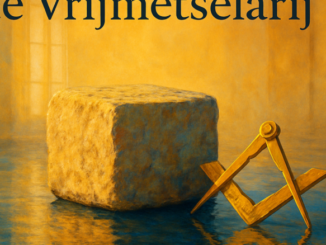
Vrijmetselarij - Montaigne over moed en menselijkheid
Michel de Montaigne

Montaigne on Courage and Humanity

In the opening chapter of his Essays, Michel de Montaigne immediately shows what kind of thinker he is. He offers no rules, no instructions, and no moral conclusions. He observes. He compares. And he invites the reader to think for themselves. His central idea is simple, yet unsettling: completely different attitudes can sometimes lead to the same outcome. Humility may work. Fearless courage may also work. But just as often, neither does. With that, Montaigne sets the tone. Anyone looking for fixed answers will not find them here. No fixed formula for right action Montaigne describes situations in which people seek mercy from a victor. Sometimes by pleading and submitting. Sometimes by standing firm and refusing to show weakness. At times this evokes compassion. At other times, respect. And sometimes it provokes even greater cruelty. His point is clear: human behavior cannot be reduced to rules. What moves one person may irritate another. What inspires admiration today may provoke jealousy tomorrow. For those interested in Freemasonry, this feels familiar. Freemasonry does not promise ready-made answers but teaches how to deal with complexity. Not by judging, but by understanding. Compassion and admiration One of the most striking moments is Montaigne’s honesty […]