Explore profound mystical claims in The Secret of Secrets. Discover esoteric teachings, noetic science, and hidden wisdom explored through Freemasonry’s spiritual lens.
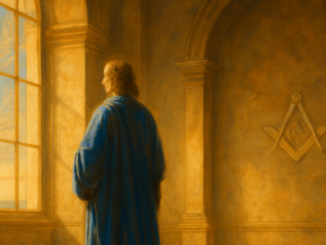
Symbolism & Rituals
Noetic Science: What Does The Secret of Secrets Claim?
Can the human mind alter physical reality? This question, as old as philosophy itself, takes on a new form in Dan Brown’s The Secret of Secrets. The novel introduces readers to a fascinating yet controversial field: noetic science — a discipline that claims human thoughts and intentions can produce measurable effects on matter. But what does this claim actually amount to, and where does it intersect with the age-old quest for hidden knowledge that lies at the heart of Freemasonry? The Premise: Consciousness as a Force In The Secret of Secrets, Dan Brown presents noetic science as a legitimate field of research in which scientists experiment with the measurable influence of human intention on the physical world. According to the novel’s storyline, focused thoughts and collective meditation can actually alter the molecular structure of water, disrupt random number generators, and even accelerate healing processes. The book suggests that these insights have long been suppressed by powerful institutions but are now finally receiving scientific validation. Brown does not present these ideas in isolation. He connects them to a rich tradition of esoteric wisdom — Hermetic philosophy, the Kabbalistic Tree of Life, and the mystical traditions preserved within Freemasonry. The implication is […]