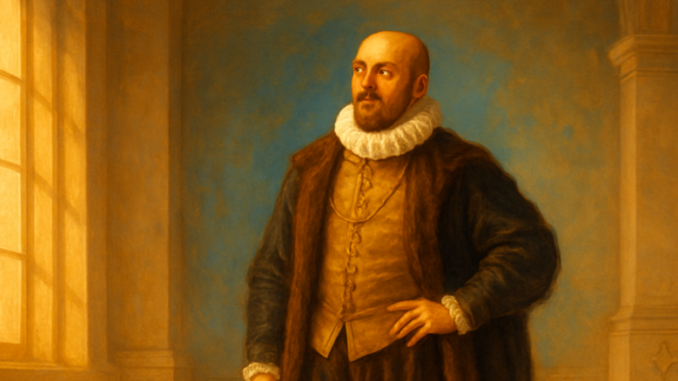
Are people truly unequal, or is the difference between us merely an illusion of outward display? In his forty-second essay, ‘On the Inequality Amongst Us,’ Michel de Montaigne poses an uncomfortable question that remains strikingly relevant today. He dissects the gap between the appearance of greatness and the true measure of a person. His essay is an invitation to look beyond titles, possessions, and reputation — and to search for what truly shapes a person from within.
The Core Idea: Outward Show Versus Inner Worth
At the heart of this essay lies the tension between a person’s social standing and their genuine inner value. Montaigne argues that we are naturally inclined to judge others by their rank, wealth, clothing, and power — yet these external markers reveal nothing about the virtue or character of the person behind them. He compares it to a column draped in a magnificent cloth: the observer admires the velvet but forgets that the pillar beneath may be cracked and weak. In this way, we constantly confuse the packaging with the content.
Montaigne draws a sharp distinction here. The honour we pay to a king or a nobleman, he contends, actually belongs to the kingship or the noble title itself — not to the individual who happens to occupy that position. Strip the office away, and what remains? Sometimes a fearful, doubting, or even insignificant human being. With this insight, Montaigne taps into a philosophical tradition stretching back to the Stoics. Thinkers like Seneca and Marcus Aurelius similarly emphasised that true greatness does not reside in external circumstances, but in the way a person shapes their character and aligns their actions with virtue.
Montaigne’s Examples: From Kings to Servants
To strengthen his argument, Montaigne draws on a wealth of examples from classical antiquity and his own era. He references Plutarch, who chronicled the lives of great statesmen and military commanders and revealed how these men often proved petty, ill-tempered, or weak in their private lives. The general who led thousands of soldiers into battle could not manage a single insolent servant in his own household. The philosopher who lectured on virtue behaved like a miser behind closed doors.
Montaigne also invokes the image of the Persian kings, surrounded in their palaces by splendour and luxury, whose true courage and wisdom were rarely put to the test. Against these figures, he sets the simple man — the farmer or the craftsman — who, without any display, goes about his daily work and sometimes demonstrates more steadfastness and honesty than many a prince. The lesson is clear: social hierarchy and human worth rarely run in parallel.
Stripping the Person Bare
One of the most striking passages in the essay is the moment Montaigne proposes, metaphorically, to undress a person. Take away their possessions, their entourage, their titles, and examine what is left. Is this person courageous, just, wise, and temperate? Or, without their outward trappings, are they no more than an ordinary, fallible human being? Montaigne cites Horace and Seneca in this context, both of whom wrote about the transience of earthly glory. What is a throne today may be a scaffold tomorrow. Only the virtue a person has cultivated within themselves truly belongs to them.
The real inequality between people does not lie in rank or possessions, but in the degree to which someone has shaped their own character and aligned their conduct with virtue. This idea has far-reaching implications. If external markers are ultimately irrelevant, then the only meaningful comparison between people is one based on inner qualities. Montaigne is not arguing for a naive form of equality — he acknowledges that people differ in talent, wisdom, and courage. But those differences become visible in how a person lives, not in the position they hold.
An Ethical Call That Echoes Through the Centuries
This essay is more than a philosophical exercise; it is an ethical call to action. Montaigne asks his reader to consider: do I judge others by their essence or by their appearance? And perhaps more painfully: do I judge myself by what I truly am, or by the image I present to the outside world? These questions go to the very heart of what personal growth and self-knowledge mean.
This theme is also deeply rooted in the Masonic tradition, where the work of shaping one’s own rough stone is a continual invitation to look beneath the surface and honestly confront one’s inner condition. The Freemason who stands before the rough ashlar is not asked about his title or his wealth — he is asked about the quality of his work on himself. Montaigne, though not a Mason, speaks a language that resonates powerfully with anyone committed to the craft of self-improvement.
The Enduring Relevance of Montaigne’s Vision
In an age where social status, follower counts, job titles, and material success are often treated as the ultimate measures of worth, Montaigne’s essay feels remarkably current. He reminds us that the gap between outward prestige and inner virtue is just as wide in every century. The examples change, but the human tendency to impress others with the wrong things remains the same. Montaigne invites us to stop admiring the cloth and start examining the pillar beneath it. That is no easy task, but it may be the most honest step a person can take on the path toward genuine self-knowledge.
What makes this essay especially compelling is that Montaigne does not exempt himself from his own critique. He acknowledges his own vanities and weaknesses, and that candour makes his argument all the more powerful. He does not preach from a pulpit; he thinks aloud, groping and doubting, just as he does in all of his essays. It is precisely this attitude of sincere self-reflection that makes his work, centuries after it was written, essential reading for anyone who wonders what it truly means to be human.
Montaigne’s meditation on inequality is ultimately not about others — it is about us. It challenges every reader, and especially those on a Masonic path, to practise what the Craft teaches in its most fundamental form: look beyond the exterior, do the difficult inner work, and measure yourself not by what you display but by what you are when no one is watching. In a world obsessed with surfaces, that remains the most radical act of all.
Copyright text & image: devrijmetselaar.nl
Texts are based on the ideas and content of the author of devrijmetselaar.nl, reviewed, corrected, and supplemented with the assistance of OpenAI. Images are created based on the ideas of the author of devrijmetselaar.nl using OpenAI/DALL-E.
Frequently Asked Questions
What is the main argument Montaigne makes in 'On the Inequality Amongst Us'?
Montaigne argues that outward inequality based on titles, wealth, and social status does not reflect true human worth. He contends that we mistake external markers like clothing, rank, and power for genuine inner value, when in reality a person's true greatness lies in their character and virtue, not in their position or possessions.
How does Montaigne distinguish between a person's honor and their position?
Montaigne makes a crucial distinction: the honor we pay to a king or nobleman actually belongs to the office or title itself, not to the individual holding it. He argues that if you strip away the position, the person beneath may be fearful, doubtful, or insignificant. Therefore, we honor the role, not necessarily the person.
What examples does Montaigne use to support his thesis about inequality?
Montaigne draws on classical examples from Plutarch's writings about great statesmen and military commanders, demonstrating how these celebrated figures were often petty or weak in their private lives. He contrasts grand figures like Persian kings surrounded by luxury with ordinary people like farmers and craftsmen who display genuine virtue without any outward display or pretense.


Be the first to comment