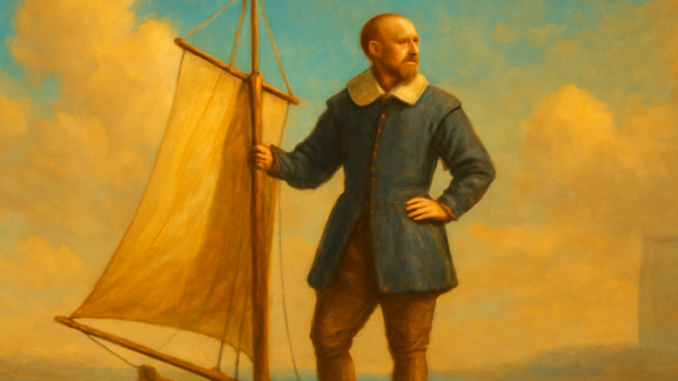
When you first encounter Montaigne’s thoughts on human equality, there is a flash of recognition. His ideas feel strikingly modern, as though they could have been written yesterday. But behind that apparent simplicity lies a rich intellectual heritage. Stoic philosophers, Greek biographers, and Renaissance humanists all left their mark on this brief but powerful essay. Understanding these philosophical sources not only deepens your appreciation of Montaigne — it also offers practical tools for applying his insights on equality in your own life and, for those who walk the Masonic path, within the Lodge.
The Stoic Foundation of Human Worth
Montaigne was an avid reader of the Roman Stoics, and Seneca served as his foremost guide. In Seneca’s letters to Lucilius, the same message appears again and again: fortune, birth, and social standing are external trappings that reveal nothing about a person’s inner worth. Seneca wrote that a slave could be morally superior to his master — a remarkably radical idea in the first century AD. Montaigne absorbed this insight and applied it to his own era, where the lines between nobility and common citizenry were sharply drawn.
Marcus Aurelius, the philosopher-emperor, likewise emphasized in his Meditations that all human beings share in the same universal reason. Whether you are an emperor or a beggar, you have access to the same inner wellspring of wisdom. This idea of a shared human nature forms the bedrock of Montaigne’s essay on equality. The practical implication is clear: judge people not by their title or possessions, but by their character and their actions. For Freemasons, this resonates deeply — within the Lodge, all Brothers meet on the level, regardless of rank or station in the outside world.
Plutarch as the Great Storyteller
Where Seneca supplied the philosophical principles, Plutarch provided the stories. His Parallel Lives, in which he placed a Greek hero alongside a Roman counterpart, was Montaigne’s favorite reading. Plutarch demonstrated that greatness is not the exclusive property of one nation or one social class. A Greek general could be every bit as virtuous as a Roman consul, and both could fail spectacularly despite their noble origins.
This comparative method profoundly influenced Montaigne’s way of thinking. In his essay on equality, he constantly draws parallels — between high and low, between past and present, between himself and others. The message is always the same: external circumstances are accidents of fate; what matters is how you respond to them. When you apply this principle in your daily life, you find it liberating. It frees you from unnecessary hierarchical thinking and encourages you to see the person behind the position.
Renaissance Humanism and the Rediscovery of Human Dignity
Montaigne wrote in the late sixteenth century, in the heart of the Renaissance. This period was defined by a renewed fascination with classical antiquity and a growing confidence in human potential. Humanists such as Erasmus and Pico della Mirandola had placed the individual back at the center of the intellectual stage. The human being was no longer merely a sinner in need of salvation, but a creature endowed with dignity and potential.
This humanistic vision permeates Montaigne’s work. He believed that every person, provided they are willing to engage in honest self-reflection, is capable of acquiring wisdom. Birth does not determine your destiny; your own effort does. This is not an abstract principle — it is an invitation to action. Ask yourself honestly: do I judge people by their titles, or by who they truly are?
As Montaigne’s thinking suggests: equality begins with recognizing that every human being, regardless of origin or position, possesses the same inner dignity and the same capacity for virtue. This conviction lies at the very heart of Masonic thought, where every candidate enters the Lodge stripped of outward distinctions and is valued for the quality of their inner life.
Skepticism as a Liberating Force
Alongside Stoicism and humanism, skepticism plays a vital role in Montaigne’s thinking. The Greek skeptic Pyrrho and his later followers taught that absolute knowledge is unattainable. For Montaigne, this epistemological humility carried a profound ethical consequence: if no one can fully possess the truth, no one has the right to elevate themselves above another.
His famous motto, “Que sais-je?” — “What do I know?” — is the perfect expression of this stance. It is not a cynical question but an invitation to intellectual humility. When you acknowledge that your own insights are limited, you naturally become more open to the perspectives of others. This is an immensely practical tool in discussions and encounters: approach others not as inferiors, but as people who may know something you do not. In the context of the Lodge, this attitude transforms every meeting into an opportunity for mutual learning and genuine Brotherhood.
A Practical Legacy for Today
These philosophical currents are not merely of historical interest. They offer concrete guidance for anyone reflecting on equality, human dignity, and Brotherhood today. The Stoic focus on inner worth reminds us not to judge by appearances. Plutarch teaches us the power of exemplary lives. Humanism invites us to pursue self-improvement. And skepticism counsels us to remain humble.
Consider these principles as daily practices:
Judge people by their actions, not by their background. Seek inspiration in the stories of people from all walks of life. Acknowledge your own limitations and remain open to different perspectives. Treat self-reflection as the key to personal growth.
Montaigne’s essay is not an isolated work — it stands at the crossroads of ancient wisdom traditions. By knowing its sources, you not only understand the text more deeply, but you also gain the tools to put the principles of equality and human dignity into practice in your own life.
The philosophical background of Montaigne’s essay on equality is rich and multifaceted. Stoicism, the exemplary narratives of Plutarch, Renaissance humanism, and skepticism converge in his thinking to form a powerful argument for human equality. Understanding these sources is not an academic exercise — it is an invitation to act. Every encounter, every conversation, every judgment you make can be infused with this awareness: that true worth comes from within, and that every human being carries the same potential for dignity. That insight, firmly rooted in centuries of philosophical tradition, remains as vital today as it was in Montaigne’s time — and it continues to illuminate the path for all who seek to meet their fellow human beings on the level.
Copyright text & image: devrijmetselaar.nl
Texts are based on the ideas and content of the author of devrijmetselaar.nl, reviewed, corrected, and supplemented with the assistance of OpenAI. Images are created based on the ideas of the author of devrijmetselaar.nl using OpenAI/DALL-E.
Frequently Asked Questions
What is the main philosophical source of Montaigne's ideas on equality?
Montaigne's thoughts on equality are primarily grounded in Stoic philosophy, particularly the works of Seneca and Marcus Aurelius. Seneca taught that external circumstances like fortune, birth, and social standing do not determine a person's inner worth, while Marcus Aurelius emphasized that all humans share in universal reason. These Stoic principles formed the bedrock of Montaigne's essay on equality.
How did Plutarch influence Montaigne's perspective on equality?
Plutarch influenced Montaigne through his Parallel Lives, which compared Greek heroes with Roman counterparts to demonstrate that greatness is not exclusive to any nation or social class. This comparative method profoundly shaped Montaigne's thinking, leading him to constantly draw parallels between different people and circumstances to illustrate that external conditions do not determine a person's true value.
How does Montaigne's philosophy on equality relate to Freemasonry?
Montaigne's emphasis on judging people by their character and actions rather than their titles or possessions resonates deeply with Masonic principles. In the Lodge, all Brothers meet on the level, regardless of their rank or station in the outside world, embodying the same philosophy of human equality that Montaigne drew from Stoic and classical sources.


Be the first to comment