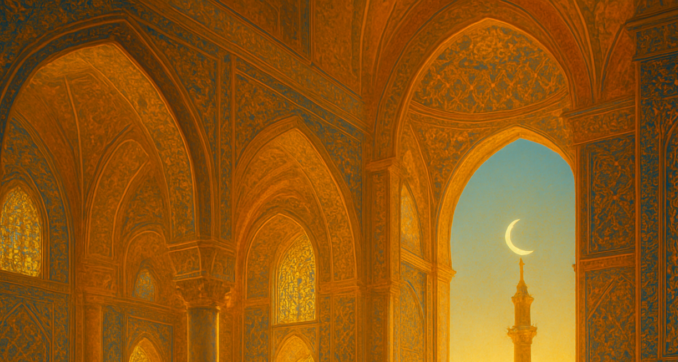
You may have experienced it yourself: sitting at your desk late at night, pen in hand or fingers hovering over a keyboard, and realizing that the act of writing is actually organizing your thoughts. What felt vague and restless suddenly becomes clear the moment you capture it in words. That experience — where the pen becomes not just a tool for communication but a vehicle for understanding — lies at the heart of one of the most remarkable chapters in the Quran. Surah 68, titled The Pen, opens with an oath sworn upon the pen and what it writes. It is a powerful image that reaches far beyond the inkwell, touching the very essence of what it means to grow consciously, morally, and spiritually.
What Does Surah The Pen Tell Us?
The Pen is one of the earliest revelations in the Quran, dating back to the Meccan period. The surah opens with the Arabic letter Nun, followed by the words: “By the pen and what they inscribe.” This opening line is extraordinary. God does not swear by His own power or by the forces of nature, but by a human instrument — the writing tool. In doing so, the pen is elevated to something sacred: a bridge between the human and the divine.
The surah then turns to the character of the Prophet Muhammad, defending him against accusations of madness. A parable follows about the owners of a garden who refuse to share their harvest with the poor, only to find their garden destroyed overnight. The message is unmistakable: arrogance and greed lead to ruin, while sincerity and generosity are the true path to inner wealth.
The Pen as an Instrument of Awareness
When you sit with the opening verses of this surah, what strikes you is the universality of its message. The pen here does not simply stand for recording information. It represents the human capacity to reflect, to think deeply about experience, and to distinguish truth from falsehood.
In the Islamic tradition, knowledge is considered one of the highest forms of worship. The very first revelation to the Prophet Muhammad was the command: “Read!” This emphasis on reading and writing as spiritual acts resonates deeply with other wisdom traditions. Think of Aristotle, who regarded the examined life as the essence of human dignity. Or consider Michel de Montaigne, who used his famous essays as instruments of self-knowledge — wielding the pen as a mirror turned inward.
Striking Parallels with Freemasonry
You might wonder what a Quranic chapter about the pen has to do with Freemasonry. More than you might initially think. Freemasonry, at its core, is a spiritual quest for light — for knowledge, for deeper insight into yourself and the world around you. The pen in this surah functions in precisely the same way: as a light-bringer, an instrument that dispels darkness and ignorance.
In the Masonic tradition, the candidate is led from darkness into light during initiation. That light is not a physical phenomenon but a symbol of awakening — the ability to critically examine your own actions and to improve them. The pen in the Quran serves the same purpose: it illuminates, clarifies, and calls the reader to honest self-examination.
The parable of the garden owners strengthens this parallel. Their story is one of moral failure: they possessed abundance but refused to share. In Freemasonry, working on the “rough stone” is nothing other than refining your own character — overcoming precisely those tendencies toward selfishness and pride. The Pen holds up a mirror to its reader, just as the ritual in the lodge confronts the brother with his own imperfections.
The pen is to the Quran what light is to the lodge: a force that breaks through ignorance and invites us to honest self-inquiry.
Character Over Outward Appearances
One of the most striking themes in The Pen is the emphasis on inner character over outward show. The Prophet is praised in this surah for his “exalted character,” while those who mock him are portrayed as shallow and morally weak.
This theme touches a fundamental Masonic principle: it is not your social standing, your wealth, or your eloquence that matters, but the sincerity of your heart and the steadfastness of your deeds. Johann Wolfgang von Goethe — himself a Freemason and deeply interested in Islamic culture and poetry — wrote in his West-Eastern Divan with great admiration for the spiritual depth of the Islamic tradition. For Goethe, the boundaries between different wisdom traditions were porous: everywhere he recognized the same search for truth and beauty.
What the Garden Parable Teaches About Brotherhood
The parable of the garden deserves closer attention. The owners secretly conspire to exclude the poor from the harvest. When they arrive at their garden the next morning, they find nothing but devastation. Only then do they realize their error and return, repentant, to better intentions.
This narrative contains a lesson that every Freemason recognizes: true brotherhood means sharing, not hoarding. The Masonic ideal of charity is not an abstract concept but a daily practice. The garden in the surah can be read as the lodge itself — or more broadly, as the community in which you live. When you stop contributing, when you close yourself off to the needs of others, it is not only the community that withers but your own inner life as well.
Writing as an Inner Journey
There is yet another layer in this surah that may resonate if you have ever kept a journal or set your reflections down on paper. The pen invoked in the opening verse is also an invitation to self-reflection. In many Masonic traditions, the candidate is asked — either before or after initiation — to write a “spiritual testament”: a text in which he articulates his deepest convictions and intentions.
This writing is not a formality. It is a ritual act through which you compel yourself to be honest about who you are and who you aspire to become. The pen becomes a chisel for the soul — shaping thought into form, forcing clarity where there was confusion. In this sense, the Quranic oath upon the pen and the Masonic practice of written self-examination share the same sacred purpose: they both ask you to stop, to look inward, and to commit your truth to the page.
Whether you approach the pen from a spiritual, philosophical, or purely personal perspective, the act of writing remains one of the most powerful tools we have for inner transformation. It slows the rushing current of thought and gives shape to what would otherwise remain formless. It turns the invisible into something you can hold, examine, and refine — much like the rough stone that is gradually worked into something worthy of the temple.
Surah 68 reminds us that the pen is far more than a writing instrument — it is a sacred tool of consciousness, moral reflection, and spiritual growth. Its themes of humility, generosity, and honest self-examination echo through the centuries and across traditions, finding a natural home in the Masonic quest for light. Whether you pick up a pen to write a journal entry, a letter to a brother, or a testament of your beliefs, you are participating in an ancient and deeply human act: the pursuit of truth through the written word. In the lodge and on the page, the journey is the same — from darkness toward understanding, from the rough stone toward something closer to the ideal.
Copyright text & image: devrijmetselaar.nl
Texts are based on the ideas and content of the author of devrijmetselaar.nl, reviewed, corrected, and supplemented with the assistance of OpenAI. Images are created based on the ideas of the author of devrijmetselaar.nl using OpenAI/DALL-E.
Frequently Asked Questions
What is Surah 68 (The Pen) in the Quran about?
Surah 68, titled The Pen, opens with an oath sworn upon the pen and what it writes. It is one of the earliest revelations from the Meccan period. The surah begins with the Arabic letter Nun followed by 'By the pen and what they inscribe,' elevating the pen to something sacred as a bridge between the human and the divine. It then defends Prophet Muhammad against accusations of madness and includes a parable about garden owners who refuse to share their harvest with the poor, ultimately leading to their ruin, illustrating that arrogance and greed lead to destruction while sincerity and generosity lead to true inner wealth.
Why does the Quran emphasize writing and the pen as spiritual acts?
In Islamic tradition, knowledge is considered one of the highest forms of worship. The first revelation to Prophet Muhammad was the command 'Read!' This emphasis on reading and writing reflects that the pen represents more than a tool for recording information; it represents the human capacity to reflect, think deeply about experience, and distinguish truth from falsehood. Writing is viewed as a vehicle for organizing thoughts and achieving understanding, making it a means of spiritual growth and moral development.
How does Surah The Pen relate to Freemasonry?
While the article does not fully complete the explanation of parallels between Surah The Pen and Freemasonry, it suggests there are significant connections between the Quranic emphasis on writing as a spiritual instrument and Masonic principles. The article indicates that understanding how the pen serves as a tool for consciousness, reflection, and distinguishing truth from falsehood resonates with Masonic teachings, though the full details of these striking parallels are not elaborated in the provided excerpt.

Be the first to comment