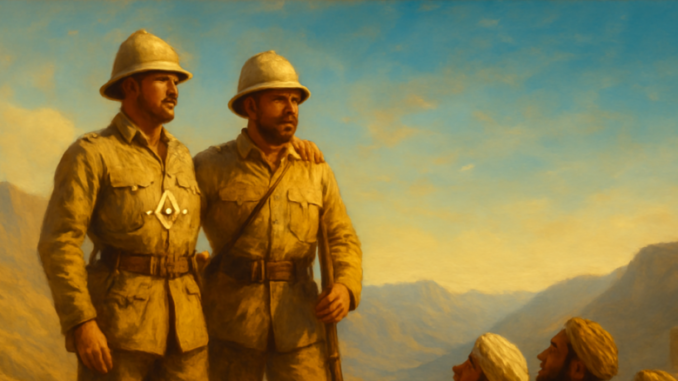
Freemasonry is about far more than symbols and rituals — it is rooted in ideals such as brotherhood, loyalty, and personal growth. These very themes lie at the heart of The Man Who Would Be King (1975), a sweeping adventure film based on a story by Rudyard Kipling. Directed by John Huston and starring Sean Connery and Michael Caine, the film is a powerful exploration of human ambition, its rewards, and its devastating consequences.
The Plot: Power and Downfall
The story follows two former British soldiers, Daniel Dravot (Sean Connery) and Peachy Carnehan (Michael Caine), who hatch an audacious plan to carve out a kingdom for themselves in a remote corner of Afghanistan. Armed with military expertise and cunning manipulation, they manage to convince the local population that they are gods. Their newfound status grants them unprecedented power — but it also introduces temptations that put their brotherhood to the ultimate test.
A pivotal element in their rise and eventual fall is the influence of Masonic values, particularly brotherhood and loyalty. In a crucial scene, Dravot wears a Masonic emblem that the local people recognize and interpret as a sign of divinity. This moment becomes a turning point in the plot, setting the stage for everything that follows.
Freemasonry in the Film
While The Man Who Would Be King is not explicitly about Freemasonry, its themes are deeply intertwined with Masonic principles. Brotherhood, the responsible use of power, and the pursuit of knowledge all feature prominently throughout the narrative. Dravot’s Masonic insignia plays a key role in the story, and the moral lessons the characters learn — and fail to learn — resonate strongly with Masonic ideals.
The film powerfully illustrates how ambition and power can reveal both the best and the worst in human nature. Much like the Masonic journey, the story centers on personal growth and self-improvement. Yet it also serves as a stark warning about the dangers of hubris and unchecked ego — themes that any Freemason will find deeply relevant.
The Bond Between Brothers
At its core, The Man Who Would Be King is a story about the bond between two men. The friendship between Dravot and Carnehan is the emotional backbone of the entire film. Their loyalty to each other is tested by wealth, power, and the intoxicating allure of being worshipped as gods. The tension between personal ambition and fraternal duty drives the narrative forward, creating some of the most compelling moments in the film.
For Freemasons, this dynamic will feel familiar. The Craft teaches that brotherhood requires sacrifice, humility, and a willingness to put the welfare of others above personal gain. Dravot’s tragic arc demonstrates what happens when those principles are abandoned in favor of self-glorification.
Why This Film Is a Must-See
The Man Who Would Be King is far more than an adventure film. It is a profound reflection on human behavior, the nature of power, and the fragile foundations of friendship and loyalty. The remarkable chemistry between Connery and Caine brings depth and emotional weight to every scene, while the stunning cinematography captures the beauty and mystique of the remote setting.
For those with an interest in Freemasonry, the film offers rich layers of symbolism and moral reflection. It is a timeless classic that both inspires and challenges the viewer to consider the consequences of unchecked ambition and the enduring importance of true brotherhood.
Watch the trailer below:
The Man Who Would Be King remains one of cinema’s most compelling explorations of Masonic themes. Through its tale of ambition, brotherhood, and downfall, it reminds us that true greatness lies not in the pursuit of power, but in the strength of the bonds we forge with one another. For Freemasons and film lovers alike, this is a story that endures — a timeless reminder that loyalty and humility are the cornerstones of a life well lived.
Copyright text & image: devrijmetselaar.nl
Texts are based on the ideas and content of the author of devrijmetselaar.nl, reviewed, corrected, and supplemented with the assistance of OpenAI. Images are created based on the ideas of the author of devrijmetselaar.nl using OpenAI/DALL-E.
Frequently Asked Questions
What is the connection between Freemasonry and The Man Who Would Be King?
While not explicitly about Freemasonry, the film deeply explores Masonic principles such as brotherhood, loyalty, and personal growth. A pivotal moment features protagonist Daniel Dravot wearing a Masonic emblem that becomes central to the story's plot and themes. The film powerfully illustrates how these Masonic ideals can be either honored or abandoned, serving as a meaningful meditation on the values the Craft teaches.
How does the film demonstrate Masonic values of brotherhood?
The friendship between Dravot and Carnehan forms the emotional core of the film, showing how brotherhood is tested by ambition and power. Their relationship illustrates Masonic principles that brotherhood requires sacrifice, humility, and placing others' welfare above personal gain. The film serves as a powerful reminder of what Freemasons learn: that true fraternal bonds are built on mutual respect and shared values, not self-glorification.
What lessons can Freemasons learn from this film?
The Man Who Would Be King demonstrates how unchecked ambition and ego can corrupt even the strongest bonds and highest ideals. Freemasons will find the film particularly relevant as it warns against hubris while celebrating the transformative power of personal growth and self-improvement. The film reinforces the Masonic principle that true success comes through building others up and maintaining integrity, not through the pursuit of power for its own sake.
Why is The Man Who Would Be King considered a must-see for those interested in Freemasonry?
The film offers a profound exploration of human nature, power, and the values that matter most—themes that resonate deeply with Masonic teaching and philosophy. Through its compelling narrative and stellar performances by Sean Connery and Michael Caine, it examines what happens when Masonic principles are either upheld or abandoned. For anyone interested in understanding the real-world consequences of loyalty, brotherhood, and moral choice, this classic film remains essential viewing.

Be the first to comment