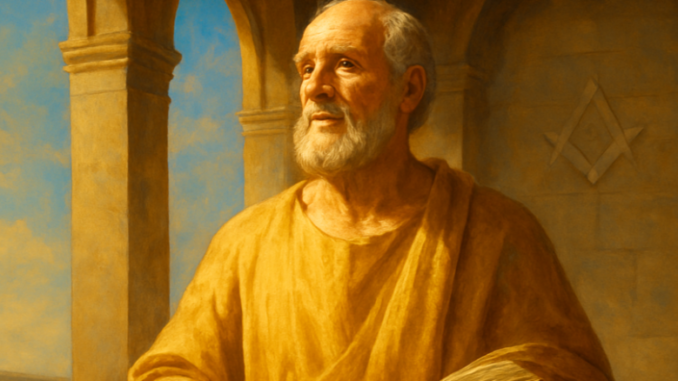
In 65 AD, the Roman philosopher Lucius Annaeus Seneca composed a series of letters to his friend Lucilius — a body of correspondence that would become one of the most influential philosophical works of antiquity. The fifth letter addresses a theme that still resonates powerfully today: how can we live a philosophical life without alienating ourselves from the society around us? Seneca warns against the pitfalls of both ostentatious display and excessive asceticism, pointing instead to a middle path that remains strikingly relevant — not least for those who walk the Masonic path of quiet self-improvement.
The Historical Context of the Letter
Seneca wrote his letters to Lucilius during the final years of his life, after withdrawing from the political arena of imperial Rome. Lucilius, who was serving as procurator of Sicily at the time, sought guidance from his older friend on how to lead a virtuous life. The fifth letter is essentially a response to Lucilius’s enthusiastic embrace of philosophy. Seneca, drawing on years of experience as an adviser at the court of Emperor Nero, knew the dangers of extremes all too well.
In first-century Roman society, philosophy was not merely an intellectual pursuit — it was a way of life that became visible through clothing, conduct, and social interaction. Some philosophers deliberately wore torn cloaks or walked barefoot to demonstrate their contempt for worldly concerns. Others gathered in exclusive circles that viewed ordinary citizens with suspicion. It is against this backdrop that Seneca delivers his admonition.
The Core Message: Moderation as Virtue
The central theme of the fifth letter is a warning against outward displays of philosophical devotion. Seneca emphasizes that true philosophy does not manifest itself through conspicuous clothing or attention-seeking behavior. On the contrary, the wise person distinguishes himself through inner qualities that are not immediately visible to the outside world.
True wisdom reveals itself not in outward show, but in the quiet strength of a well-ordered inner life.
Seneca uses the example of people who deliberately neglect their hair, wear crumpled togas, or grow unkempt beards in order to appear philosophical. He points out that such behavior repels rather than attracts. Anyone who truly wishes to inspire others toward philosophy, he argues, would do better to lead a life that invites imitation rather than aversion.
Philosophy and the Community
One of the most remarkable aspects of this letter is Seneca’s emphasis on the relationship between the philosopher and the broader community. He warns that philosophy is not intended to separate us from our fellow human beings. The Stoic tradition in which Seneca worked emphasized the interconnectedness of all people. We are part of one great community, bound together by our shared humanity.
This perspective echoes powerfully within the Masonic tradition, where brethren from all walks of life come together in lodge. Like Seneca, the founders of modern Freemasonry understood that true growth does not take place in isolation. The lodge functions as a microcosm of an ideal society, where differences in background become secondary to shared values. The square and compasses — central working tools in Masonic symbolism — remind us of the importance of balance between personal development and engagement with the wider world.
The Examples Seneca Uses
Seneca enriches his argument with concrete examples that clarify his message:
- The philosopher who parades his asceticism through torn clothing, but in doing so actually reveals his vanity
- The wise man who partakes of a simple meal without boasting about it
- The comparison between inner and outer cleanliness
Particularly striking is his observation that philosophy does not demand a hard sleeping mat. Seneca acknowledges that comfort is not inherently wrong; the problem arises when we become dependent on it, or when we begin to regard our resistance to it as a virtue in itself. This nuanced position sets Seneca apart from more extreme philosophical schools and aligns closely with the Masonic principle of temperance — one of the four cardinal virtues emphasized in Craft ritual.
Timeless Relevance in the Age of Social Media
Two thousand years later, Seneca’s message remains surprisingly current. In an era when self-realization and spiritual growth sometimes devolve into status symbols on social media, his warning against display rings out anew. Freemasonry, with its emphasis on inner labor and the discreet practice of virtue, reflects this Stoic wisdom with remarkable fidelity. The apron, worn during ritual gatherings, symbolizes labor and service — not outward distinction.
Seneca closes his letter with a quotation from Epicurus, despite the fact that this philosopher belonged to a rival school of thought. This gesture illustrates his conviction that wisdom is not the exclusive property of any single tradition. Good ideas deserve to be shared, regardless of their origin. This openness of mind also forms a cornerstone of the Masonic brotherhood, which welcomes brethren of all religious and philosophical backgrounds.
Lessons for the Present Day
What can we learn today from this ancient letter? First and foremost, that authenticity is more valuable than presentation. The person who works daily on his character without making a fuss about it accomplishes more than someone who elevates his spiritual journey into a personal brand. Second, Seneca reminds us that philosophy is not an end in itself, but a means toward living better among others.
The rough ashlar — a symbol that Freemasons know well from their rituals — represents the individual at the beginning of his spiritual journey. The work upon this stone is carried out in silence, with patience, and with respect for the community in which one lives. Seneca would have recognized and appreciated this imagery. The movement from rough to perfect ashlar mirrors his vision of gradual, humble self-improvement — work done not for applause, but for the quiet satisfaction of becoming a better person and a more useful member of society.
Seneca’s fifth letter to Lucilius remains a powerful reminder of the essence of philosophical living: it is not our exterior, but our interior that determines our true worth. In a world that often confuses visibility with substance, this ancient text offers a valuable counterbalance. Freemasonry, with its emphasis on discreet self-improvement and brotherly connection, walks a path that Seneca himself charted millennia ago. For the modern Mason and the modern seeker alike, the message endures: work quietly, live humbly, and let your character speak louder than your appearance ever could.
Copyright text & image: devrijmetselaar.nl
Texts are based on the ideas and content of the author of devrijmetselaar.nl, reviewed, corrected, and supplemented with the assistance of OpenAI. Images are created based on the ideas of the author of devrijmetselaar.nl using OpenAI/DALL-E.
Frequently Asked Questions
What is the main message of Seneca's Fifth Letter?
The main message is a warning against outward displays of philosophical devotion. Seneca emphasizes that true philosophy reveals itself through inner qualities and a well-ordered life, not through conspicuous behavior, distinctive clothing, or attention-seeking conduct. He advocates for moderation and a middle path between ostentatious display and excessive asceticism.
Why is Seneca's Fifth Letter relevant to Freemasonry?
The letter's themes of quiet self-improvement, inner development, and living virtuously without alienating oneself from society align closely with Masonic principles. Both emphasize personal growth that is not dependent on outward display, instead valuing the strength of character and the wisdom gained through a well-ordered inner life—values central to the Masonic path.
What criticisms does Seneca make about philosophers in first-century Rome?
Seneca criticizes philosophers who deliberately neglect their appearance by wearing torn cloaks, going barefoot, or growing unkempt beards to demonstrate their contempt for worldly concerns. He also condemns those who form exclusive circles that view ordinary citizens with suspicion. He argues that such behavior repels rather than attracts people to philosophy and that true wisdom inspires through example rather than through conspicuous rejection of society.



Be the first to comment