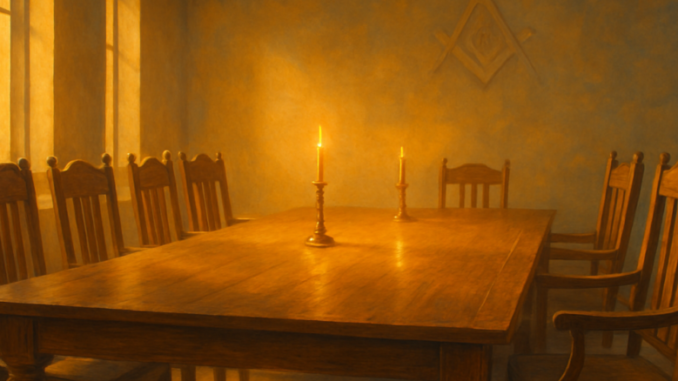
Imagine sitting at a table where the stakes could not be higher. On one side, everything you know and love hangs in the balance. On the other side sits someone who inhabits a fundamentally different reality. You must talk. You must listen. And above all, you must know who you are before you utter a single word. Recent developments in international diplomacy — including Ukraine’s push to involve Europe more directly in negotiations with Russia — raise a question that reaches far deeper than geopolitics: what kind of personality does it take to truly negotiate?
The Negotiation Table as a Mirror
Negotiation may be the most revealing of all human activities — not because of the words exchanged, but because of the character it exposes. The moment you sit down across from someone whose interests run contrary to your own, every insecurity, every prejudice, and every hidden motive becomes visible. If not to the other party, then certainly to yourself.
The call to structurally involve Europe in peace talks over the conflict in Ukraine touches on precisely this point. More voices at the table means more perspectives, but also more personalities that must find balance with one another.
In Freemasonry, we know this principle in a very different context. The lodge is a space where brethren of diverse backgrounds, convictions, and temperaments come together — not to reach agreement, but to learn something about themselves through the encounter with others. The philosopher Immanuel Kant once wrote that enlightenment is the ability to use your own understanding without the guidance of another. But he added something essential: that this only becomes possible when you are willing to reason publicly — that is, in dialogue with others.
Personality as the Foundation of Every Dialogue
Have you ever wondered why some conversations lead nowhere, while others — sometimes without a single spectacular word — change something fundamental? The difference rarely lies in the arguments. It lies in the personalities of those involved. Someone who knows what they stand for, who is acquainted with their own shadow side, and who is willing to be vulnerable without becoming weak, brings an entirely different presence to the negotiation table than someone hiding behind rhetoric or displays of power.
Freemasonry regards the formation of personality as a lifelong craft. The word “personality” itself derives from the Latin persona, which originally referred to the mask worn by actors on stage. The question that is continuously posed in the lodge — albeit in ritual and philosophical form — is this: what remains when the mask comes off? Who are you, truly, when no one is watching? It is precisely this question that should echo at every negotiation table in the world.
What the Lodge Teaches Us About Listening
One of the most underestimated aspects of Freemasonry is its emphasis on silence and listening. Within the ritual, there are moments when you are not permitted to speak. You must simply be present, observe, and allow the words of another to fully penetrate your understanding before you respond. This is not passivity. It is an active exercise in temporarily suspending your own judgment so that genuine understanding of the other person becomes possible.
The Stoic philosopher Epictetus, who was born into slavery and nevertheless became one of the most influential thinkers of antiquity, put it sharply: “We have two ears and one mouth so that we may listen twice as much as we speak.” It may sound like a cliché, but in the context of negotiations over war and peace, it is a vital insight. When more parties sit at the table, the temptation to speak louder grows stronger. Yet it is precisely then that the quality of listening becomes decisive.
True personality reveals itself not in what you demand at the negotiation table, but in your capacity to listen before you speak and to understand before you judge.
The Rough Stone and the Diplomatic Arena
In Freemasonry, we work with the symbol of the rough ashlar — an unfinished stone that is gradually shaped into a perfect cube, a stone that fits within a larger structure. This is not a story about perfection. It is about the willingness to continually work on yourself. Every rough edge you smooth, every corner you refine, makes you better suited to work alongside others. It is a philosophy that shares striking parallels with what diplomacy, at its core, ought to be.
Johann Wolfgang von Goethe — himself a Freemason and one of the greatest thinkers in European cultural history — wrote in Wilhelm Meister’s Apprenticeship about the necessity of forming yourself through engagement with the world. For Goethe, personal formation was never a solitary project; it could only emerge through interaction with others. This principle stands at the center of what happens when multiple European nations become involved in negotiation processes: they participate not as disruptors, but as voices that enrich the whole — provided they are willing to work on their own rough stones.
Why Personality Matters Now More Than Ever
It is tempting to reduce international diplomacy to power dynamics and economic interests. But every negotiation is ultimately conducted by people — individuals with character, with fears, with hopes. The quality of their personality plays a decisive role in whether a conversation devolves into empty theater or grows into genuine rapprochement.
Freemasonry offers no political answers here, nor is that its role. What it does offer is an age-old method for working on personality: through ritual, through reflection, through brotherhood. Through the understanding that you can only be a worthy building block when you truly know yourself.
Marcus Aurelius, the Roman emperor and Stoic philosopher, wrote in his Meditations that the best way to avenge yourself against an enemy is to not become like him. In that single sentence lies a diplomatic wisdom more profound than most policy papers will ever contain. It reminds us that the strongest position at any table is not the loudest voice or the largest army, but the most fully formed character.
Whether at the negotiation tables of world leaders or within the quiet walls of a Masonic lodge, the same truth applies: meaningful dialogue begins with self-knowledge. The willingness to examine your own rough edges, to listen with genuine openness, and to show up as your authentic self — these are not soft skills. They are the very foundations upon which lasting peace, understanding, and brotherhood are built. In a world that desperately needs more thoughtful negotiators, the ancient Masonic commitment to shaping character has never been more relevant.
Copyright text & image: devrijmetselaar.nl
Texts are based on the ideas and content of the author of devrijmetselaar.nl, reviewed, corrected, and supplemented with the assistance of OpenAI. Images are created based on the ideas of the author of devrijmetselaar.nl using OpenAI/DALL-E.
Frequently Asked Questions
What does the article suggest is the real foundation of successful negotiation?
The article argues that successful negotiation is not based on the words exchanged or arguments presented, but rather on the personalities involved. It emphasizes that a person who knows what they stand for, understands their own limitations, and is willing to be vulnerable without weakness brings a fundamentally different presence to the negotiation table than someone relying on rhetoric or displays of power.
How does Freemasonry relate to the principles of negotiation and diplomacy discussed in the article?
According to the article, the Masonic lodge serves as a space where members of diverse backgrounds and temperaments come together to learn about themselves through encounters with others. This mirrors the negotiation process, as both involve dialogue that reveals character and insecurity. Freemasonry views personality formation as a lifelong craft, which is essential for meaningful engagement in dialogue and negotiation.
What is the significance of Immanuel Kant's concept of enlightenment in this context?
The article references Kant's definition of enlightenment as the ability to use your own understanding without guidance from another, but emphasizes his crucial addition that this is only possible through willing public reasoning—dialogue with others. This connects to both Freemasonry and negotiation, as it demonstrates that true understanding and enlightenment require engaging with different perspectives and personalities, not isolation or one-sided thinking.

Be the first to comment