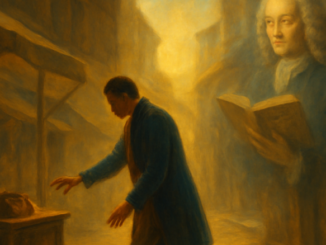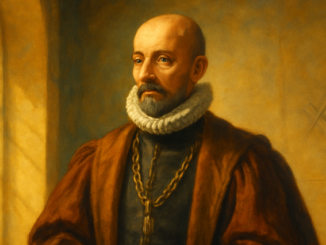
A veiled figure in silent grief, symbolizing Montaigne's essay on sadness
Content & Summary

Montaigne on Grief: When Words Fall Short

There comes a moment when grief cuts so deep that it turns to silence. Tears refuse to fall, words catch in the throat, and what remains is a stillness that weighs more than any gesture. Michel de Montaigne explored this phenomenon in his brief but penetrating essay ‘On Sadness,’ the second chapter of his monumental Essays. He poses a question that resonates as powerfully today as it did in the sixteenth century: what happens when emotion exceeds the limits of expression? The Core Idea: Emotion Beyond Expression Montaigne opens his essay with a striking claim: he professes to be hardly susceptible to sadness himself. This is not an attempt at Stoic indifference but rather a runway toward his real subject. What fascinates him are those moments when grief becomes so overwhelming that the body simply cannot express it. Instead of releasing us, the sheer intensity of the emotion paralyzes us. This central insight illuminates a paradox most of us recognize: the most intense feelings sometimes manifest as total silence. A mother who loses her child may appear calm while others weep around her. Only later, when the initial shock begins to subside, do the tears come. Montaigne sees in this […]

A symbolic mirror reflecting multiple faces representing Masonic self-knowledge
Freemasonry & Connection

The Mirror with Many Faces: Montaigne and Freemasonry

Imagine a mirror that doesn’t show one reflection, but a hundred. Every time you look, you see a different face — not because the mirror is broken, but because you yourself are constantly changing. This image captures the essence of what sixteenth-century philosopher Michel de Montaigne described in his reflections on the inconsistency of human action. And it is precisely this insight that reveals a striking kinship with the symbolic journey Freemasons undertake in their quest for self-knowledge. The Unstable Ground Beneath Our Feet Montaigne observed something we all recognize but rarely dare to admit: we are not the consistent beings we believe ourselves to be. Yesterday’s hero is today’s coward. The generous hand closes into a fist by morning. This is not a moral failing — it is a fundamental feature of human existence. We do not move in a straight line from birth to death, but in circles, spirals, and sometimes seemingly random patterns. Freemasonry begins from a remarkably similar starting point. The rough ashlar with which every Freemason symbolically begins their journey is not rough because it is flawed. It is rough because it has not yet been worked — because it has not yet become conscious […]