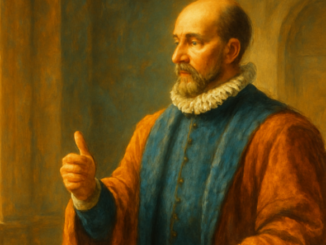
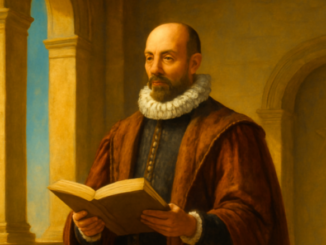
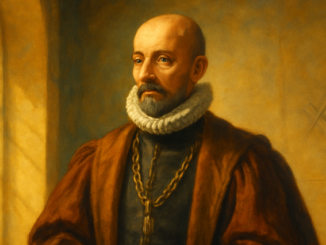
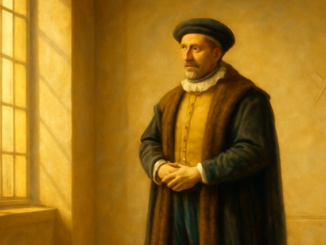
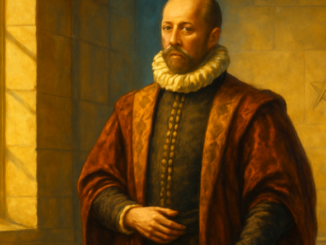
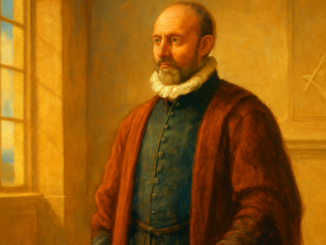
Portrait of Michel de Montaigne with classical philosophical texts and symbols
Michel de Montaigne – Philosophical Background

Montaigne on Custom: Philosophical Roots of a Timeless Essay

In 1580, Michel de Montaigne published his groundbreaking essays, among them a remarkable treatise on the power of custom and the danger of rashly changing established laws. Written against the backdrop of religious wars and political turmoil, this essay drew on a rich philosophical tradition stretching back to classical antiquity. The intellectual sources Montaigne wove together illuminate his unique position between ancient wisdom and early modern doubt — and offer enduring lessons for anyone who values tradition, reflection, and the careful balance between preservation and reform. Pyrrhonian Skepticism as Foundation Montaigne’s thinking about custom finds its deepest roots in the Greek skepticism of Pyrrho of Elis. This fourth-century BC philosopher taught that human judgments are always uncertain because our senses and reason constantly deceive us. Sextus Empiricus, who systematically recorded Pyrrhonian doctrine, emphasized that different peoples regard entirely different customs as self-evident. What was considered barbaric in Greece was honored in Persia. Montaigne owned and intensively studied a copy of Sextus Empiricus in the years leading up to the composition of his essays. The skeptical method of placing opposing customs side by side — without passing final judgment — permeates his essay on custom. He gathers examples from every corner […]

Open book with classical philosophy texts symbolizing Montaigne's essays
Michel de Montaigne – Philosophical Background

Montaigne on Profit and Loss: Tracing the Philosophical Roots

When Michel de Montaigne argues in his twenty-first essay that one man’s profit is another man’s loss, he draws upon a rich philosophical tradition stretching back centuries. This short but influential essay reflects not only the economic turmoil of sixteenth-century France but also the voices of Seneca, Plutarch, and Stoic philosophy. How did Montaigne relate to these thinkers, and what can we still learn today from their dialogue about greed, temperance, and human relationships? The World of the Renaissance Humanist To understand Montaigne’s essay, we must immerse ourselves in the intellectual climate of the French Renaissance. Scholars were rediscovering classical texts from Greek and Roman antiquity on a massive scale. Montaigne, born in 1533, grew up with Latin as his first language. His father ensured he could read the classics as naturally as other children read fairy tales. This upbringing made him a true humanist — someone who regarded the wisdom of the Ancients not as dead knowledge but as a living guide for daily life. Renaissance humanism was defined by a return to the source: the original Greek and Latin texts, stripped of medieval interpretations. Erasmus had paved the way with his rediscovery of the New Testament in Greek. […]

Open book with philosophical texts symbolizing Montaigne's intellectual sources
Michel de Montaigne – Philosophical Background

Montaigne on Imagination: Philosophical Roots and Influences

When Michel de Montaigne penned his twentieth essay on the power of imagination, he was drawing from a deep well of philosophical tradition. His observations on how the mind shapes the body were not born in isolation. They stand at a crossroads where ancient wisdom, medieval scholasticism, and Renaissance humanism converge. By exploring the philosophical sources behind this essay, we uncover not only the intellectual landscape of the sixteenth century but also timeless questions about the relationship between mind and matter — questions that continue to resonate today. The Stoic Legacy: The Mind as Shaper of Reality For the Stoics — thinkers like Seneca, Epictetus, and Marcus Aurelius — the human mind was not a passive receiver of impressions but an active shaper of experience. Their central thesis, that it is not events themselves that disturb us but our judgments about them, is a direct precursor to Montaigne’s observations. When he describes how people fall ill merely by thinking about illness, or how the fear of impotence can actually bring it about, the echoes of Stoic insight are unmistakable. Seneca, whom Montaigne read and quoted extensively, wrote at length about how the mind can torment or elevate itself. In his […]

Open book with Montaigne's essays surrounded by Masonic symbols and candlelight
Michel de Montaigne – Philosophical Background

Montaigne and Death: Philosophical Sources of a Timeless Essay

Imagine living in the sixteenth century, surrounded by plague epidemics, religious wars, and a life expectancy that barely reached forty. How would you relate to death? Michel de Montaigne chose not to avoid this question but to confront it head-on. In his celebrated essay “That to Philosophize Is to Learn to Die,” he drew upon a rich tradition of ancient wisdom. But which thinkers and philosophical currents whispered in his ear as he wrote? Let us descend together into the philosophical sources that shaped this masterwork — and discover why they still resonate deeply within Freemasonry today. The Stoic Legacy: Seneca as Guiding Light If there is one philosopher whose presence shimmers through every page of Montaigne’s essay, it is Seneca. The Roman statesman and philosopher wrote extensively about the art of dying in his Letters to Lucilius. For Seneca, death was not an enemy to be feared but a natural boundary that gives our lives meaning. He taught that we should live each day as though it could be our last — not out of gloom, but in order to be truly present. Montaigne absorbed this Stoic insight and made it deeply personal. Where Seneca sometimes remained abstract, Montaigne […]

Open book of Montaigne's Essays with Masonic symbols and philosophical imagery
Michel de Montaigne – Philosophical Background

Montaigne on Laughter and Tears: Philosophical Roots Exposed

Why do we sometimes laugh when we really want to cry? And why can tears of grief suddenly give way to a liberating burst of laughter? Michel de Montaigne posed this very question in his eighteenth essay, but he was far from the first thinker to wrestle with the capriciousness of human emotion. Behind his elegant prose lies a rich philosophical tradition reaching back to the ancient Greeks and Romans. Let us explore the thinkers and intellectual currents that inspired Montaigne when he wrote this fascinating essay — and consider what their insights mean for Freemasons committed to the work of self-knowledge. Which Classical Thinkers Whispered in Montaigne’s Ear? Montaigne was a voracious reader of classical antiquity. His library, housed in the tower of his château, contained hundreds of works, and the ceiling beams of his study were inscribed with quotations from his favourite authors. For this particular essay, he drew heavily on the writings of Seneca, the Roman philosopher who wrote so penetratingly about the instability of human feelings. Seneca described how the very same event can provoke completely opposite reactions in different people — or even in the same person at different moments. But there was another voice […]

Open book with classical philosophical texts relating to Montaigne and fear
Michel de Montaigne – Philosophical Background

Montaigne on Fear: The Philosophical Roots of Essay 17

Michel de Montaigne did not write his essay ‘On Fear’ in an intellectual vacuum. Behind his seemingly personal observations about anxiety lies a rich philosophical tradition stretching back to Greek and Roman antiquity. By tracing these roots — Stoicism, Skepticism, and the moral psychology of Plutarch — we can better understand how sixteenth-century thinking about fear connects to the contemplative practice that also lies at the heart of Freemasonry. Stoicism as the Foundation Stoic philosophy is arguably the most important undercurrent in Montaigne’s thinking about fear. Seneca, whose letters Montaigne studied closely, regarded fear as a passion born from false judgments about reality. For the Stoics, fear arises when we treat external events as threats to our well-being, when true well-being resides in virtue alone. Epictetus put it sharply: it is not things themselves that disturb us, but our judgments about those things. Montaigne absorbs this Stoic insight but transforms it at the same time. Where Seneca aims for complete mastery over the passions, Montaigne is more modest. He acknowledges that fear is a human reality that cannot simply be reasoned away. This nuance makes his essay far more approachable than the sometimes severe Stoic treatises. He does not ask […]

Open book with quill pen symbolizing Montaigne's philosophical essays
Michel de Montaigne – Philosophical Background

Montaigne on Ambassadors: Philosophical Roots of Diplomacy

A letter arrives. A messenger awaits instructions. A prince must decide how much freedom to grant his envoy. What appears to be a straightforward question about diplomatic communication conceals a far deeper philosophical inquiry — one that captivated Michel de Montaigne: how much trust does a person deserve, and where lies the boundary between obedience and independent judgment? The philosophical traditions that shaped Montaigne’s thinking, from Stoicism to Renaissance humanism, cast a remarkable light on this sixteenth essay from his first book. The Stoic Undercurrent When Montaigne writes about the conduct of ambassadors, the voice of Seneca resonates unmistakably through the text. The Roman philosopher, whose letters to Lucilius Montaigne had studied so thoroughly, constantly emphasized the importance of practical wisdom over blind adherence to rules. Seneca warned that those who merely carry out orders without understanding are not truly acting — they are merely moving. This idea saturates Montaigne’s analysis of the envoy who must choose between the literal wording of his instructions and the spirit of his mission. Stoicism taught that the wise person judges situations by their true nature, not by their outward appearance. Marcus Aurelius wrote in his personal meditations that one should ask of every […]

Rough ashlar and chisel symbolizing Montaigne's philosophy of courage and virtue
Michel de Montaigne – Philosophical Background

Montaigne on Cowardice: Philosophical Roots of Courage

When Michel de Montaigne wrote his fifteenth essay on the punishment of cowardice, he touched upon a question that has occupied philosophers for centuries. What makes cowardice such a grievous vice that some societies punished it with death? To truly understand Montaigne’s reflections, we must descend into the philosophical wellsprings from which he drew: the Stoics, the Greek moral philosophers, and the humanist tradition of his own era. In exploring the intellectual background of his thought, we discover not only the roots of his argument but also why these questions still resonate deeply within any brotherhood that places virtue at its center. The Stoic Legacy: Courage as a Cardinal Virtue Montaigne’s thinking about cowardice and courage is deeply rooted in the Stoic tradition. Seneca, whom he read extensively and quoted often, regarded courage as one of the four cardinal virtues — inseparably linked to wisdom, justice, and temperance. For the Stoics, cowardice was not merely a lack of physical bravery; it was a fundamental disturbance of the soul. To flee from danger was ultimately to flee from oneself. Marcus Aurelius wrote in his Meditations that a person must align his actions with nature and reason. From that perspective, cowardice was […]

Open book with Montaigne essays beside Masonic rough ashlar and square symbol
Michel de Montaigne – Philosophical Background

Montaigne on Good and Evil: Philosophical Roots of Essay 14

Imagine waking up tomorrow under exactly the same circumstances as yesterday, yet suddenly feeling happier. Nothing in the outside world has changed — only the way you look at it. This simple thought experiment strikes at the heart of what Michel de Montaigne explores in his fourteenth essay. But where did this sixteenth-century thinker draw his ideas from? The philosophical sources he tapped into turn out to be remarkably relevant today, shedding light on how Freemasons, too, think about moral truth and personal perception. The Stoic Legacy in Montaigne’s Thought When you read Montaigne’s essay, you immediately taste the influence of Stoic philosophy. Thinkers like Seneca, Epictetus, and Marcus Aurelius shared a central conviction: it is not events themselves that determine our well-being, but our judgments about those events. Montaigne, who frequently quoted and admired Seneca, adopted this starting point and gave it his own distinctive twist. He observed how people experienced the same adversity in completely different ways, depending on their inner disposition. The Stoics drew a clear line between what lies within our control and what does not. You cannot command the weather, but you can choose how you respond to it. Montaigne applied this principle to the […]

Portrait of Michel de Montaigne with philosophical texts on cruelty
Michel de Montaigne – Philosophical Background

Montaigne and the Law of Cruelty: Philosophical Roots

You have almost certainly experienced it: someone treats another person with unnecessary harshness, and somewhere deep inside you sense that something is fundamentally wrong. Michel de Montaigne, the sixteenth-century French thinker, wrestled with exactly this question. In his essay on cruelty, he digs into the philosophical roots of human violence and compassion. Which thinkers shaped his views? And more importantly — what can those insights still offer us today, particularly as Freemasons committed to the moral improvement of ourselves and society? The Stoic Legacy: Seneca as Teacher When Montaigne writes about cruelty, the voice of Seneca resonates throughout. The Roman philosopher, who lived from 4 BC to 65 AD, regarded cruelty as the very opposite of humanity. For Seneca, brutality was not merely a moral misstep — it was a fundamental assault on human dignity. He championed clementia, a form of mercy that springs from inner strength rather than weakness. Montaigne adopted this idea and applied it to his own turbulent era. Where Seneca wrote amidst the spectacle of Roman gladiatorial games, Montaigne observed the Wars of Religion tearing France apart. Both men witnessed how violence became entertainment, how crowds took pleasure in the suffering of others. The Stoic lesson […]

Rough stone being shaped into a perfect ashlar symbolizing constancy
Michel de Montaigne – Philosophical Background

Montaigne on Constancy: The Philosophical Roots Revealed

A stone that stands unmoved while the storm rages around it. This image, as familiar in the builder’s craft as in philosophy, strikes at the heart of what Michel de Montaigne explores in the twelfth essay of his first book: human constancy. But which thinkers whispered those ideas into his ear? Which philosophical traditions formed the foundation upon which he built his reflections on steadfastness? The answers lie hidden in a rich intellectual heritage reaching back to antiquity. The Stoic Foundation When Montaigne writes about constancy, he is unmistakably walking through the colonnades of the Stoa. Stoic philosophy, founded by Zeno of Citium in the third century BC, placed the imperturbability of the human mind at its center. For the Stoics, true virtue lay in accepting what lies beyond our control while mastering our own reactions. This idea forms the backbone of Montaigne’s approach to the subject. Particularly influential was the work of Seneca, the Roman philosopher and statesman whose letters and essays Montaigne studied with great enthusiasm. Seneca’s De Constantia Sapientis (On the Constancy of the Wise Man) addresses precisely the theme Montaigne would later rework. The wise man, Seneca argued, cannot truly be insulted or harmed, for his […]

Open books and classical philosophy texts in a Renaissance tower library
Michel de Montaigne – Philosophical Background

Montaigne’s Philosophical Sources on Divination and Prophecy

Have you ever wondered why some people swear by horoscopes while others dismiss them without a second thought? That tension between belief in predictions and healthy skepticism is nothing new. In the sixteenth century, the French thinker Michel de Montaigne grappled with exactly the same questions — and he did so by drawing on a rich tradition of classical philosophy, from the Roman Stoics to the Greek skeptics. In this article, we explore the philosophical sources that fed Montaigne’s thinking when he wrote his famous essay on divination and prophecy. The Renaissance Humanist in His Tower Library Picture Montaigne in his celebrated tower study, surrounded by thousands of books lining the walls from floor to ceiling. Each volume bore his handwritten inscriptions and annotations. This was no mere decoration — it was a living dialogue with the past. As a true Renaissance humanist, Montaigne believed that the wisdom of the ancients remained profoundly relevant to his own age. He was no passive reader: he questioned, compared, and drew conclusions that often feel strikingly modern. The humanism of the Renaissance was characterized by a return to classical sources. Where medieval scholars had often worked through commentaries and summaries, the humanists read […]

Open antique book with classical philosophical texts about rhetoric and speech
Michel de Montaigne – Philosophical Background

Montaigne and Rhetoric: Philosophical Roots of the Art of Speech

Why did a sixteenth-century French nobleman devote himself to writing about the art of speech? And perhaps more importantly, which thinkers were whispering in his ear as he put pen to paper? Michel de Montaigne was no isolated mind. He stood on the shoulders of ancient traditions — from Roman orators to Greek philosophers. In this article, we explore the philosophical sources that shaped his thinking on eloquence and the pace of speech, and consider why these ideas remain deeply relevant for those who value reflection, ritual, and the careful use of words. It Begins in the Library Where does such an inquiry begin? In the library, naturally. Montaigne’s famous tower room in his château in the Dordogne was lined with books. It was here that he read the classics, and here that he held conversations with the dead. His essay on eloquence and speed of speech did not emerge in a vacuum — it was born from a dialogue with centuries of rhetorical tradition. The question that presses itself upon us: which voices resonated most? Roman Rhetoric: Cicero and Quintilian as Living Companions To understand Montaigne’s thinking, we must return to the wellspring of Roman rhetoric. Cicero and Quintilian […]