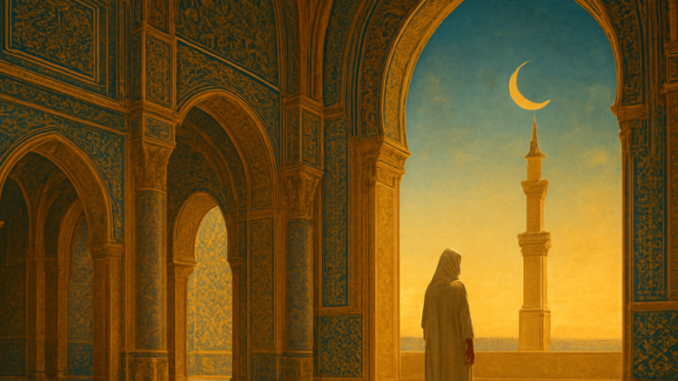
What does it truly mean to be tested? And what can a sacred scripture revealed fourteen centuries ago teach us about the essence of human loyalty? In Surah 60 of the Quran — known as Al-Mumtahanah, or The Tested Woman — we find striking insights that resonate deeply with the spiritual quest at the heart of Freemasonry. These are ancient questions worth sitting with, and their answers may surprise us.
Why Is This Surah Named After a Tested Woman?
The title refers to a specific historical event from the early Islamic period. Women who chose their faith over the comfort and familiarity of their former communities were put to the test — examined to determine whether their conversion was truly a matter of the heart or merely an escape from difficult circumstances.
The theme is universal. The examination did not concern outward appearances or background. It probed something far more fundamental: the inner disposition of the soul. The essential question being asked was this — does your heart speak the truth? This is precisely the question that echoes when a candidate crosses the threshold of a Masonic lodge.
What Does Trial Have to Do With Spiritual Growth?
In Freemasonry, a candidate is never simply admitted. There is a process — a conversation, an inquiry into motives. Not to judge, but to ensure that the seeker’s quest is genuine. The parallel with Surah 60 is remarkable: both traditions recognize that true spiritual development begins with honesty toward oneself and others.
Aristotle wrote long ago about the necessity of self-knowledge as the foundation of virtue. The trial is not a punishment; it is a mirror. It shows us who we truly are when everything is at stake. In the Quran, this is expressed as a test of the heart. In Freemasonry, we speak of the rough ashlar that must be shaped and refined.
Trial is not an obstacle on the spiritual path — it is the path itself. It reveals the truth of the heart that no words can conceal.
How Does This Surah Address Loyalty and Betrayal?
Surah 60 also deals extensively with the theme of loyalty. It warns against maintaining secret ties with those who are hostile to your deepest values. This is not a call to isolation but an exhortation toward integrity. You cannot serve two masters. You cannot embrace two contradictory sets of values at the same time.
For Freemasons, this message sounds familiar. The brotherhood demands sincerity in word and deed — not because it cultivates an image of enemies, but because duplicity undermines the inner temple. Building character requires a solid foundation, and that foundation is truthfulness.
Can Different Traditions Find Common Ground Here?
This is where we touch upon the very core of Freemasonry as a spiritual practice. The lodge welcomes men of all religious backgrounds. What unites them is not a specific dogma but a shared search for light, for truth, for moral perfection. Surah 60 speaks to Muslims, yet its theme of inner sincerity resonates with every sincere seeker, regardless of tradition.
Voltaire, who was intimately familiar with Freemasonry, wrote about the necessity of tolerance between different faiths — not because all religions are identical, but because the human search for meaning is universal. The tested woman of the Surah and the candidate in the lodge share the same challenge: to demonstrate that the heart speaks what the mouth professes.
What Can We Learn From This Ancient Wisdom Today?
In a world filled with noise and superficiality, the question of inner sincerity is more urgent than ever. Social media invites us to present a polished self-image. But the trial asks what lies beneath the surface. Who are you when no one is watching? What do you truly believe, apart from what others expect of you?
Consider the enduring lessons at play here: trial as a mirror for self-knowledge; loyalty as the foundation of community; sincerity as a prerequisite for spiritual growth; and tolerance between traditions that ask the same fundamental questions.
Plato, in his Allegory of the Cave, described how a person must learn to turn toward the light. That movement begins with the courage to examine oneself. Surah 60 and Freemasonry both point toward that same light, albeit from different traditions and in different languages.
Is Trial, Then, a Gift?
Perhaps this is the most surprising lesson of all. The tested woman of Surah 60 was not punished by her trial — she was honored through it. Her sincerity was made visible. In the same way, a Freemason can view his trials as opportunities for growth, as chances to further shape the rough ashlar into a perfect cube.
The spiritual journey is no stroll through a garden of ease. It leads through deserts of doubt and over mountains of challenge. But whoever completes that journey with a sincere heart finds not only himself at the end, but also the brotherhood of all those who walk the same path.
Surah 60 reminds us that true spirituality does not reside in words or rituals alone, but in the sincerity with which we approach them. The tested woman stands as a symbol for every human being who dares to choose authenticity, even when it demands sacrifice. For the Freemason, this is a familiar lesson: the building of the inner temple begins with the courage to be tested — and to be found true.
Copyright text & image: devrijmetselaar.nl
Texts are based on the ideas and content of the author of devrijmetselaar.nl, reviewed, corrected, and supplemented with the assistance of OpenAI. Images are created based on the ideas of the author of devrijmetselaar.nl using OpenAI/DALL-E.


Be the first to comment