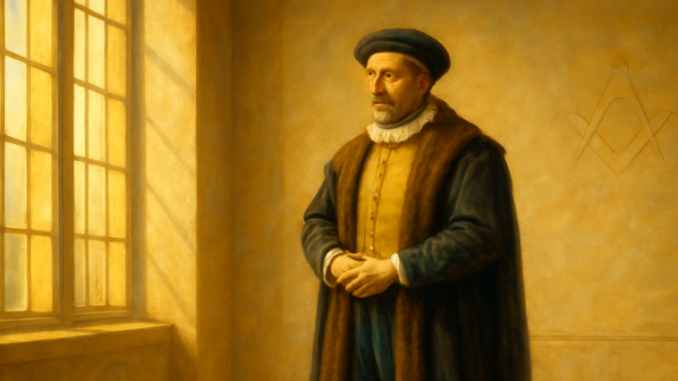
In 1580, Michel de Montaigne published his groundbreaking essays, among them a remarkable treatise on the power of custom and the danger of rashly changing established laws. Written against the backdrop of religious wars and political turmoil, this essay drew on a rich philosophical tradition stretching back to classical antiquity. The intellectual sources Montaigne wove together illuminate his unique position between ancient wisdom and early modern doubt — and offer enduring lessons for anyone who values tradition, reflection, and the careful balance between preservation and reform.
Pyrrhonian Skepticism as Foundation
Montaigne’s thinking about custom finds its deepest roots in the Greek skepticism of Pyrrho of Elis. This fourth-century BC philosopher taught that human judgments are always uncertain because our senses and reason constantly deceive us. Sextus Empiricus, who systematically recorded Pyrrhonian doctrine, emphasized that different peoples regard entirely different customs as self-evident. What was considered barbaric in Greece was honored in Persia.
Montaigne owned and intensively studied a copy of Sextus Empiricus in the years leading up to the composition of his essays. The skeptical method of placing opposing customs side by side — without passing final judgment — permeates his essay on custom. He gathers examples from every corner of the world: peoples who consume their dead, cultures where nudity provokes no shame, lands where polygamy is the norm. His aim is not to shock, but to reveal how arbitrary our own standards truly are.
The Stoic Legacy of Seneca and Marcus Aurelius
Alongside skepticism, Montaigne drew heavily from the Stoic tradition. Seneca, whose letters and essays Montaigne treated as daily reading, wrote extensively about the power of habituation. In his letters to Lucilius, Seneca warns that repetition blinds us to both virtue and vice alike. Custom numbs our capacity for judgment and makes the monstrous feel familiar.
Marcus Aurelius, the philosopher-emperor whose Meditations profoundly influenced Montaigne, also reflected on the relativity of human practices. In his private journal, Marcus observed that what one generation considers normal may strike the next as absurd. This Stoic sobriety about the impermanence of human institutions echoes throughout Montaigne’s cautious stance toward radical reform.
Plutarch and the Art of the Moral Portrait
The Greek writer Plutarch was perhaps Montaigne’s most beloved source. In the Moralia and the Parallel Lives, Plutarch gathered hundreds of anecdotes about strange customs, unexpected virtues, and the capriciousness of fortune. Montaigne explicitly names him as his favorite author, borrowing countless examples directly from Plutarch’s work.
Custom is a second nature, and no less powerful than the first; what seems foreign to us becomes, through repetition, our actual reality.
Plutarch’s method of packaging ethical insight into concrete stories about historical figures appealed deeply to Montaigne. His essay on custom contains no abstract philosophical systems — only vivid sketches of human behavior in its endless variety. This narrative approach set Montaigne apart from the academic philosophy of his day and made his work accessible to a wide audience, a quality that continues to attract readers more than four centuries later.
Renaissance Humanism and the Rediscovery of Antiquity
Montaigne wrote within an intellectual climate shaped by Renaissance humanism. A generation earlier, Erasmus of Rotterdam had breathed new life into classical texts and advocated a return to original sources. The humanists believed that ancient wisdom, properly understood, could guide modern life.
Yet Montaigne carved out a characteristically independent position. Where many humanists idealized antiquity, he emphasized the diversity and contradiction within the classical tradition itself. Aristotle and Plato contradict each other; Stoics and Epicureans defend opposing visions of the good life. This polyphony reinforced Montaigne’s skeptical attitude: if the greatest minds of antiquity could not agree among themselves, how could we presume to claim certainty?
The Political Context of Religious Wars
The essay on custom and legislation cannot be fully understood without considering the historical backdrop of the French Wars of Religion. Between 1562 and 1598, Catholics and Huguenots tore the kingdom apart. Both sides invoked absolute truths and were willing to kill for them. Montaigne, himself a Catholic but with Protestant relatives, sought a third way.
His warning against carelessly changing accepted laws should be read as a plea for political prudence in times of crisis. The philosopher Jean Bodin, Montaigne’s contemporary, developed similar ideas about sovereignty and stability. Both men witnessed how the zeal for reform could descend into bloodshed and chaos. Custom, however arbitrarily it may have arisen, at least provides a foundation upon which people can live together in peace.
A Legacy for Later Thinkers — and for Freemasonry
The philosophical synthesis Montaigne achieved in this essay would resonate through the centuries that followed. Blaise Pascal, who both admired and criticized Montaigne, adopted the theme of custom as second nature in his Pensées. The Enlightenment philosophers Voltaire and Rousseau read Montaigne avidly, though they drew different conclusions from his skepticism.
For Freemasonry, which took its modern form in the eighteenth century, Montaigne’s insights carry a particular resonance. The fraternity has its own rituals and customs, handed down from generation to generation. These traditions are not sacred because they are absolutely true, but valuable because they create a shared framework for reflection and connection. Montaigne’s nuanced position — between blind reverence for tradition and reckless reformism — mirrors the Masonic commitment to preserving meaningful ritual while remaining open to deeper understanding.
Lodges practice ceremonies whose origins sometimes stretch back centuries. The entered apprentice learns the value of these forms not through dogmatic instruction but through repeated experience — precisely the mechanism Montaigne describes. Custom shapes the inner life of the Mason, just as it shapes the moral landscape of entire civilizations. The key, as Montaigne understood, lies in holding tradition and critical inquiry in creative tension.
Montaigne’s essay on custom remains one of the most penetrating examinations of why human beings cling to inherited ways of life — and why, despite their arbitrariness, those ways deserve respect rather than contempt. By drawing on Pyrrhonian skepticism, Stoic wisdom, Plutarch’s moral portraits, and the hard lessons of religious warfare, Montaigne crafted a vision of prudent humility that speaks across the ages. For Freemasons and philosophical seekers alike, his message endures: cherish the rituals and customs that bind us together, question them with honest curiosity, but change them only with the greatest care.
Copyright text & image: devrijmetselaar.nl
Texts are based on the ideas and content of the author of devrijmetselaar.nl, reviewed, corrected, and supplemented with the assistance of OpenAI. Images are created based on the ideas of the author of devrijmetselaar.nl using OpenAI/DALL-E.
Frequently Asked Questions
What is Pyrrhonian Skepticism and how did it influence Montaigne's essay on custom?
Pyrrhonian Skepticism, founded by the Greek philosopher Pyrrho of Elis in the fourth century BC, teaches that human judgments are always uncertain because our senses and reason constantly deceive us. Montaigne studied Sextus Empiricus's systematic recording of this doctrine and applied its skeptical method to custom by placing opposing customs side by side without passing final judgment. He used examples from around the world—such as peoples who consume their dead, cultures where nudity causes no shame, and lands where polygamy is normal—to reveal how arbitrary our own standards truly are.
Which Stoic philosophers influenced Montaigne's thinking about custom?
Montaigne drew heavily from two major Stoic philosophers: Seneca and Marcus Aurelius. Seneca's letters warned that repetition and habituation blind us to both virtue and vice, numbing our capacity for judgment. Marcus Aurelius, whose Meditations profoundly influenced Montaigne, reflected on how what one generation considers normal may strike the next as absurd. This Stoic perspective on the impermanence of human institutions shaped Montaigne's cautious stance toward radical reform.
When was Montaigne's essay on custom published and what historical context shaped it?
Montaigne's groundbreaking essays, including his treatise on custom, were published in 1580. The essay was written against the backdrop of religious wars and political turmoil in France, which influenced Montaigne's careful consideration of the dangers of rashly changing established laws. His philosophical approach to custom offered enduring lessons about the balance between preservation and reform during a period of significant social upheaval.

Be the first to comment