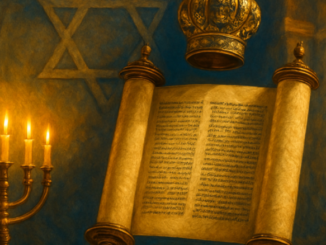
Open Torah scroll with Masonic square and compasses symbolizing holiness
Judaism

Leviticus: The Call to Holiness and Masonic Symbolism

What does it mean to be called? This question opens the third book of the Torah, known in Hebrew as Vayikra — Leviticus. The book begins with the words “And He called,” a divine summons inviting Moses to draw near. But is this call reserved solely for a biblical prophet, or does it also speak to us — modern seekers of meaning and purpose? In this article, we explore the deeper layers of this remarkable book and discover how its themes of purification, sacrifice, and holiness resonate powerfully with the symbolism of Freemasonry. Why Does Leviticus Begin with a Call? The Hebrew word Vayikra literally means “And He called.” In Jewish tradition, great significance is attached to this opening word because it sets the tone for the entire book. The call is personal and intimate. God does not speak in abstract terms but addresses Moses directly with an invitation. According to rabbinical commentators, including the medieval scholar Rashi, this phrasing expresses affection. It is not a command from a distant authority but a loving summons to draw closer to the sacred. For Freemasons, this theme is immediately recognizable. In the Lodge, too, the journey begins with a call — an […]

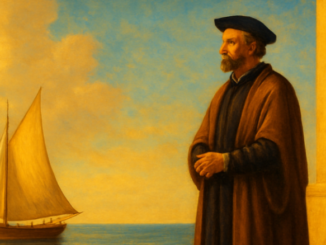
Symbolic Masonic tools with light representing Montaigne's philosophy of connection
Michel de Montaigne – Freemasonry & Connection

Montaigne on Laughter and Tears: Connection in Freemasonry

A tear can express joy. A smile can conceal sorrow. Michel de Montaigne understood this paradox of the human soul when he observed that we do not laugh and cry about the same thing. Hidden within this sixteenth-century essay lies a timeless truth that resonates deeply with Masonic thought: genuine connection between people requires us to look beyond the surface of expressions and gestures, into one another’s inner landscape. The Surface Deceives Montaigne opens his essay with a seemingly simple observation: the same event can evoke opposite emotions in different people. More than that, within the same person, laughter and tears can lie remarkably close together — sometimes even occurring simultaneously. What does this mean for how we understand one another? Montaigne suggests that we judge far too quickly based on what we see. The tear on someone’s cheek does not tell the whole story. The smile on someone’s lips may well be a mask. This insight touches on a fundamental Masonic principle: the distinction between the exoteric and the esoteric, between the outer form and the inner truth. In the lodge, we learn that symbols carry multiple layers of meaning. A square is not merely a tool. A level […]

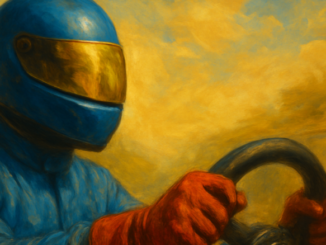
Racing car speeding through a curve symbolizing Masonic character under pressure
Personal Development & Leadership

Speed and Character: Masonic Lessons from the Racetrack

There is something deeply paradoxical about speed. A driver tearing through the corners of Spa-Francorchamps at blistering pace seems to have no room for reflection. And yet, in that fraction of a second — the split-second decision to brake or commit — the entire personality of the driver is laid bare. A top result in free practice is a sporting achievement, certainly. But what does speed actually reveal about character? And what might a Freemason learn from someone who repeatedly puts himself to the ultimate test? Personality Reveals Itself Under Pressure Let us begin with a provocative thought: perhaps personality is not what someone claims to be, but what someone does when the pressure is at its peak. A racing car cutting through the Ardennes forest at three hundred kilometers per hour offers no time for masks. There is no room for façade. The driver, in that moment, is entirely himself — fear, courage, calculation, instinct. Everything that makes a person who they are concentrates itself into an action lasting mere seconds. This raises a compelling question: is personality a verb rather than a noun? Not a fixed quality, but something that continuously reshapes itself in confrontation with the world? […]