Rescue team symbolizing Masonic brotherhood and the duty to stand by others
Personal Development & Leadership

Rescue After a Crash: What Brotherhood Truly Means

When a fighter pilot goes down over hostile territory, a race against the clock begins — not just for the pilot, but for every person who has sworn never to leave someone behind. The recent account of an American crew member rescued after a crash touches on something far deeper than military protocol. It strikes at the very heart of what Freemasons call brotherhood: the unconditional willingness to act for another, even when circumstances are anything but favorable. What Drives People to Risk Their Lives for Another? This may be the central question that occupies both soldiers and Freemasons alike. When rescue teams venture into dangerous airspace to recover a single person, they are not acting out of self-preservation. They are acting from a deep-rooted conviction that no one should be left alone in their darkest hour. Freemasonry holds this principle as one of its foundations: the duty to stand by a brother, not because it is easy, but precisely because it may be hard. The Roman philosopher Seneca wrote that true friendship means making another person’s fate your own. In his letters to Lucilius, he emphasized that trust forms the bedrock of every meaningful bond. Without trust, brotherhood is […]

Freemasons joining hands in brotherhood symbolizing unity in uncertain times
Personal Development & Leadership

Horizontal Escalation and Brotherhood: Masonic Lessons

Newspapers and news feeds are saturated with analyses of so-called horizontal escalation — conflicts that spread across ever more regions and domains. Defense experts warn of a world where tensions no longer stay confined to a single front. As geopolitical uncertainty grows, a deeply personal question emerges: how do you stay grounded? And what does brotherhood actually mean in an era where division seems to be the default? An ancient tradition offers surprisingly practical answers. When Uncertainty Gets Under Your Skin You’ve probably experienced it: you read a news report about rising tensions somewhere in the world, and a wave of unease washes over you. The term horizontal escalation describes how conflicts widen to new fronts — from cyber warfare to economic sanctions, from Arctic shipping routes to the Baltic states. It’s no longer an abstract geopolitical concept; it’s something that arrives on your phone every morning. That constant stream of unsettling news takes a toll. It can paralyze you, or it can push you toward anxious, reactive behavior. Many people withdraw. Others harden their positions. But there is a third path: consciously choosing connection with others who share your values. What Brotherhood Actually Means in Practice In Freemasonry, brotherhood […]

Philosopher contemplating brotherhood and Masonic symbolism in a lodge
Personal Development & Leadership

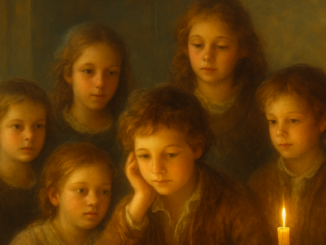
The Eighth Child and the Philosopher: Brotherhood as a Way

What can the eighth child of a philosopher teach us about brotherhood and the formation of personality? The question may seem unusual at first glance, but a closer look at the lives of great thinkers reveals that family circumstances often shaped their understanding of human connection. The role of the brother — both in the literal and the figurative sense — runs like a golden thread through the philosophical tradition, and it finds a particularly powerful echo in the practice of Freemasonry. Why Does Birth Order Matter So Much? Picture a large family in eighteenth-century Europe. Eight children, perhaps more. The eldest inherits the estate, the middle children seek their fortunes in trade or the military, and the youngest? They must make do with whatever remains. Yet it is precisely in this position that something remarkable emerges: the necessity of forging an identity independent of family tradition and birthright. The Genevan philosopher Jean-Jacques Rousseau wrote extensively about how upbringing and environment shape character. Although Rousseau himself was not an eighth child, he understood deeply that one’s position within a family — as a brother among brothers — fundamentally influences personality. A child who learns to navigate relationships with older siblings […]

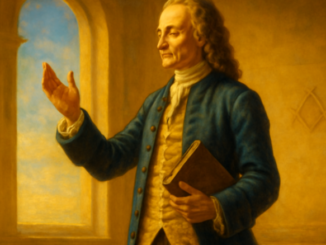
Voltaire writing his Treatise on Tolerance, symbolizing Masonic ideals
Symbolism & Rituals

Voltaire on Tolerance: The Calas Affair and Freemasonry

What drives a person to stand up against injustice when the rest of society looks the other way? In 1762, Jean Calas — a Protestant merchant from Toulouse — was sentenced to death on the strength of religious prejudice alone. Voltaire took up his pen and wrote his famous Treatise on Tolerance. But what does this eighteenth-century plea for humanity have to do with Freemasonry today? Far more than you might expect. What Actually Happened in the Calas Affair? Let’s start with the facts. Marc-Antoine Calas, Jean’s son, was found dead in the family home. In all likelihood, he had taken his own life. But a rumor spread quickly through Toulouse: that his father had murdered him to prevent his conversion to Catholicism. Without credible evidence, Jean Calas was tortured and broken on the wheel — a judicial murder driven by religious hysteria. Voltaire learned of the case and launched a years-long campaign for Calas’s posthumous rehabilitation. His Treatise on Tolerance is no dry legal argument. It is a passionate appeal for basic human decency. The question he posed remains just as relevant today: how can we call ourselves civilized while condemning our fellow human beings on the basis of […]

Honeybee on honeycomb symbolizing Masonic brotherhood and spiritual wisdom
Islam

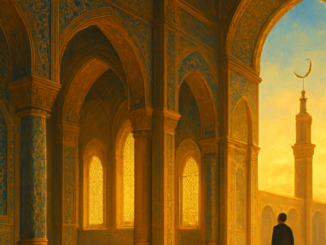
The Bee as Teacher: Spiritual Wisdom from the Quran

What can a creature just a few centimeters long teach us about the deepest questions of human existence? The sixteenth Surah of the Quran bears the name An-Nahl — The Bee — and in doing so, it opens a surprising window onto spirituality, community, and the hidden order of creation. For those willing to look beyond the literal text, a meditative landscape unfolds, one that shares remarkable common ground with the spiritual quest at the heart of Freemasonry. A Paradox of Smallness and Greatness Our exploration begins with an apparent contradiction. The bee is a tiny creature, yet in a sacred text it is elevated to the status of a divine sign. The Quran speaks of how the Creator inspired the bee to build her dwellings in mountains, in trees, and in the structures that people raise for her. From within her body comes a drink of varying colors in which there is healing for humankind. The verse concludes that in this there is surely a sign for those who reflect. This passage is an invitation to contemplation. It is not really about biology or honey production — it points to a deeper truth: that wisdom can lie hidden in […]

Antique bronze balance scales symbolizing profit and loss in Masonic philosophy
Michel de Montaigne – Freemasonry & Connection

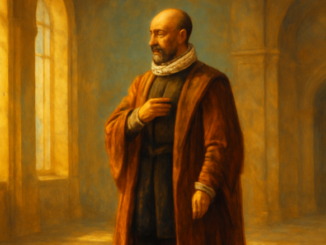
Montaigne on Profit and Loss: Beyond the Masonic Path

A pair of bronze scales, joined at a central pivot point. When one side descends, the other rises. This everyday object — once found in every market hall and apothecary shop — became for Michel de Montaigne the symbol of a disturbing truth about human exchange. In his short but powerful essay ‘That the Profit of One Man Is the Damage of Another,’ the sixteenth-century philosopher forces us to ask whether human dealings can ever be truly reciprocal. For Freemasons, who place brotherhood and connection at the heart of their craft, this essay opens a profound reflection on the nature of genuine community. The Scales as a Mirror of Existence Montaigne opens his essay by referencing the Athenian lawgiver Solon, who — according to Demades — argued that no profit is possible without a corresponding loss elsewhere. The scales serve here not merely as a measuring device but as a metaphor for the human condition. Every transaction, every exchange, every acquisition seems inevitably tied to a loss on the other side. Montaigne cites the Roman poet Lucretius, who described how nature itself operates on this very principle: what grows does so at the expense of something else that perishes. This […]

Freemasons in lodge reflecting on brotherhood, loyalty, and shared values
Personal Development & Leadership

Loyalty Under Pressure: What Brotherhood Demands After Mistakes

Imagine sitting in a meeting with people you’ve known for years. People with whom you’ve shared joys and sorrows, laughter and silence. Then word arrives that one of them has done something questionable — something now facing public scrutiny. The silence in the room becomes palpable. What do you do? This scenario doesn’t only play out in Masonic lodges or circles of close friends — it unfolds in politics too. Recently, a local alderman in the Netherlands, a former presenter for a controversial broadcasting network, kept his position despite photographs surfacing that placed him in a pro-Russian light. The city council judged the misstep not severe enough to warrant dismissal. For outsiders, this raises pointed questions about loyalty, forgiveness, and their boundaries. For Freemasons, it echoes a dilemma as old as the Craft itself. The Essence of Brotherhood Brotherhood is not a casual concept within Freemasonry. It is a deliberate commitment to cultivate bonds with people you didn’t necessarily choose, but who walk the same path of personal development. Johann Wolfgang von Goethe, himself a Freemason, wrote extensively about the connection between individuals who strive together toward enlightenment. He understood that true brotherhood doesn’t mean ignoring each other’s faults — […]

Voltaire reflecting on religious tolerance and Freemasonry in England
Symbolism & Rituals

Voltaire on the Anglicans: Religious Freedom and Brotherhood

What happens when one of history’s sharpest minds flees his homeland and discovers, in exile, a society where religious diversity leads not to chaos but to prosperity? François-Marie Arouet — better known as Voltaire — had exactly that experience in England. He wrote about it in his Letters on the English, and his second letter, devoted to the Anglicans, paints a religious landscape that filled him with both astonishment and admiration. For those familiar with Freemasonry, his observations resonate in a remarkably powerful way. Voltaire touches on values the Craft has cherished for centuries: tolerance, the art of living together, and the ability to bridge differences without erasing them. The Paradox of a State Church Voltaire opens his letter with an apparent contradiction. England has a state church — the Church of England — which officially claims to represent the one true faith. Yet at the same time, he observes a society in which dissenters, Catholics, Quakers, and Jews live and trade alongside one another. How can a state church exist without producing the tyranny Voltaire knew so well from France? This question forces us to reconsider the very nature of religious institutions. Is a church by definition an instrument […]

Symbolic depiction of brotherhood, philosophy, and art in Freemasonry
Culture & Media

The Eighth Child as Philosopher and Brother: Art as Connection

The history of philosophy reveals a fascinating pattern: thinkers who grew up as the eighth child in large families often developed a remarkable sensitivity to brotherhood and human connection. These philosopher-brothers sought not only truth but also the art of living together. How does this perspective compare to Freemasonry, which likewise places the figure of the brother at its very center? And what can this comparison teach us about the role of art as a binding force between people? The Eighth Child: A Philosopher Shaped by Brotherhood In eighteenth-century France, Denis Diderot was born as the eighth child in a large household in Langres. His position in the family pecking order profoundly shaped his view of human relationships. As one of the youngest in a crowded home, he learned to share, to wait, and above all, to listen — skills that would define both his character and his life’s work. Diderot, the philosopher who grew up as a brother among many brothers and sisters, developed an encyclopedic way of thinking that sought to connect every field of knowledge. His magnum opus, the Encyclopédie, was never a solitary enterprise. It was a fraternal project in which dozens of thinkers collaborated. He […]

Open book with Masonic symbols representing Montaigne's philosophy on mortality
Michel de Montaigne – Freemasonry & Connection

Montaigne on Death: Philosophy as a Source of Brotherhood

In 1580, Michel de Montaigne published his nineteenth essay under a provocative title: That to Philosophize Is to Learn to Die. Borrowed from Cicero, these words were not born of morbid fascination but served as an invitation to live more deeply. For this sixteenth-century thinker, contemplating death was never an endpoint — it was a starting point for meaning, human connection, and moral growth. These are precisely the elements that lie at the heart of Freemasonry. The Historical Context of Montaigne’s Meditation Montaigne composed his essays during an era of religious wars, plague epidemics, and political upheaval. France was torn apart by violent conflicts between Catholics and Huguenots. Death was not an abstract concept but a daily reality knocking on everyone’s door. Against this turbulent backdrop, Montaigne retreated to the tower of his château and began writing about what occupied his mind most urgently: how to live when the end is uncertain yet inevitable. He drew inspiration from the Stoic philosophers — Seneca and Epictetus in particular — and from Cicero, who argued that philosophy is essentially a preparation for death. But Montaigne did not adopt this idea wholesale. He transformed it into something far more personal. The fear of […]

Sunlight breaking through dark clouds symbolizing Masonic brotherhood
Personal Development & Leadership

After the Rain Comes Sunshine: Brotherhood in Changing Times

You know the feeling. A grey weekend, rain drumming against the windows, plans falling apart. Then you glance at the forecast: sunshine is coming next week. Maybe only briefly, but still — that small promise shifts something inside you. Not because the weather truly matters, but because it reminds you of a deeper truth: after every darkness comes light. It is precisely this rhythm of change that Freemasons have recognized for centuries as a metaphor for human existence, and it goes straight to the heart of what brotherhood really means. The Seasons of a Life Imagine a life made up entirely of sunshine. No setbacks, no loss, no moments when everything conspires against you. It sounds appealing — but would you ever truly understand the value of warmth? The Greek philosopher Heraclitus argued that change is the only constant. Everything flows, everything shifts. Today’s rain feeds tomorrow’s flowers. This ancient wisdom forms a cornerstone of Freemasonry, which sees a person not as a static being, but as someone in continual development. In the Lodge, we speak of the rough ashlar that must be shaped and polished. That shaping does not happen in comfort — it happens through friction. The difficult […]

Swimmer persevering in open water supported by community on shore
Personal Development & Leadership

Perseverance and Brotherhood: Lessons From a Swimmer

A swimmer pushes forward despite nausea and exhaustion, carried by the cheers of thousands lining the shore. What drives someone to keep going when every fiber of their body begs them to stop? And what does this tell us about the power of community? These are questions that reach far beyond the sports pages — questions that touch the very heart of what Freemasons understand as brotherhood. Why Do We Persevere When the Body Refuses? When Dutch open-water swimmer Maarten van der Weijden announced he would continue his legendary charity swim despite severe physical discomfort, the world took notice. But beyond the headlines lies a deeper question: what compels a person to press on when quitting seems like the only rational choice? Is it sheer willpower alone, or is something else at work? When we look at great endeavors throughout history, a pattern emerges. Rarely does anyone accomplish something truly monumental in complete isolation. Aristotle wrote that human beings are inherently social creatures, ill-suited for a life without others. He didn’t simply mean that we enjoy company — he meant that our highest aspirations only gain meaning in relation to community. What Does This Have to Do With Masonic Brotherhood? […]

Symbolic Masonic tools with light representing Montaigne's philosophy of connection
Michel de Montaigne – Freemasonry & Connection

Montaigne on Laughter and Tears: Connection in Freemasonry

A tear can express joy. A smile can conceal sorrow. Michel de Montaigne understood this paradox of the human soul when he observed that we do not laugh and cry about the same thing. Hidden within this sixteenth-century essay lies a timeless truth that resonates deeply with Masonic thought: genuine connection between people requires us to look beyond the surface of expressions and gestures, into one another’s inner landscape. The Surface Deceives Montaigne opens his essay with a seemingly simple observation: the same event can evoke opposite emotions in different people. More than that, within the same person, laughter and tears can lie remarkably close together — sometimes even occurring simultaneously. What does this mean for how we understand one another? Montaigne suggests that we judge far too quickly based on what we see. The tear on someone’s cheek does not tell the whole story. The smile on someone’s lips may well be a mask. This insight touches on a fundamental Masonic principle: the distinction between the exoteric and the esoteric, between the outer form and the inner truth. In the lodge, we learn that symbols carry multiple layers of meaning. A square is not merely a tool. A level […]

Masonic brotherhood as an antidote to threatening language in the modern world
Personal Development & Leadership

When Threats Set the Tone: Brotherhood vs. Verbal Violence

You may have read the headlines and felt a pang of unease. A world leader threatening to “bomb an ally into oblivion” if they refuse to cooperate. The words linger — heavy, menacing. And as you set down the newspaper or put away your phone, you might find yourself wondering: is this where we’re headed? A world where threats become the norm and alliances crumble under the weight of power displays? In Freemasonry, we know a different compass. Not one of intimidation, but one of brotherhood. The Echo of Threatening Language When a head of state openly threatens destruction, it touches something fundamental. It goes beyond geopolitics or strategic interests around the Strait of Hormuz. It raises the question of how we as human beings relate to one another. Words create realities. They can build bridges or erect walls. They can invite dialogue or pave the way for conflict. The Greek philosopher Aristotle understood that language is never neutral. In his Rhetoric, he described how words stir emotions, persuade, but also manipulate. Threatening language on the world stage is not an abstraction. It seeps into the way all of us handle disagreement — in our communities, our workplaces, our homes. […]

Overturned coach on a mountain road symbolizing Masonic brotherhood in crisis
Personal Development & Leadership

When the Coach Overturns: Brotherhood in Times of Disaster

The mountain air is still crisp when the coach begins its descent. Thirteen travelers — strangers to one another — share the same wooden bench, the same sweeping views of Alpine peaks. Then everything tips. In a split second, strangers become companions in fate, bystanders become rescuers, and somewhere in the chaos, something unfolds that Freemasons recognize instinctively: the true nature of brotherhood. A Mountain Road as a Metaphor for Life The tragic accident in the Swiss Alps — one dead, twelve injured — shocks us. But beneath the headlines lies a deeper layer of meaning. Anyone who has walked a mountain trail knows the path is rarely predictable. Rocks shift, weather turns, and what seemed stable can give way in the blink of an eye. This is not merely a physical reality; it is a spiritual truth that Freemasons have acknowledged for centuries. In Freemasonry, we speak of life as a journey from rough to polished. The rough ashlar we symbolically receive at our initiation must be shaped through experience, reflection, and trial. No one chooses to face those trials in the form of an overturned coach on an Alpine pass. Yet it is precisely in such moments that […]

Symbolic representation of trust and brotherhood in Freemasonry
Lucius Annaeus Seneca – Freemasonry & Connection

Seneca on True Friendship and Brotherhood in Freemasonry

Have you ever shared a secret with someone you weren’t entirely sure you could trust? Or perhaps you’ve kept someone at arm’s length — someone who actually deserved your full openness? Nearly two thousand years ago, the Stoic philosopher Lucius Annaeus Seneca wrote a short but powerful letter to his friend Lucilius about precisely this dilemma. His reflections on true friendship cut to the heart of what it means to be genuinely connected to another person. And remarkably, they align seamlessly with one of the central values of Freemasonry: brotherhood. Trust Must Come Before Friendship — Not After Seneca opens his third letter with a warning that still resonates today. He argues that you should never trust someone first and only then consider whether they are worthy of that trust. Instead, you must carefully evaluate who you allow into your life — and then give your trust completely. Stopping halfway, Seneca insists, is worse than never beginning at all. This distinction between shallow acquaintances and deep friendships forms the backbone of his argument. For anyone who has ever visited a Masonic lodge, this will sound familiar. Freemasonry has no room for half-hearted bonds. When a candidate is initiated, he enters […]

Ancient Roman bust of Marcus Aurelius symbolizing Stoic wisdom and Freemasonry
Marcus Aurelius – Freemasonry & Connection

Marcus Aurelius and Impermanence: What Truly Connects Us?

Why would a Roman emperor from the second century still have something meaningful to say about human connection? And what does his reflection on the brevity of life have to do with the brotherhood that Freemasons strive for? In the second book of his Meditations, Marcus Aurelius confronts himself with an uncomfortable truth: everything passes, including ourselves. Yet within that very acknowledgment lies a surprising lesson about what truly binds us together as human beings. What Does Marcus Aurelius Actually Mean by Impermanence? Let us first consider what the emperor actually writes. In Book II of the Meditations, Marcus Aurelius describes how everything we know passes like waves on a river. Our bodies decay, our names are forgotten, and even the memory of our deeds eventually fades. This may sound bleak, but for the Stoic, it is no cause for despair. It is an invitation to clarity. The impermanence Marcus Aurelius describes is not nihilism. It is a call to distinguish between what is truly valuable and what is merely appearance. Fame, possessions, power — these are fleeting things. But virtue, character, and the way we treat others carry a different quality. Not because they last forever, but because they […]

Stone carving tools on a rough ashlar symbolizing Masonic courage and growth
Michel de Montaigne – Freemasonry & Connection

Montaigne on Cowardice: Courage as a Masonic Virtue

Imagine standing at a crossroads in life where the easy path beckons, but your conscience pulls you in the opposite direction. Michel de Montaigne explored this very tension in his fifteenth essay, which examines the punishment of cowardice. At first glance, it appears to be a military treatise, but look closer and it strikes at the heart of what it means to live a virtuous life. For Freemasons, this essay resonates with particular force — courage and personal accountability are pillars of the Craft. What Montaigne Teaches Us About Cowardice In his short but powerful essay, Michel de Montaigne wrestles with a provocative question: should cowardice on the battlefield be punished by death, or is the disgrace itself punishment enough? He points to the Roman practice of publicly humiliating cowards rather than executing them. Soldiers who fled from battle were forced to walk through the camp dressed in women’s clothing for days on end — a spectacle designed to shame rather than destroy. Montaigne argues that executing someone for cowardice is fundamentally paradoxical. You cannot punish a lack of courage by killing the person, because death eliminates any possibility of redemption or improvement. This is classic Montaigne: he avoids absolute […]

Cyclist climbing a mountain road symbolizing Masonic perseverance and brotherhood
Personal Development & Leadership

Fifteen Seconds Behind: On Perseverance and Brotherhood

The sun beats down on the asphalt of the final mountain stage. A cyclist stares at the back of her rival, fifteen seconds up the road. Her legs scream for rest, her lungs burn, but somewhere deep inside a voice speaks: we never give up. Not for herself alone, but for the teammates who sacrificed themselves all day to bring her here. This moment of perseverance — carried by a collective — touches something Freemasons have known for centuries: the power of brotherhood in times of trial. The Final Kilometers: When Giving Up Becomes Tempting In professional cycling, the final kilometers of a grueling mountain stage are the moment of truth. All the training, all the preparation, all the strategy converge into a single question: do you hold on, or do you give in to the temptation to ease off the pace? The difference between victory and defeat can be measured in mere seconds. Fifteen seconds sounds like nothing, but on a gradient of ten percent, every meter feels like an eternity. What keeps riders upright in those moments is rarely pure physical strength. It is the awareness that they are not riding alone. Behind them lie miles in which […]

Symbolic image of brotherhood and loyalty within Freemasonry
Personal Development & Leadership

Blood Ties and Brotherhood: When Family Loyalty Turns Dark

A woman allegedly conspired with her own brother to arrange the contract killing of her ex-partner. The story is shocking — not just because of the crime itself, but because a family member was willing to participate. What drives a brother to go along with such a dark plan? And what does this tell us about the limits of loyalty? This disturbing case raises a profound question: when does faithfulness cross the line into complicity? Freemasonry, with its long tradition of reflection on brotherhood, offers a surprisingly relevant perspective on this very issue. The Blood Bond: Loyalty Without Conditions? Across cultures, family loyalty ranks among the highest virtues. “Blood is thicker than water,” as the saying goes. Standing by a sibling no matter what is often seen as a sign of unwavering devotion. This belief has ancient roots. In his Nicomachean Ethics, Aristotle described how familial bonds form a natural foundation for moral obligations. Supporting your kin is not a choice — it is a duty that springs from nature itself. Yet the case at hand exposes the dark side of unconditional loyalty. When a brother is willing to participate in a plot that could cost a human life, family […]