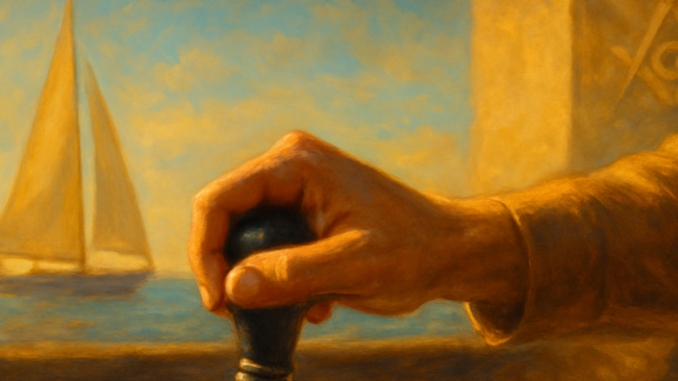
In a world racing toward automation, a surprising number of drivers still choose to drive a manual transmission. It seems paradoxical — why exert effort when ease is readily available? Yet hidden within this apparent illogic lies a deeper truth about human connection: that choosing engagement over convenience is what gives our relationships real meaning. It is precisely this tension that strikes at the heart of what brotherhood truly means in Freemasonry.
The Paradox of Purposeful Effort
Here is a statement that sounds contradictory at first: genuine connection does not arise despite effort but precisely because of it. The driver who opts for a stick shift when an automatic is available is making a quiet declaration of engagement. With every gear change, the driver remains an active participant in the act of driving rather than a passive observer being ferried from A to B.
This choice for active involvement has a remarkable parallel in Freemasonry. When Brethren gather in the Lodge, they consciously choose a form of togetherness that demands effort. The ritual is not designed for comfort. The symbols call for contemplation. The conversations require genuine listening and reflection. One could just as easily stay home on the couch — yet one chooses to show up, to participate, to shift gears.
Brotherhood as a Craft, Not a Default
Johann Wolfgang von Goethe, himself a Freemason, understood that human development never happens on autopilot. His entire body of work testifies to the conviction that a person must shape themselves through deliberate action. Brotherhood, in the Masonic sense, is therefore not a state of being — it is a practice. It is something you do, not something that simply happens to you.
Brotherhood is not automatic — it is a craft that requires daily shifting between self-interest and the common good.
Just as a manual car demands a continuous dialogue between driver and machine, brotherhood demands a continuous dialogue between the individual and the community. When we automate that dialogue — when we expect connection to materialize on its own — we lose something essential. We lose the conscious act that gives the relationship its meaning.
A Fair Counterpoint: Is Convenience Really the Enemy?
One might reasonably object that this romanticizes unnecessary discomfort. Why reject the automatic if it frees us for other, perhaps more important pursuits? This is an honest objection that deserves serious consideration.
Aristotle already distinguished between actions that are ends in themselves and actions that are merely means to something else. Driving a car is, for most people, a means — not an end. But brotherhood? That is very much an end in itself. It is not an instrument to achieve something else; it is an intrinsic value that comes into existence through the very act of practicing it.
Here lies the synthesis: not every domain of life requires deliberate effort. But those domains that are essential to our humanity — our relationships, our communities, our personal growth — cannot be automated without losing their essence. The automatic transmission is perfectly useful for the trip to the grocery store. But for the journey toward meaningful human connection, craftsmanship remains indispensable.
The Lodge as a Training Ground for Conscious Connection
In the Masonic Lodge, brotherhood is not preached — it is practiced. The ritual functions as a kind of gearbox: it demands attention, timing, and attunement to others. Those who go through the ritual distractedly miss the point entirely. Those who participate with full awareness discover how the actions themselves generate meaning.
Consider the elements that make up genuine brotherhood:
The handshake that communicates more than words ever could. The act of listening that truly hears, rather than merely waiting for one’s own turn to speak. The shared silence that becomes bearable — even sacred — precisely because it is shared. The act of forgiveness that costs effort yet creates space for growth.
Every one of these elements requires what we might call conscious shifting. They ask us to move out of our own gear and into the gear of another — to adjust, to slow down when needed, to accelerate when called for.
What Remains When Everything Is Automated?
The march toward automation will continue — including in human relationships. Algorithms increasingly determine whom we encounter. Digital systems manage our calendars, and with them, our meetings. The temptation grows to outsource even brotherhood to efficient structures and frictionless platforms.
Yet there will always be people who choose the manual version of life. Who consciously walk into the Lodge when they could have stayed home. Who write a letter when a text message would have been faster. Who have a real conversation when an emoji would have sufficed. These people understand something that no automated system ever can: that the value of connection lies in the effort we invest in it.
Perhaps the enduring popularity of the manual transmission is a quiet reminder of something fundamental. A reminder that certain things in life cannot be automated without losing their soul. Brotherhood belongs to those things. The question that remains is not whether we can automate, but whether we always should. And when it comes to genuine human connection, the answer may well be: keep shifting — consciously and with care. Because within that effort lies the meaning.
Copyright text & image: devrijmetselaar.nl
Texts are based on the ideas and content of the author of devrijmetselaar.nl, reviewed, corrected, and supplemented with the assistance of OpenAI. Images are created based on the ideas of the author of devrijmetselaar.nl using OpenAI/DALL-E.
Frequently Asked Questions
What does the article mean by comparing manual transmissions to Freemasonry?
The article uses manual transmissions as a metaphor for conscious, active participation in life. Just as a driver who chooses a manual car remains actively engaged with the driving process, Freemasons consciously choose to participate in rituals, symbols, and community dialogue that require genuine effort and thoughtful engagement. This deliberate choice to show up and participate is what creates meaningful brotherhood.
Is Freemasonry really that demanding? Why not just make it easier?
The article explains that while convenience is valuable in many areas of life, brotherhood is an intrinsic value that actually becomes more meaningful through the effort required to cultivate it. The rituals, symbols, and community commitments aren't designed to be burdensome but rather to create the conditions where genuine human connection and personal development can flourish. This purposeful engagement is what distinguishes real brotherhood from superficial connection.
Can I experience Freemasonry's benefits without putting in effort?
According to the article's philosophy, authentic brotherhood cannot be automated or passively received—it must be actively practiced and cultivated through daily choices to engage with both yourself and your community. The benefits of Freemasonry emerge precisely because members consciously choose to participate in rituals, listen deeply to one another, and contemplate the symbols together. True connection requires this conscious, ongoing effort from each participant.
What can I expect when I join a Masonic Lodge?
You can expect to be part of a community that values thoughtful participation, meaningful ritual, and genuine dialogue among members. Rather than a passive experience, Freemasonry invites you to actively engage with powerful symbols and traditions while building real connections with Brethren who share your commitment to personal growth and fellowship. This conscious engagement is what transforms a group of individuals into a true brotherhood.


Be the first to comment