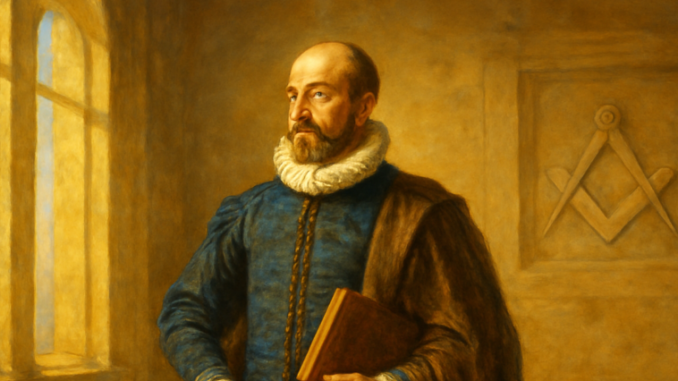
A letter arrives. A messenger awaits instructions. A prince must decide how much freedom to grant his envoy. What appears to be a straightforward question about diplomatic communication conceals a far deeper philosophical inquiry — one that captivated Michel de Montaigne: how much trust does a person deserve, and where lies the boundary between obedience and independent judgment? The philosophical traditions that shaped Montaigne’s thinking, from Stoicism to Renaissance humanism, cast a remarkable light on this sixteenth essay from his first book.
The Stoic Undercurrent
When Montaigne writes about the conduct of ambassadors, the voice of Seneca resonates unmistakably through the text. The Roman philosopher, whose letters to Lucilius Montaigne had studied so thoroughly, constantly emphasized the importance of practical wisdom over blind adherence to rules. Seneca warned that those who merely carry out orders without understanding are not truly acting — they are merely moving. This idea saturates Montaigne’s analysis of the envoy who must choose between the literal wording of his instructions and the spirit of his mission.
Stoicism taught that the wise person judges situations by their true nature, not by their outward appearance. Marcus Aurelius wrote in his personal meditations that one should ask of every object: what is this in its essence? Montaigne applies this principle directly to diplomatic practice. The ambassador who follows only the letter of his instructions may well miss the heart of what his master truly intended. Here, ancient Stoic virtue ethics meets the daily reality of power and trust.
Plutarch as Moral Guide
Alongside the Stoics, Plutarch was a constant companion in Montaigne’s intellectual life. The Greek writer, celebrated for his parallel lives of famous Greeks and Romans, offered Montaigne a treasury of examples illustrating leadership, loyalty, and moral decision-making. In the essay on ambassadors, Plutarch’s method of illuminating abstract virtues through concrete historical cases echoes clearly.
Plutarch described countless situations in which generals and statesmen had to decide whether to follow the strict orders of their superiors or trust their own judgment on the ground. Some were celebrated for their independent thinking; others were condemned to death for the very same quality. This moral ambiguity fascinated Montaigne. He recognized that no universal rule exists for determining when obedience is a virtue and when it becomes cowardice.
The Skeptical Foundation
Montaigne’s famous motto, Que sais-je? — What do I know? — permeates this essay as well, albeit in subtle ways. The Pyrrhonian skepticism he encountered primarily through the writings of Sextus Empiricus taught him to acknowledge the limits of human knowledge. When a prince gives his envoy instructions, he bases them on information that may be incomplete or outdated. The ambassador on the ground possesses fresh insights that his master does not.
The true wisdom of an ambassador lies not in the perfect execution of orders, but in grasping the intention behind those orders. This skeptical awareness does not lead to indecisiveness — it leads to humility. Montaigne suggests that both the one who gives orders and the one who carries them out must acknowledge the limits of their own knowledge. The prince who issues overly rigid instructions overestimates his own insight. The envoy who interprets too freely overestimates his. Somewhere within this tension, practical wisdom must be found.
Renaissance Humanism and the Value of the Individual
This essay appeared during a period when Renaissance humanism was placing the individual at center stage in a way the Middle Ages had never known. Thinkers such as Erasmus and Giovanni Pico della Mirandola had elevated human dignity to the status of a philosophical principle. The human being was no longer a passive instrument of higher powers but a creative agent endowed with independent judgment and personal responsibility.
Montaigne applies this humanistic view of the person to the figure of the ambassador. An envoy is not a mechanical relay for messages but a thinking being who must understand his master’s intentions and translate them into a changing reality. This demands not only loyalty, but also intelligence, courage, and moral discernment. The ambassador thus becomes a symbol of the thinking person in a world filled with uncertainty.
Hidden Lessons for Seekers of Wisdom
For those familiar with the traditions of fraternal orders devoted to the pursuit of wisdom, this essay opens a particularly resonant door. The relationship between master and envoy mirrors the relationship between teacher and student, between tradition and individual growth. How much freedom does the seeker have to interpret the knowledge handed down to him? When does fidelity to the letter become betrayal of the spirit?
The symbolism of the messenger who bridges two worlds — who carries information but also transforms it — resonates deeply with ancient initiatory traditions. Every transmission of knowledge is also a translation. Every student who learns inevitably adds something of himself to what he receives. Montaigne seems to suggest that this is not a flaw but the very essence of living wisdom. In Freemasonry, as in diplomacy, the art lies not in mechanical repetition but in thoughtful, principled interpretation.
The Intellectual Legacy
This seemingly modest essay on diplomatic practice turns out, upon closer examination, to be a crossroads of philosophical traditions. Stoic practical wisdom meets Pyrrhonian skepticism. Plutarch’s moral exemplars blend with humanist convictions about human dignity. Montaigne weaves these threads together into a meditation on trust, responsibility, and the art of acting under uncertainty.
Those who read Montaigne as merely a literary essayist miss the depth of his philosophical roots. Behind his apparently casual observations lies a thinker who had deeply internalized the great questions posed by his predecessors and applied them to the most human of dilemmas — how to act wisely when certainty is impossible.
Montaigne’s essay on ambassadors may seem like a historical curiosity, but its philosophical foundations speak directly to timeless questions about trust, authority, and the balance between obedience and independent thought. For Freemasons and all seekers of wisdom, the lesson endures: true understanding requires not just receiving knowledge, but engaging with it — translating inherited wisdom into lived experience, with humility, discernment, and moral courage.
Copyright text & image: devrijmetselaar.nl
Texts are based on the ideas and content of the author of devrijmetselaar.nl, reviewed, corrected, and supplemented with the assistance of OpenAI. Images are created based on the ideas of the author of devrijmetselaar.nl using OpenAI/DALL-E.
Frequently Asked Questions
What is the main philosophical question Montaigne explores regarding ambassadors?
Montaigne investigates the fundamental tension between trust and obedience, asking how much freedom a prince should grant his envoy and where the boundary lies between blind obedience and independent judgment. He uses diplomatic communication as a lens to examine deeper questions about personal autonomy and moral responsibility.
How does Stoicism influence Montaigne's analysis of ambassadors?
Montaigne draws heavily from Stoic philosophers like Seneca and Marcus Aurelius, who emphasized practical wisdom over rigid rule-following. The Stoic principle of judging situations by their true essence rather than outward appearance leads Montaigne to argue that ambassadors must understand the spirit of their mission, not merely follow instructions literally.
What role does Plutarch play in Montaigne's essay on ambassadors?
Plutarch serves as a moral guide through his parallel lives of Greeks and Romans, providing concrete historical examples of leaders facing dilemmas between following strict orders and trusting their own judgment. These cases illustrate the moral ambiguity Montaigne finds fascinating: that both obedience and independent thinking can be virtues or vices depending on circumstances.


Be the first to comment