Vrijmetselarij - Montaigne over moed en menselijkheid
Michel de Montaigne

Montaigne on Courage and Humanity

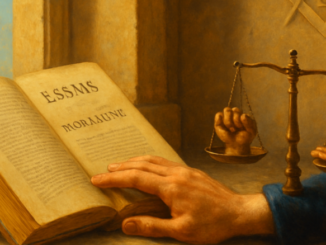
In the opening chapter of his Essays, Michel de Montaigne immediately shows what kind of thinker he is. He offers no rules, no instructions, and no moral conclusions. He observes. He compares. And he invites the reader to think for themselves. His central idea is simple, yet unsettling: completely different attitudes can sometimes lead to the same outcome. Humility may work. Fearless courage may also work. But just as often, neither does. With that, Montaigne sets the tone. Anyone looking for fixed answers will not find them here. No fixed formula for right action Montaigne describes situations in which people seek mercy from a victor. Sometimes by pleading and submitting. Sometimes by standing firm and refusing to show weakness. At times this evokes compassion. At other times, respect. And sometimes it provokes even greater cruelty. His point is clear: human behavior cannot be reduced to rules. What moves one person may irritate another. What inspires admiration today may provoke jealousy tomorrow. For those interested in Freemasonry, this feels familiar. Freemasonry does not promise ready-made answers but teaches how to deal with complexity. Not by judging, but by understanding. Compassion and admiration One of the most striking moments is Montaigne’s honesty […]
Vrijmetselarij - John Stuart Mill’s Of Names and Propositions: Fundamenten van Taal en Logica
Philosophy

John Stuart Mill over namen en proposities: de fundamenten van taal, logica en betekenis

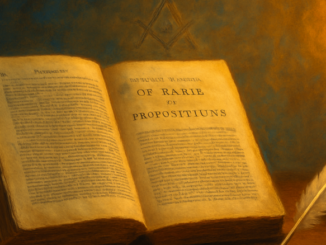
Dit artikel over het baanbrekende werk van John Stuart Mill over taal en logica is recent bijgewerkt en verrijkt met nieuwe inzichten. Mill’s analyse van namen en proposities raakt aan fundamentele vragen die ook binnen de vrijmetselarij centraal staan: hoe verhouden woorden zich tot waarheid, en hoe kunnen symbolen ons dichter bij kennis brengen? Een verkenning die verrassend actueel blijft. John Stuart Mill, one of the most influential thinkers of the 19th century, is best known for his contributions to ethics, political philosophy, and economics. However, his work in the philosophy of language and logic is equally important, though less recognized. In Of Names and Propositions, a chapter from his masterpiece A System of Logic (1843), Mill delves deeply into the nature of language and meaning. This essay has had a lasting impact on philosophy and forms a key foundation for modern views on language, thought, and reasoning. This post provides a detailed analysis of Of Names and Propositions. We will explore its core ideas, implications for philosophy and logic, and the relevance of Mill’s work in contemporary discussions. The Context of Mill’s Work Mill wrote A System of Logic to clarify the foundations of scientific thinking and reasoning. At […]

Vrijmetselarij - Cycli en Tijd: De Impact op de Mensheid Door de Eeuwen Heen
Philosophy

Cycli en tijd: hoe ons tijdsbesef de mensheid door de eeuwen heen heeft gevormd

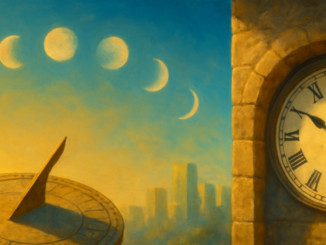
Dit artikel over de invloed van tijdscycli op de mensheid is recent bijgewerkt met nieuwe inzichten en verdiepende verbanden met de vrijmetselarij. Van de prehistorische maancycli tot de moderne 24-uurseconomie: de manier waarop wij tijd ervaren heeft ons als mensheid fundamenteel gevormd. Ontdek hoe het cyclische denken – dat ook in de rituelen van de vrijmetselarij voortleeft – een tegenwicht kan bieden aan de hectiek van lineaire tijd. The human experience is deeply intertwined with time. From early civilizations to the modern world, cycles and time have shaped our view of life, our rituals, and our understanding of reality. But how has the transition from thinking in natural cycles to experiencing linear time influenced humanity? And what are the consequences for modern life, socially, mentally, and physically? Humans and Natural Cycles In prehistoric times, humans lived in complete harmony with natural cycles: the movement of the sun, the phases of the moon, the seasons, and the life cycles of plants and animals. This cyclical perception of time provided structure and meaning to life. The rise and fall of the sun dictated work and rest, while moon phases and seasons determined rituals, harvests, and celebrations. Natural cycles provided a sense of […]

Vrijmetselarij - Occam's Razor en Ontologie: De Kunst van Eenvoud in Complexiteit
Philosophy

Occam’s Razor en ontologie: de kunst van eenvoud in complexiteit

Dit artikel over Occam’s Razor en ontologie werd oorspronkelijk in het Engels gepubliceerd en is nu grondig herzien en vertaald voor onze Nederlandstalige lezers. De zoektocht naar eenvoud te midden van complexiteit is een tijdloos thema dat nauw aansluit bij de vrijmetselarij — waar symbolen en rituelen juist bedoeld zijn om diepe waarheden in begrijpelijke vormen te gieten. Ontdek hoe twee krachtige filosofische principes ons helpen de essentie van de werkelijkheid te doorgronden. The world we live in is filled with complex ideas, systems, and concepts. Finding clarity amidst this complexity is a challenge philosophers, scientists, and thinkers have tackled for centuries. Two powerful philosophical principles that help us achieve this are Occam’s Razor and ontology. Together, they offer a toolset to better understand the essence of reality and solve complex problems. In this blog post, we’ll explore the meaning of Occam’s Razor and ontology, discover how these two principles are connected, and provide examples of how they are applied in practice. What is Occam’s Razor? Occam’s Razor, or the law of parsimony, is a philosophical principle dating back to the 14th-century English philosopher and theologian William of Ockham. The idea is simple: the simplest explanation that accounts for all […]