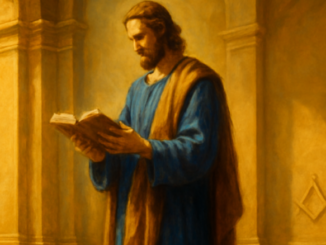
Leonardo da Vinci The Last Supper with symbolic Freemasonry elements
Symbolism & Rituals

Leonardo da Vinci in The Da Vinci Code: What Does It Claim?

A painting is never just pigment on canvas. Anyone who gazes long enough at Leonardo da Vinci’s The Last Supper senses something vibrating beneath the surface — something that resists easy articulation. It is precisely this ineffable feeling that Dan Brown’s novel The Da Vinci Code taps into. The book claims that Leonardo deliberately embedded hidden messages in his masterpieces, secrets understood for centuries by initiates and overlooked by the rest of the world. But what exactly does the novel assert, and what deeper layers emerge when we examine those claims through the lens of Freemasonry? The Painting as a Cipher In The Da Vinci Code, Dan Brown presents Leonardo da Vinci as a deliberate encoder. According to the story, the Florentine master planted hidden clues in works like The Last Supper and the Mona Lisa. These are not subtle aesthetic choices or stylistic quirks — they are carefully constructed visual codes designed to reveal an alternative reading of Christian history. The figure seated next to Christ in The Last Supper is said to be not a male apostle but Mary Magdalene. The V-shape formed between the two figures supposedly represents a feminine symbol. The absence of a chalice on […]
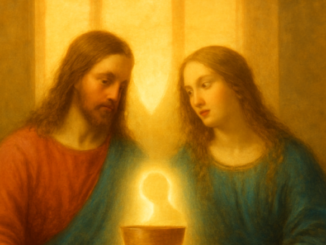
Vrijmetselarij - Maria Magdalena en de Heilige Graal volgens The Da Vinci Code
Symbolism & Rituals

Mary Magdalene and the Holy Grail in The Da Vinci Code

You probably know the image well: a chalice shrouded in mystery, the object of centuries-long quests. But what if the Holy Grail isn’t a cup at all? In his worldwide bestseller The Da Vinci Code, Dan Brown presents a radically different reading of this symbol — one that places Mary Magdalene at its very center. What exactly does the book claim, and how can seekers of truth approach these ideas in a meaningful, practical way? The Central Claim of the Book The Da Vinci Code, written by Dan Brown and published in 2003, revolves around a spectacular thesis: the Holy Grail is not a physical cup said to have caught the blood of Christ, but a metaphor for Mary Magdalene herself. According to the narrative Brown presents, she was not merely a follower of Jesus but his wife and the bearer of his bloodline. The Grail, then, refers to the lineage continued through her. Brown weaves this claim through his plot by way of a secret society that has allegedly guarded this truth for centuries. He points to the works of Leonardo da Vinci — most notably The Last Supper — arguing that the figure seated next to Jesus is […]

Ancient manuscript and magnifying glass symbolizing the Priory of Sion mystery
Symbolism & Rituals

The Priory of Sion in The Da Vinci Code: Fact or Fiction?

You may have read the book or watched the movie: Dan Brown’s The Da Vinci Code spins a breathtaking tale about a secret organization that has supposedly guarded an explosive secret for centuries. The Priory of Sion sits at the very heart of the story. But what exactly does the book claim? And more importantly, how can you, as a critical reader, evaluate such claims for yourself? In this article, we unravel the central assertions of this bestselling novel and give you practical tools to separate fact from fiction. What Does The Da Vinci Code Claim About the Priory of Sion? In The Da Vinci Code, Dan Brown portrays the Priory of Sion as an ancient secret brotherhood dating back to the era of the Crusades. According to the story, this organization was founded to protect an explosive secret: the alleged bloodline of Jesus Christ and Mary Magdalene. The book suggests that famous historical figures such as Leonardo da Vinci, Isaac Newton, and Sandro Botticelli served as Grand Masters of the Priory. Brown presents a fascinating theory within his novel: through secret documents and symbols, the Priory supposedly passed this secret down through the centuries. Artworks, architecture, and hidden codes […]