
Imagine losing everything you thought you needed — your position, your possessions, perhaps even a conviction you cherished for years. Would that be the end, or a new beginning? The sixty-fourth surah of the Quran, known as At-Taghabun or The Mutual Loss, poses exactly this question. And its answer touches something that resonates deeply within Freemasonry: the art of letting go as a precondition for inner growth.
What Does The Mutual Loss Tell Us?
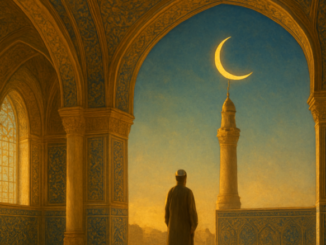
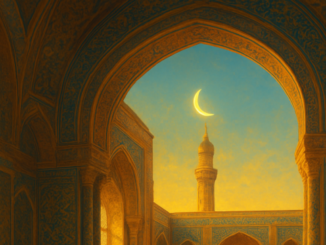
This surah — the sixty-fourth of the Quran’s one hundred and fourteen chapters — carries a title you might not immediately expect in a holy book: The Mutual Loss. The Arabic word refers to a moment of unmasking, a day when everyone sees clearly what was truly gain and what was loss. This is not about material balance sheets but about an existential reckoning. Who has spent their time on earth devoted to what truly matters? Who has been blinded by false certainties?
The surah opens with a powerful image: everything in the heavens and on earth glorifies the divine. Then humanity is reminded of its own impermanence and the choices made each day. Possessions, children, status — all of these are trials. Not because they are inherently bad, but because they can distract from a deeper search. The core message is clear: let go of what holds you captive, give generously, and forgive. Only those who do so will find true wealth.
Letting Go as a Spiritual Discipline
You probably know the feeling: you cling to something — an idea, a habit, a self-image — and somewhere inside you know it is not serving you anymore. The Mutual Loss speaks to this without hesitation. It describes how people deceive themselves into believing that outward prosperity equals inner progress. The real loss is not what is taken from you, but what you never dared to examine within yourself.
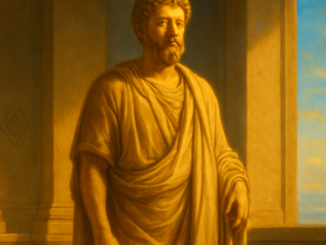
This theme of letting go is far from unique to the Islamic tradition. The Stoic philosopher Seneca wrote extensively about the freedom that comes from releasing attachment. Marcus Aurelius observed that it is not events themselves that trouble us, but our judgments about them. In the Buddhist tradition, non-attachment is one of the pillars on the path to enlightenment. The Mutual Loss connects to a universal stream of wisdom that runs across cultures and centuries.
The Freemason and the Trial of the Ego
If you are at all familiar with Freemasonry, you know that the initiatory journey begins with a fundamental stripping away. The candidate is divested of metals — of the outward signs of rank and wealth — and enters the lodge in a state of symbolic nakedness. This is not humiliation but an invitation. Only when you release the superfluous can you receive what is truly valuable.
The parallel with The Mutual Loss is striking. The surah warns that possessions and relationships can be trials — not because they are worthless, but because they can cloud your vision. In Freemasonry, this is called working the rough ashlar: chipping away everything that does not belong to your core, so that the pure form may emerge. It is a process that demands courage, because it means looking honestly at yourself and acknowledging where your ego has taken charge.
True letting go is not loss — it is the first stone of an inner edifice that can never collapse.
Forgiveness as a Building Block of Brotherhood
One of the most remarkable verses in this surah calls for forgiveness — not as a sign of weakness, but as a source of strength. To forgive, in this context, means freeing yourself from the burden of resentment so that you can move forward with an open heart. In Freemasonry, brotherhood is no casual concept. It demands the ability to look beyond personal grievances and to see the other as a fellow seeker on the same path. Those who cannot forgive build on quicksand.
The philosopher Voltaire, who had close ties to the Enlightenment ideals that also shaped Freemasonry, wrote that tolerance is the highest virtue of civilized humanity. Forgiveness may be the personal counterpart of that same tolerance. Where tolerance concerns how you meet the world, forgiveness concerns how you order your own inner world. Both are indispensable for anyone who seeks to build themselves into a better person.
Seeking Light Beyond Appearances
The Mutual Loss reminds us that true light is not found in what the world holds up as valuable. True light resides in self-knowledge, in generosity, and in the willingness to make yourself vulnerable. This message echoes through the mystical traditions of virtually every civilization. The search for light — so central to Freemasonry — is not a search for an external spotlight, but for the ability to see clearly in your own darkness.
Johann Wolfgang von Goethe, himself a Freemason and one of the greatest minds of Western culture, distilled this into his famous dying words: more light. Not a request for a lamp, but an expression of a lifelong attitude — always searching further, always willing to go one layer deeper. The Mutual Loss invites you to do exactly the same: look beyond the surface and dare to discover what you truly gain when you are willing to lose what only appeared to matter.
You do not need to be a Muslim to be moved by the message of this surah, just as you need not be a Christian to find inspiration in the Sermon on the Mount, or a Stoic to recognize truth in the Meditations of Marcus Aurelius. Great spiritual texts speak a language that reaches far beyond the boundaries of any single tradition. They touch something we all share: the longing to live meaningfully, to grow, and to become more than we were yesterday. The Mutual Loss, read through the lens of Freemasonry, is ultimately an invitation to self-reflection — a call to set down what weighs you down, so that you may rise toward the light you have always carried within.
Copyright text & image: devrijmetselaar.nl
Texts are based on the ideas and content of the author of devrijmetselaar.nl, reviewed, corrected, and supplemented with the assistance of OpenAI. Images are created based on the ideas of the author of devrijmetselaar.nl using OpenAI/DALL-E.

Be the first to comment