Leader serving a community symbolizing Masonic ideals of servant leadership
Freemasonry & Society

Service to the Whole: Leadership as a Calling in Freemasonry

When someone declares, after years away from the spotlight, that they remain willing to serve whenever called upon, it touches on something deeply fundamental. Recent remarks by a well-known football manager about his readiness to take on a national coaching role again — regardless of personal circumstances — raise questions that extend far beyond the world of sport. What does it truly mean to place yourself in service of something greater? And how do two very different worldviews — the public arena and the Masonic tradition — understand this concept of service? The Public View of Leadership In today’s society, leadership is overwhelmingly measured by results. A coach is judged by matches won, an executive by quarterly earnings, a politician by policies enacted. The question the outside world invariably asks is: what have you achieved? This perspective is understandable. It provides a sense of certainty in a complex world where we crave measurable success. When an experienced leader offers to step back into a demanding role, the public arena tends to analyze the move in terms of ego, ambition, or even vanity. Why would someone who has already reached the pinnacle volunteer to step into the line of fire once […]

Mountain climbers roped together ascending a snowy peak at dawn
Freemasonry & Society

The Mountain as Mirror: Climbing Tragedy and Brotherhood

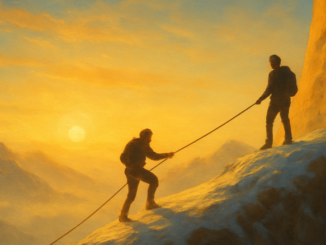
Somewhere high in the Karakoram, bodies lie beneath the snow. A renowned climber is missing, and the world waits in uncertainty. The mountain refuses to reveal who it has taken. In the tension between hope and grief, between knowing and not knowing, there lies a deeper lesson about what connects us as human beings — a lesson that reaches far beyond any summit, straight into the heart of every community built on trust. The Rope That Binds Mountaineers know a simple truth: you are only as strong as the weakest link on your rope. The line that connects climbers is more than a safety device. It is a promise — a promise not to let go when the abyss beckons, when the storm rises, when strength begins to fail. In that promise, Freemasons recognize something deeply familiar. We too are bound by an invisible cord, woven from ritual, trust, and mutual devotion. The tragedy in Pakistan confronts us with the fragility of that bond. When one link in the rope falls, the entire group feels the shock. The bodies in the snow are not merely individuals — they are links in a chain of relationships: families, friends, climbing partners who […]

Mammoth bones exposed along the Danube River banks during low water levels
Freemasonry & Society

Mammoth Bones in the Danube: What the Depths Reveal About Us

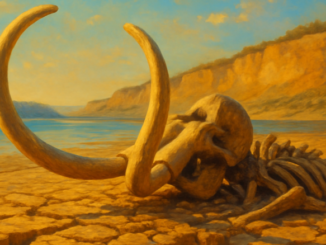
Imagine walking along the banks of the Danube River in Bulgaria and spotting something protruding from the mud — something that last saw the light of day tens of thousands of years ago. Mammoth bones, exposed by historically low water levels this summer. It’s the kind of discovery that stops you in your tracks and makes you wonder: what lies hidden beneath the surface of our world, our society, and ourselves? And what happens when those hidden layers are unexpectedly revealed? When the River Reveals Its Secrets The Danube has flowed through the heart of Europe for millennia, carrying far more than water. It carries history, culture, and apparently the remains of creatures that roamed these plains long before the first human ever set foot on its banks. This summer’s extreme drought dropped water levels so dramatically that these ancient relics became visible once more. It’s a striking image: what normally stays hidden beneath the current of daily life suddenly surfaces when conditions change. You may recognise this feeling from your own experience. There are moments in life when something forces you to look deeper than you’re accustomed to — a crisis, a loss, an unexpected event. Suddenly you see […]

Symbolic representation of the three degrees of Freemasonry with Masonic tools
Freemasonry & Society

The Degrees in Freemasonry Explained: A Complete Guide

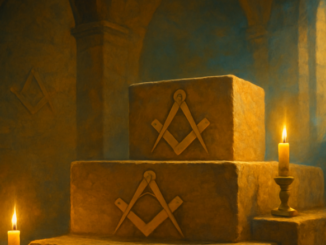
The degrees in Freemasonry form the backbone of the entire fraternity. They are far more than titles or ranks — they represent stages of personal growth, ethical deepening, and brotherly connection. Understanding the degree system is the key to unlocking the symbolism, rituals, and philosophy that define this centuries-old brotherhood. This article offers a comprehensive yet accessible overview of Masonic degrees, from the first step as an Apprentice to the highest levels found within the various rites. The Historical Background of the Degree System To truly understand the degrees in Freemasonry, it helps to look at the historical roots of the fraternity. Modern Freemasonry as we know it developed in early eighteenth-century Britain. On June 24, 1717, the first Grand Lodge was founded in London — a milestone that ushered in the era of modern, speculative Freemasonry. The four lodges that united on that occasion initially worked with a simple two-degree system: the Entered Apprentice and the Fellow Craft. It was only shortly afterward, around 1725, that the third degree — that of Master Mason — was added to the system. The origins of this degree structure lie in the medieval stonemason guilds, often referred to as operative Freemasonry. The […]

No Picture
Freemasonry & Society

The Degrees of Freemasonry Explained

Freemasonry is one of the world’s oldest and most widely recognised fraternal traditions, and at the heart of its structure lies a carefully organised system of degrees. These degrees of Freemasonry represent successive stages of moral, philosophical, and symbolic instruction through which a member progresses over time. Each degree introduces new allegories, rituals, and teachings designed to deepen a Mason’s understanding of virtue, duty, and the human condition. Whether you are newly curious about the Craft or seeking a more thorough understanding of its architecture, exploring the degree system is the most direct path into the heart of Freemasonry’s living tradition. Historical Background of the Degree System The origins of Freemasonry’s degree structure are rooted in the medieval guild traditions of operative stonemasons — the craftsmen who built the great cathedrals, castles, and civic monuments of Europe. These guilds used a system of ranks to distinguish apprentices from journeymen and master craftsmen, regulating both knowledge and access to trade secrets. When speculative Freemasonry — concerned not with physical building but with moral and philosophical development — emerged in the early eighteenth century, it inherited and transformed this hierarchical model. The founding of the Premier Grand Lodge of England in London […]

No Picture
Freemasonry & Society

The Degrees of Freemasonry Explained

Freemasonry is one of the world’s oldest and most widely recognized fraternal organizations, and at the heart of its structure lies a carefully designed system of degrees. These degrees of Freemasonry are not simply ranks or titles — they are initiatory stages, each carrying its own symbolism, ritual, and philosophical teachings. Understanding how this degree system works offers a window into the rich intellectual and moral tradition that has shaped Freemasonry for centuries. Whether you are a curious newcomer, a family member of a Mason, or someone considering membership, this guide offers a thorough and balanced overview of what the degrees mean, where they come from, and why they continue to matter. Historical Background of the Masonic Degree System The origins of the Masonic degree system are rooted in the transition of stonemasons’ guilds from operative (working) craft organizations to speculative (philosophical) brotherhoods during the late 17th and early 18th centuries. The earliest clear evidence of a formal degree structure dates to the founding of the first Grand Lodge in London in 1717, though historians such as David Stevenson have argued persuasively that organized Masonic lodges existed in Scotland as early as the late 16th century. The initial structure consisted […]

Vrijmetselarij - Wat is vrijmetselarij?
Freemasonry & Society

What is Freemasonry?

Freemasonry is one of the world’s oldest and most widely recognized fraternal organizations, uniting men across cultures, borders, and generations through a shared commitment to moral development, philosophical inquiry, and brotherly fellowship. Founded on the symbolic tools of the stonemason’s craft, Freemasonry uses allegory and ritual to encourage its members — known as Masons or Freemasons — to become better versions of themselves. With millions of members worldwide and lodges active on every inhabited continent, understanding what Freemasonry is means exploring a tradition that has quietly shaped much of Western civilization for centuries. Historical Background: The Origins of Freemasonry The history of Freemasonry is a rich tapestry woven from medieval craft guilds, Renaissance philosophy, and Enlightenment idealism. While the precise origins remain a subject of scholarly discussion, most historians trace the formal establishment of speculative Freemasonry to the founding of the Premier Grand Lodge of England in London on June 24, 1717 — the feast day of St. John the Baptist. Four London lodges came together at the Goose and Gridiron Alehouse in St. Paul’s Churchyard to form this central governing body, marking the beginning of organized, modern Freemasonry as we know it. However, the roots of the fraternity stretch […]

Masonic square and compasses symbol representing the fraternity of Freemasonry
Freemasonry & Society

What Is Freemasonry? Origins, Values, and Philosophy

Freemasonry is one of the oldest and most influential fraternal organizations in the world, with roots stretching back to the early eighteenth century. It’s a question many people ask — what is Freemasonry, really? — and the answer is far richer and more nuanced than most expect. Freemasonry is not a religion, not a political movement, and not a secret society in the sensationalized way popular culture might suggest. It is an ethical and philosophical brotherhood that brings men — and in some lodges, women — together around shared values such as fraternity, truth, charity, and moral self-improvement. Through symbolism, ritual, and philosophical reflection, Freemasonry invites its members on a lifelong journey of personal growth and service to society. The Historical Background of Freemasonry From Stonemasons to Philosophers: The Medieval Guilds The history of Freemasonry begins with the medieval craft guilds of masons and stonemasons. During the Middle Ages, the skilled craftsmen who built Europe’s great cathedrals, churches, and castles were organized into guilds that carefully guarded their trade knowledge, techniques, and tools. These guilds had their own rules, initiation ceremonies, and signs of recognition that allowed members to identify one another and distinguish themselves from outsiders. The so-called “operative […]

Vrijmetselarij - Wat is vrijmetselarij?
Freemasonry & Society

What is Freemasonry?

Freemasonry is one of the world’s oldest and most widely recognised fraternal organisations, uniting men across cultures, nationalities, and backgrounds under a shared commitment to moral development, brotherly love, and service to humanity. With roots stretching back several centuries and lodges active on every inhabited continent, Freemasonry has shaped the lives of millions of men and, through them, the societies they lived in. Understanding what Freemasonry is requires looking beyond myths and misconceptions to explore its genuine history, philosophy, and practice — a journey that reveals a tradition as fascinating as it is enriching. Historical Background of Freemasonry Origins: From Operative to Speculative Masonry The story of Freemasonry begins with the medieval stonemasons’ guilds of Europe. Skilled craftsmen who built the great cathedrals, castles, and public buildings of the Middle Ages organised themselves into guilds to protect their trade secrets, regulate standards of workmanship, and care for their members. These were the operative masons — men who worked with actual stone and mortar. Over time, particularly between the 16th and 17th centuries, these guilds began admitting members who were not working stonemasons. These so-called “accepted” masons were often educated gentlemen, merchants, or intellectuals who were drawn to the philosophical and […]

Vrijmetselarij - Wat is vrijmetselarij?
Freemasonry & Society

What is Freemasonry?

Freemasonry is one of the world’s oldest and most widespread fraternal organisations, uniting men of good character across cultures, faiths, and backgrounds under a shared commitment to moral development, brotherly love, and service to society. Understanding what is Freemasonry means exploring a tradition that stretches back centuries, encompassing a rich tapestry of symbolism, ritual, philosophy, and charitable action. Far from being a secret society, Freemasonry is better described as a society with secrets — an organisation that is open about its existence and values while preserving certain ceremonial traditions as part of its unique character. Today, millions of Freemasons meet in lodges around the world, continuing a tradition that has shaped culture, philosophy, and civic life in profound ways. Historical Background and Origins The history of Freemasonry is as fascinating as it is complex. While the organisation as we know it today was formally established in the early eighteenth century, its roots reach much deeper — both in documented history and in the symbolic traditions it has adopted. The Stonemason Guilds The most widely accepted historical account traces the origins of Freemasonry to the medieval stonemason guilds of Europe. Skilled craftsmen who built the great cathedrals, castles, and public buildings […]

Stuntman leaping from a platform symbolizing trust and Masonic brotherhood
Freemasonry & Society

The Human Catapult: On Daredevils, Trust, and Brotherhood

Picture this: you’re standing on a platform, about to be launched through the air by a human catapult. Below you lies a landing zone. Around you stands a team that has gone over every detail. And yet, things go wrong. A stuntman recently broke his ankle after a jump with a human catapult at a major festival. The news struck me — not just because of the pain involved, but because of the deeper question it raises: what does it truly mean to surrender yourself to a system, to other people, to the unknown? The Leap and the System A stuntman who allows himself to be launched into the air does something most of us would never dare. It’s not just about the physical courage required — it’s about the trust that precedes the leap. A structure has been built. Calculations have been made. People stand ready to catch you. You surrender yourself to a system that is larger than you are. And sometimes, despite every preparation, things go wrong. This isn’t some abstract philosophical puzzle. It’s the reality of everyday life for each one of us. Perhaps not as spectacular as a human catapult, but equally real. Every time […]

Masonic square and compass with symbolic scales representing value and measure
Freemasonry & Society

Falling Inflation, Rising Worries: A Philosophical Exploration

Here is a paradox that demands deeper reflection: economists tell us inflation is falling, that the numbers are moving in the right direction, that the curve is finally bending downward. Yet we look at the receipt at the checkout and feel something quite different. Groceries still cost more than we expect, the energy bill still stings, and fixed costs still gnaw at our peace of mind. How can something simultaneously improve and remain painful? This tension between measurement and experience — between abstract truth and felt reality — touches on fundamental questions about how we, as human beings, assign value to the world around us. The Gap Between Numbers and Feeling Let us first examine the paradox more closely. When economists speak of falling inflation, they mean the rate at which prices are rising is slowing down. Prices are not falling — they are simply rising less quickly. It is the difference between a car still moving forward, but decelerating. For anyone already struggling to keep up, this offers little comfort. The distance between where you are and where you need to be is still growing, just not as fast. This is not a matter of ignorance or misunderstanding on […]

City bus passengers symbolizing shared community trust and vulnerability
Freemasonry & Society

Building Safety Together: A Masonic Reflection on Trust

It’s early morning. On a city bus in Rotterdam, people sit side by side: a mother with her child, a student wearing headphones, an elderly man carrying groceries. They share the same space, the same journey, the same vulnerability. Then shots ring out. Today’s news confronts us with a question Freemasons have been asking for centuries: how do we build a world in which strangers can trust one another? The Bus as a Mirror of Society A city bus is more than a means of transportation. It is one of the few remaining places where every layer of society literally sits side by side. Rich and poor, young and old, people from vastly different backgrounds and life stories. No one chooses their fellow passengers, yet everyone shares a common destination. This forced proximity makes the bus a powerful symbol of what society truly is: a collection of individuals who depend on each other’s goodwill. When violence invades that shared space, it doesn’t only harm those directly involved. It shakes the very foundation of communal life — the basic trust that we can be safe among strangers. For Freemasons, this trust is never taken for granted. It is a structure that […]

Referee whistle symbolizing judgment and Masonic self-reflection
Freemasonry & Society

The Referee’s Whistle: When the Crowd Becomes the Judge

A match ends. The ball rolls to a stop. And then something erupts that has nothing to do with sport. The recent decision by a national football association to file complaints against hateful messages directed at players after a World Cup elimination reveals a deeper societal issue. How is it that people who were cheering moments ago can transform, in the blink of an eye, into judges who strip fellow human beings of their dignity? Behind this phenomenon lies a symbolic truth that Freemasons have explored for centuries: the struggle between the lower and higher self, and the choice that every moment demands of us. The Whistle as a Symbol of Final Judgment A referee’s whistle is a small object. Metal, simple, functional. Yet it carries an enormous symbolic weight. The moment it sounds, a match is frozen into a result. Win or lose. Hero or scapegoat. The complexity of ninety minutes of effort, dozens of decisions, and countless variables is reduced to a single number. This is the paradox of every judgment: it brings clarity, but it sacrifices nuance. In Freemasonry, we know a comparable symbol: the gavel. The Worshipful Master strikes it at decisive moments — not to […]

Masonic rough ashlar stone symbolizing the search for understanding and peace
Freemasonry & Society

The Message as Weapon: Conflict and the Search for Understanding

A plane crashes in the jungle. A life ends far from home. A message echoes across borders — designed to shock, to warn, to force the world to listen. When violence becomes a means of communication, society faces a fundamental question: how do we respond to messages written in blood? This is not a question reserved for diplomats and strategists. It strikes at the very heart of what it means to be human in a world of broken connections. The Airplane as a Symbol of Connection An airplane is more than a mode of transport. Symbolically, it represents the deeply human urge to bridge distances, to connect what has been separated. The pilot at the controls embodies the role of a connector between worlds that might otherwise never touch. When such a plane is brought down, it is not merely a machine that is destroyed — a symbol is struck. In Freemasonry, connection plays a central role. The lodge is, by its very nature, a place where people of different backgrounds, professions, and convictions come together. Not despite their differences, but precisely because those differences offer valuable perspectives. The Mason builds bridges, not walls. He seeks what unites people, not […]

Symbolic representation of unity and harmony in Freemasonry and community
Freemasonry & Society

Concordia: How Unity Shapes Both Sports Clubs and Freemasonry

In the heart of the Dutch province of Friesland, the name Concordia Sneek carries a meaning that reaches far beyond sports. The Latin word concordia — meaning unity or harmony — reflects a deeply rooted human aspiration: the desire for connection in a fragmented world. This desire takes many forms, from local sports clubs to centuries-old brotherhoods. When we examine these seemingly different worlds through the lens of community and civic engagement, surprising parallels emerge. The World of Concordia Sneek: Local Bonds in Action For anyone who grew up in or around the Frisian town of Sneek, the name Concordia is inseparable from community life. For generations, it has stood for togetherness on the sports field, for the thrill of competition and the warmth of the clubhouse afterward. It is a world where people know each other by name, where volunteers tirelessly mark the pitch lines, and where children learn their first lessons in teamwork. This local community functions as a micro-society. There are written and unwritten rules, traditions passed down from generation to generation, and a shared purpose that binds individuals together. The player who dedicates his best years to the club, the parent who stands on the sideline […]

Symbolic representation of agnosticism and Freemasonry paths converging
Freemasonry & Society

Agnosticism and Freemasonry: Two Paths Toward the Unknowable

Agnosticism is often understood as a position of not-knowing — a philosophical stance that acknowledges certain questions about existence may be unanswerable. Freemasonry, on the other hand, is sometimes perceived as a fraternity defined by its rituals and symbols. But what happens when we place these two worlds side by side? Both share a fundamental recognition: that the human mind cannot fathom everything, and that within that very recognition lies a particular kind of wisdom. In this article, we explore how the agnostic outlook and Masonic philosophy mirror and enrich each other. The Agnostic Perspective: Living With Uncertainty The agnostic does not claim to know whether a higher power exists. This is not a weakness or a lack of conviction — it is a deliberate intellectual position. The term was coined in the nineteenth century by the British biologist Thomas Henry Huxley, who wanted to express that certain metaphysical questions lie beyond the reach of human knowledge. The agnostic stance demands humility: the ability to say “I don’t know” without abandoning the search for meaning. In modern society, agnosticism is frequently confused with indifference or atheism. Nothing could be further from the truth. Where the atheist asserts that no god […]

Rescue workers digging through rubble symbolizing brotherhood and hope
Freemasonry & Society

Rescue Under Rubble: What Rescue Workers Teach Us About Hope

For two days, a baby lay buried beneath the rubble of collapsed buildings in Venezuela. Rescue workers dug tirelessly, hour after hour, until their hands finally reached a living child. This story touches something universal within us — the refusal to give up when a human life is at stake. It also resonates deeply with the principles of Freemasonry: the power of organized cooperation, perseverance, and practical charity in action. Chaos and Determination After earthquakes struck Venezuela, rescue workers faced an overwhelming challenge. Mountains of debris, unstable structures, limited resources, and the terrible knowledge that time was working against them. Yet they refused to stop. Every stone they removed, every inch of progress, was an act of hope. For two days, teams worked in rotating shifts — coordinated, disciplined, and driven — until the impossible became possible. Moments like these confront us with fundamental questions. What drives people to keep going when the odds seem insurmountable? How do you organize hope in a situation of utter chaos? And perhaps more importantly: what can we, in our everyday lives, learn from this kind of determination? Practical Brotherhood in Action Freemasonry speaks often of brotherhood, but that word only gains true meaning […]

Fallen tree on a road symbolizing unexpected tragedy and community response
Freemasonry & Society

When Fate Strikes: Brotherhood in Times of Crisis

Picture an ordinary weekday. You’re driving along a familiar road. The sun is shining, the trees are swaying gently in the breeze. Then, in a fraction of a second, everything changes. A tree falls, and the life you knew ceases to exist. Tragedy struck recently when a woman lost her life after a tree crashed onto her car. Emergency services were overwhelmed with calls, alerts flooded in from every direction. In moments of chaos and grief like these, an ancient question rises to the surface: what truly binds us together as a community when fate strikes without mercy? The Fragility of Existence Perhaps you’ve felt it yourself — that sudden, jarring moment when you realize just how fragile life really is. You walk down the street, you breathe, you make plans for tomorrow, and somewhere deep down you know that none of it is guaranteed. Freemasonry has always acknowledged this vulnerability. Not as something to fear, but as something to embrace. Throughout the symbolism of the lodge, you find constant reminders of human mortality: the skull, the hourglass, the extinguished candle. These symbols aren’t meant to darken your mood. They’re meant to wake you up. To remind you that every […]

Gavel and chisel on a rough ashlar stone symbolizing Masonic self-work
Freemasonry & Society

Intent and Responsibility: Lessons From the Law for Freemasons

A new law is making headlines: it criminalizes the glorification of terrorism, but only when there is proof of intent. That single word — intent — touches on something profound. What does it truly mean to act consciously? And why does the distinction between deliberate choice and careless behavior matter so deeply, both in a courtroom and in the quiet reckonings of your own conscience? The Weight of a Single Word In legal language, intent sounds dry and technical. But behind that term lies an entire view of what it means to be human. The law assumes you are only truly responsible for something when you did it consciously — when you knew what you were doing and chose to continue anyway. That is no minor principle. It says we should not condemn people for unintended consequences. It demands that we distinguish between a misstep and a deliberate choice. This nuance is not only relevant in courtrooms. It touches on how you see yourself when you look in the mirror. How much of what you do is truly conscious? And how much simply happens — out of habit, conformity, or inattention? Consciousness as the Art of Living Within Freemasonry, this […]