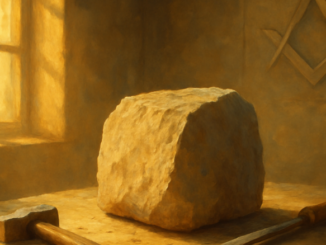
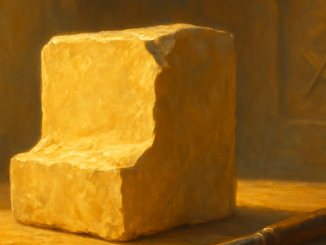
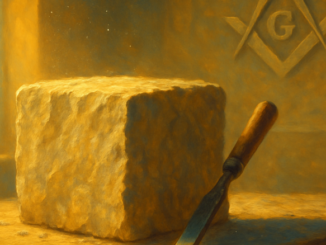
Rough ashlar stone being shaped symbolizing Masonic character formation
Personal Development & Leadership

Destruction and Character: Lessons from Youthful Impulsivity

A fourteen-year-old girl was recently arrested after causing an estimated hundred thousand euros in damage to an elementary school. It’s the kind of news story that makes you pause. What drives a young person to such destructive behavior? And perhaps more importantly, what does it reveal about the formation of character — about the long road every human being walks from chaos toward inner order? The Rough Stone as Starting Point Freemasonry offers a powerful symbol that speaks directly to this situation: the rough ashlar. Every apprentice who enters the lodge is symbolically presented as an unworked stone, full of irregularities and sharp edges. The Mason’s task is to work this stone — to smooth it, shape it, and form it into something that fits within a greater structure. But no one begins as a perfectly polished cube. Everyone carries rough corners and jagged edges. A teenager who destroys a school shows us that rough stone in its most visible form. This isn’t meant as an excuse for the act, but rather as an invitation to look beyond the surface. What shaped this young girl? What circumstances, what unprocessed emotions, what missed opportunities for guidance led to this moment of […]

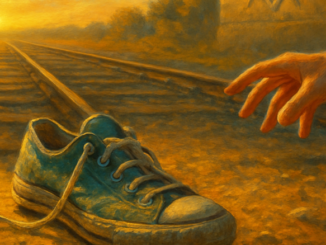
Railway tracks stretching to the horizon symbolizing Masonic self-reflection
Personal Development & Leadership

Accusation and Denial: What This Reveals About Character

A railway line. At first glance, nothing more than steel and gravel — a functional connection between two points. But when that line becomes the stage for accusations and denials, when organizations point fingers and deflect blame, something far deeper is revealed. Not about tracks, but about the human soul. About how we respond when our character is truly put to the test. The Railway as a Mirror of the Soul Recent accusations of sabotage on railway lines — and the emphatic denials that followed — touch on something universal. The moment a person or group is accused, a choice presents itself: how do I respond? That choice is a window into personality, into the character that lies beneath the surface. The railway itself, stretching across the landscape, becomes an unexpected mirror. In Freemasonry, we speak of the rough ashlar — the unworked stone that, through dedicated labor, is shaped into a perfect cube. That shaping does not happen in times of comfort but precisely under pressure. When the chisel strikes, when the hammer falls, only then does the true quality of the material reveal itself. An accusation is such a hammer blow. Not pleasant, but profoundly revealing. The Trial […]

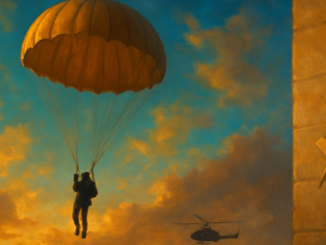
Rescue team symbolizing Masonic brotherhood and the duty to stand by others
Personal Development & Leadership

Rescue After a Crash: What Brotherhood Truly Means

When a fighter pilot goes down over hostile territory, a race against the clock begins — not just for the pilot, but for every person who has sworn never to leave someone behind. The recent account of an American crew member rescued after a crash touches on something far deeper than military protocol. It strikes at the very heart of what Freemasons call brotherhood: the unconditional willingness to act for another, even when circumstances are anything but favorable. What Drives People to Risk Their Lives for Another? This may be the central question that occupies both soldiers and Freemasons alike. When rescue teams venture into dangerous airspace to recover a single person, they are not acting out of self-preservation. They are acting from a deep-rooted conviction that no one should be left alone in their darkest hour. Freemasonry holds this principle as one of its foundations: the duty to stand by a brother, not because it is easy, but precisely because it may be hard. The Roman philosopher Seneca wrote that true friendship means making another person’s fate your own. In his letters to Lucilius, he emphasized that trust forms the bedrock of every meaningful bond. Without trust, brotherhood is […]

Freemasons joining hands in brotherhood symbolizing unity in uncertain times
Personal Development & Leadership

Horizontal Escalation and Brotherhood: Masonic Lessons

Newspapers and news feeds are saturated with analyses of so-called horizontal escalation — conflicts that spread across ever more regions and domains. Defense experts warn of a world where tensions no longer stay confined to a single front. As geopolitical uncertainty grows, a deeply personal question emerges: how do you stay grounded? And what does brotherhood actually mean in an era where division seems to be the default? An ancient tradition offers surprisingly practical answers. When Uncertainty Gets Under Your Skin You’ve probably experienced it: you read a news report about rising tensions somewhere in the world, and a wave of unease washes over you. The term horizontal escalation describes how conflicts widen to new fronts — from cyber warfare to economic sanctions, from Arctic shipping routes to the Baltic states. It’s no longer an abstract geopolitical concept; it’s something that arrives on your phone every morning. That constant stream of unsettling news takes a toll. It can paralyze you, or it can push you toward anxious, reactive behavior. Many people withdraw. Others harden their positions. But there is a third path: consciously choosing connection with others who share your values. What Brotherhood Actually Means in Practice In Freemasonry, brotherhood […]

Rough ashlar stone being shaped symbolizing Masonic character building
Personal Development & Leadership

Video Game Controversies and Character: What Our Reactions Reveal

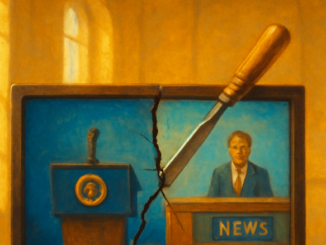
A simple puzzle game became the center of an international controversy this week. The White House published an online game that satirically depicted immigrants, prompting the creator of the world-famous falling-blocks game to threaten legal action over copyright infringement. The game was swiftly removed. But beyond the headlines, what does an incident like this actually reveal about personality — about how people and institutions respond under pressure? And what might a Freemason learn from it about the lifelong work of building character? Why Does Conflict Reveal Our True Character? It is an ancient truth, one that Aristotle articulated long ago: we do not discover someone’s character in times of prosperity, but in moments of tension. When criticism arrives, when legal threats follow, when public opinion turns against you — that is when true nature surfaces. The speed with which the game was taken down tells us something. Was it wisdom or cowardice? Pragmatism or a lack of backbone? The answer depends entirely on how we define personality and character. In Freemasonry, there is a core principle that becomes deeply relevant here: a person is not born a finished character but shapes themselves through conscious, deliberate work. The rough ashlar must […]

Philosopher contemplating brotherhood and Masonic symbolism in a lodge
Personal Development & Leadership

The Eighth Child and the Philosopher: Brotherhood as a Way

What can the eighth child of a philosopher teach us about brotherhood and the formation of personality? The question may seem unusual at first glance, but a closer look at the lives of great thinkers reveals that family circumstances often shaped their understanding of human connection. The role of the brother — both in the literal and the figurative sense — runs like a golden thread through the philosophical tradition, and it finds a particularly powerful echo in the practice of Freemasonry. Why Does Birth Order Matter So Much? Picture a large family in eighteenth-century Europe. Eight children, perhaps more. The eldest inherits the estate, the middle children seek their fortunes in trade or the military, and the youngest? They must make do with whatever remains. Yet it is precisely in this position that something remarkable emerges: the necessity of forging an identity independent of family tradition and birthright. The Genevan philosopher Jean-Jacques Rousseau wrote extensively about how upbringing and environment shape character. Although Rousseau himself was not an eighth child, he understood deeply that one’s position within a family — as a brother among brothers — fundamentally influences personality. A child who learns to navigate relationships with older siblings […]

Freemasons building together symbolizing shared growth beyond zero-sum thinking
Personal Development & Leadership

Breaking Zero-Sum Thinking: How Freemasonry Shapes Character

You probably recognize it: that quiet, almost unconscious thought that when someone else wins, you automatically lose. The assumption that success, recognition, and happiness exist in limited supply — and that you need to fight for your share. This is zero-sum thinking, and it creeps into your personality without you even noticing. But what if that assumption is fundamentally wrong? What if real growth happens when you build together rather than compete alone? What Exactly Is Zero-Sum Thinking? The term originates from game theory, where it describes situations in which one person’s gain is automatically another person’s loss. Think of a poker game: the money you win is money your opponent loses. In those situations, zero-sum thinking is perfectly logical and accurate. The problem arises when you apply this mindset to areas where it doesn’t belong. Relationships, personal development, knowledge sharing, creativity — these are not poker games. Yet many people treat their entire lives as though they are. They see a colleague’s promotion as a personal defeat. They experience a friend’s happiness as a painful reminder of their own shortcomings. This doesn’t just limit your possibilities — it distorts your personality over time. How Zero-Sum Thinking Shapes Your Character […]

Mountain glacier reflecting sunlight as a symbol of Masonic self-reflection
Personal Development & Leadership

The Melting Glacier and Your Character: A Masonic Lesson

Picture yourself standing on the flanks of the world’s highest mountain, surrounded by ancient ice and silence. You are not alone. Thousands of climbers have come before you, and each one left something behind — not just footprints, but something far more human: their body heat, their waste, their urine. Recent research has revealed that even these seemingly insignificant acts contribute to the accelerated melting of the glacier. It is a confronting insight that raises a deeper question: what are you leaving behind? Small Actions, Great Consequences Recent studies have shown that the warm urine of climbers on Mount Everest measurably contributes to the melting of the Khumbu Glacier. It sounds almost absurd — how can something as trivial as relieving yourself in the snow affect something as vast as a glacier? Yet this is precisely what happens when thousands of people visit the same place year after year. The sum of all those small actions creates an unintended chain reaction. Freemasons will recognize this principle immediately. In lodge, we constantly speak of building the inner temple, stone by stone. But the same logic works in reverse: every rough stone you leave unworked, every small negligence you ignore, contributes to […]

Rough ashlar stone with gavel and chisel symbolizing Masonic character formation
Personal Development & Leadership

Tragedy and Reflection: On the Forming of Character

Sometimes a news headline stops you in your tracks. A twelve-year-old boy killed under violent circumstances. An adult suspect arrested. You read the words, feel the helplessness, and wonder: how can a human being be capable of such a thing? It is precisely in moments like these that the ancient question of human character forces itself upon us — not as an abstraction, but as an urgent search for understanding. The Unfathomable Human Being When confronted with extreme violence, we instinctively reach for explanations. We want to understand what drives a person, what went wrong in the shaping of a personality. The philosopher Aristotle argued that character is not given at birth but formed through repeated actions. You become what you do, again and again. You do not become virtuous by reading about virtue — you become virtuous by acting virtuously. This insight is as comforting as it is unsettling. It means that every human being has the capacity for growth and improvement. But it also implies that wrong choices, repeated over time, can shape a personality capable of terrible deeds. Freemasonry takes this idea profoundly seriously. The Rough Stone as Metaphor In Freemasonry, the rough ashlar is a central […]

Rough ashlar stone and chisel symbolizing Masonic self-improvement journey
Personal Development & Leadership

Reckless Actions and the Courage to Admit Your Mistakes

You probably recognize the moment: you say or do something without thinking, and only afterward does it dawn on you how hurtful or inappropriate it was. That painful flash of recognition, followed by the inevitable question — what now? A recent news story about a well-known actor who publicly apologized for mocking a sign language interpreter touches on this deeply universal human theme. The celebrity himself isn’t what matters here. What matters is the question his behavior raises: what does it truly mean to acknowledge your mistakes, and how does doing so shape you into a better person? The Rough Ashlar We All Are In Freemasonry, the rough ashlar plays a central role as a symbol for the individual at the beginning of their inner journey. You enter the lodge as unworked material — full of irregularities, sharp edges, and hidden flaws. The goal is never to deny or conceal these imperfections, but to recognize them and patiently work on them. Every mistake, every thoughtless action, every moment of weakness is like an imperfection in that stone. When someone publicly mocks another person — especially someone performing an essential service for deaf and hard-of-hearing members of the community — it […]

Rough ashlar being shaped into a perfect cube symbolizing character through adversity
Personal Development & Leadership

Failure as a Teacher: What Adversity Reveals About Character

When a world-class athlete once again misses the podium at a major championship, an inevitable question arises: what does this tell us about their character? Is failure a sign of weakness — or does it reveal something far deeper about inner strength? In Freemasonry, there is an ancient teaching that the rough ashlar only reveals its true form through persistent work. Today, we explore what repeated adversity can teach us about personality and growth — not through the lens of sports commentary, but through a more profound question about human development. Why Does Adversity Strike Us So Deeply? There is something deeply fascinating about watching someone who belongs to the absolute elite in one arena fail repeatedly in another. It raises questions that reach far beyond sport. Why does a person keep returning to a discipline where success remains elusive? What drives someone to expose themselves to public failure again and again? The Greek philosopher Aristotle wrote extensively about what he called thumos — the driving force of ambition and spirited pride within the human soul. This is not blind ego but a deep longing to achieve something of genuine value. When that longing is repeatedly frustrated, a crucial choice […]

Freemasons in lodge reflecting on brotherhood, loyalty, and shared values
Personal Development & Leadership

Loyalty Under Pressure: What Brotherhood Demands After Mistakes

Imagine sitting in a meeting with people you’ve known for years. People with whom you’ve shared joys and sorrows, laughter and silence. Then word arrives that one of them has done something questionable — something now facing public scrutiny. The silence in the room becomes palpable. What do you do? This scenario doesn’t only play out in Masonic lodges or circles of close friends — it unfolds in politics too. Recently, a local alderman in the Netherlands, a former presenter for a controversial broadcasting network, kept his position despite photographs surfacing that placed him in a pro-Russian light. The city council judged the misstep not severe enough to warrant dismissal. For outsiders, this raises pointed questions about loyalty, forgiveness, and their boundaries. For Freemasons, it echoes a dilemma as old as the Craft itself. The Essence of Brotherhood Brotherhood is not a casual concept within Freemasonry. It is a deliberate commitment to cultivate bonds with people you didn’t necessarily choose, but who walk the same path of personal development. Johann Wolfgang von Goethe, himself a Freemason, wrote extensively about the connection between individuals who strive together toward enlightenment. He understood that true brotherhood doesn’t mean ignoring each other’s faults — […]

Rough ashlar stone symbolizing inner beauty and Masonic self-improvement
Personal Development & Leadership

Cosmetic Surgery and Inner Beauty: A Masonic Perspective

In a dimly lit lodge room, an older Freemason leans toward a younger brother. ‘See those cracks in the ceiling?’ he asks quietly. ‘Some want to plaster over them, but they tell the story of this building. Without those lines, it would be a soulless space.’ The younger brother nods thoughtfully — while outside, the world grows ever more obsessed with erasing every perceived flaw. A Fivefold Increase That Raises Deeper Questions Reports of botched cosmetic procedures involving injectable treatments have increased fivefold in recent years. Behind that statistic lie personal tragedies: people who sought enhancement and ended up with scars, infections, or permanent disfigurement. But perhaps behind this troubling trend lies a deeper question — one that touches the very core of what it means to be human. Why are we so willing to risk our health for an appearance that conforms to some external ideal? The philosopher Michel de Montaigne wrote in the sixteenth century about the human compulsion to correct what is imperfect. In his essays, he reflected on the paradox that we often place more value on what others think of us than on who we truly are. That observation is more relevant today than ever. […]

Sunlight breaking through dark clouds symbolizing Masonic brotherhood
Personal Development & Leadership

After the Rain Comes Sunshine: Brotherhood in Changing Times

You know the feeling. A grey weekend, rain drumming against the windows, plans falling apart. Then you glance at the forecast: sunshine is coming next week. Maybe only briefly, but still — that small promise shifts something inside you. Not because the weather truly matters, but because it reminds you of a deeper truth: after every darkness comes light. It is precisely this rhythm of change that Freemasons have recognized for centuries as a metaphor for human existence, and it goes straight to the heart of what brotherhood really means. The Seasons of a Life Imagine a life made up entirely of sunshine. No setbacks, no loss, no moments when everything conspires against you. It sounds appealing — but would you ever truly understand the value of warmth? The Greek philosopher Heraclitus argued that change is the only constant. Everything flows, everything shifts. Today’s rain feeds tomorrow’s flowers. This ancient wisdom forms a cornerstone of Freemasonry, which sees a person not as a static being, but as someone in continual development. In the Lodge, we speak of the rough ashlar that must be shaped and polished. That shaping does not happen in comfort — it happens through friction. The difficult […]

Swimmer persevering in open water supported by community on shore
Personal Development & Leadership

Perseverance and Brotherhood: Lessons From a Swimmer

A swimmer pushes forward despite nausea and exhaustion, carried by the cheers of thousands lining the shore. What drives someone to keep going when every fiber of their body begs them to stop? And what does this tell us about the power of community? These are questions that reach far beyond the sports pages — questions that touch the very heart of what Freemasons understand as brotherhood. Why Do We Persevere When the Body Refuses? When Dutch open-water swimmer Maarten van der Weijden announced he would continue his legendary charity swim despite severe physical discomfort, the world took notice. But beyond the headlines lies a deeper question: what compels a person to press on when quitting seems like the only rational choice? Is it sheer willpower alone, or is something else at work? When we look at great endeavors throughout history, a pattern emerges. Rarely does anyone accomplish something truly monumental in complete isolation. Aristotle wrote that human beings are inherently social creatures, ill-suited for a life without others. He didn’t simply mean that we enjoy company — he meant that our highest aspirations only gain meaning in relation to community. What Does This Have to Do With Masonic Brotherhood? […]

Rough ashlar stone and chisel symbolizing character building in Freemasonry
Personal Development & Leadership

Adversity and Character Building: Lessons from Freemasonry

A young footballer watches his dream transfer collapse at the last moment due to a disagreement between medical experts. He calls the situation “rotten.” This moment of public disappointment raises a timeless question that philosophers and Freemasons have pondered for centuries: how does adversity shape our character, and what determines whether we emerge stronger — or more embittered? The Stoic Legacy in Times of Adversity In the Roman Empire, Marcus Aurelius — emperor and philosopher — wrote extensively about the art of enduring setbacks. In his personal meditations, he argued that it is not events themselves that affect us, but our interpretation of them. This insight, shared with his predecessors Epictetus and Seneca, forms a cornerstone of Stoic philosophy. When a young athlete watches a career opportunity evaporate due to circumstances beyond his control, he is confronted with precisely this ancient wisdom. The Stoics drew a sharp distinction between what lies within our control and what does not. The judgment of physicians, the decisions of club officials, the whims of fate — these are external factors. What does lie within our power is how we respond. Marcus Aurelius would argue that the true test of character is not found in […]

Masonic brotherhood as an antidote to threatening language in the modern world
Personal Development & Leadership

When Threats Set the Tone: Brotherhood vs. Verbal Violence

You may have read the headlines and felt a pang of unease. A world leader threatening to “bomb an ally into oblivion” if they refuse to cooperate. The words linger — heavy, menacing. And as you set down the newspaper or put away your phone, you might find yourself wondering: is this where we’re headed? A world where threats become the norm and alliances crumble under the weight of power displays? In Freemasonry, we know a different compass. Not one of intimidation, but one of brotherhood. The Echo of Threatening Language When a head of state openly threatens destruction, it touches something fundamental. It goes beyond geopolitics or strategic interests around the Strait of Hormuz. It raises the question of how we as human beings relate to one another. Words create realities. They can build bridges or erect walls. They can invite dialogue or pave the way for conflict. The Greek philosopher Aristotle understood that language is never neutral. In his Rhetoric, he described how words stir emotions, persuade, but also manipulate. Threatening language on the world stage is not an abstraction. It seeps into the way all of us handle disagreement — in our communities, our workplaces, our homes. […]

Overturned coach on a mountain road symbolizing Masonic brotherhood in crisis
Personal Development & Leadership

When the Coach Overturns: Brotherhood in Times of Disaster

The mountain air is still crisp when the coach begins its descent. Thirteen travelers — strangers to one another — share the same wooden bench, the same sweeping views of Alpine peaks. Then everything tips. In a split second, strangers become companions in fate, bystanders become rescuers, and somewhere in the chaos, something unfolds that Freemasons recognize instinctively: the true nature of brotherhood. A Mountain Road as a Metaphor for Life The tragic accident in the Swiss Alps — one dead, twelve injured — shocks us. But beneath the headlines lies a deeper layer of meaning. Anyone who has walked a mountain trail knows the path is rarely predictable. Rocks shift, weather turns, and what seemed stable can give way in the blink of an eye. This is not merely a physical reality; it is a spiritual truth that Freemasons have acknowledged for centuries. In Freemasonry, we speak of life as a journey from rough to polished. The rough ashlar we symbolically receive at our initiation must be shaped through experience, reflection, and trial. No one chooses to face those trials in the form of an overturned coach on an Alpine pass. Yet it is precisely in such moments that […]

Freemasons gathered in lodge symbolizing brotherhood beyond numbers
Personal Development & Leadership

Why the Tyranny of Numbers Undermines True Brotherhood

Somewhere in a lodge in the Netherlands, a brother sits quietly at the festive board after the ritual work is done. He’s a business owner, and earlier that afternoon he was told his company isn’t showing enough “growth.” The numbers don’t add up, they said. But here, among his brethren, he feels something no spreadsheet can measure: recognition for who he is, not for what he produces. This tension between measurable value and human dignity touches on something that’s currently rippling through the world of the arts — and something Freemasonry has been teaching for centuries. The Tyranny of the Number Recently, a well-known contemporary musician spoke out against the obsession with streaming numbers in the music industry. He called it “depressing” that artists are reduced to statistics — figures on a screen that determine whether you’re considered successful or not. His words struck a nerve, not just in the entertainment world, but across a society that seems increasingly obsessed with quantification. We live in an era where everything must be measurable. Likes, followers, streaming counts, watch minutes, revenue, return on investment. People are judged more and more on the basis of data rather than character or contribution to community. […]

Industrial site aftermath symbolizing Masonic lessons on character and crisis
Personal Development & Leadership

Industrial Accident and Character: Masonic Lessons from Crisis

On August 13, 2026, the city of Rotterdam was shaken by a deadly explosion at an industrial site. Six people were injured, and one person lost their life. Early reports point to an industrial accident. As emergency services do their work and investigations get underway, a timeless question presses itself upon us: how does human character reveal itself in moments of crisis? Thinkers have wrestled with this question for centuries — and it lies at the very heart of Freemasonry. The Forge of Character In the eighteenth century, James Anderson — compiler of the first Constitutions of Freemasonry — wrote that a brother should distinguish himself by his conduct in all circumstances of life. This was not a novel idea. The Roman Stoic philosopher Seneca had already observed in antiquity that a person’s true nature is not revealed in comfort, but in adversity. An explosion, a fire, a sudden disaster: these are the moments when the façade falls away and the real character emerges. The Rotterdam explosion reminds us of this ancient truth. As the dust settles and chaos unfolds, we see people act. Some flee; others rush forward to help. First responders set aside their own safety. Colleagues search […]