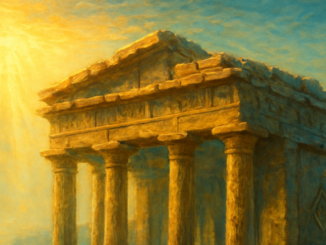
The Danube river at low water level reflecting ancient Masonic themes of impermanence
History

The Danube Runs Dry: What Rivers Teach Us About Impermanence

When a nuclear power plant in Hungary has to shut down because the Danube has dropped to historically low levels, most people see a technical problem. But what if this drought tells us something deeper — about the nature of civilizations, the fragility of everything we build, and the ancient wisdom that Freemasons have cherished for centuries? The river that once watched empire after empire rise and fall still whispers the same message. A River as Witness to Time The Danube has seen it all. Roman legions marched along her banks. Medieval cathedrals rose in her cities. Emperors and kings laid claim to her waters. Now, in August 2026, this same river has fallen so low that it can no longer provide the cooling water a modern nuclear power plant requires. It is a paradox worth sitting with: our most advanced technology, brought to a standstill by the simple absence of water. For Freemasons, this image raises a fundamental question. We build temples — not of stone alone, but of ideals, of brotherhood, of moral development. But how enduring are these structures when the current of time suddenly shifts direction? The history of the Danube offers an unexpected mirror. Heraclitus […]

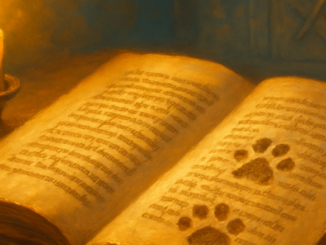
Medieval manuscript page with cat paw prints symbolizing Masonic legacy
History

Paw Prints in Manuscripts: What Cats Teach Freemasons

Picture a monk hunched over a sheet of parchment in a European monastery, centuries ago. He sets down his quill, waiting for the ink to dry. Moments later, a cat strolls across his workspace and leaves indelible paw prints behind. What may have caused irritation at the time fascinates us today. These tiny traces connect us to people who lived and worked seven centuries ago — people who, it turns out, tolerated the same pets we do. For Freemasons, such discoveries provoke deeper questions: how do we pass on what is valuable? And what remains of our work once we are gone? The Cat as an Accidental Witness to History Libraries around the world preserve manuscripts bearing cat paw prints. From Dubrovnik to Deventer, from Italy to England — wherever monks wrote, cats roamed. Scholars have documented dozens of examples, some dating back to the thirteenth century. The prints are often clearly visible, pressed into still-wet ink or stamped right across carefully written text. These paw prints tell us more than just that cats are curious creatures. They reveal the human context behind the written word. Cats were apparently welcome in the scriptorium, most likely to chase away mice that […]

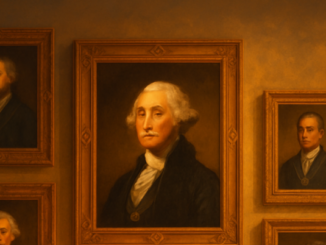
Historical portraits of famous Freemasons through the centuries
History

Famous Freemasons Throughout History: A Remarkable Legacy

For centuries, Freemasonry has attracted men who not only excelled in their fields but also felt a deep yearning for brotherhood, philosophical inquiry, and personal growth. Famous Freemasons can be found across virtually every domain of human endeavor — from politics and the arts to science, the military, and business. Their membership in a lodge speaks to a shared pursuit of wisdom, ethics, and community — values that Freemasonry has championed for more than three hundred years. This overview brings together a broad and diverse collection of historical and more recent brethren, placing their Masonic membership in the context of their lives and times. The Early Centuries: Freemasons in the 18th and 19th Century Organized Freemasonry as we know it today began in 1717 with the founding of the first Grand Lodge in London. From that moment, the movement spread rapidly across Europe and North America. It comes as no surprise, then, that many of the most influential thinkers, statesmen, and artists of the eighteenth and nineteenth centuries were drawn to the principles of the lodge. George Washington — Founding Father and Brother Perhaps the most iconic name among famous Freemasons is George Washington (1732–1799), the first President of the […]

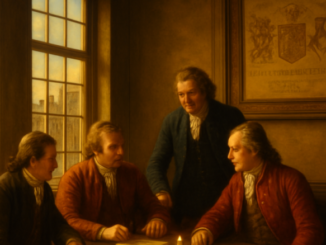
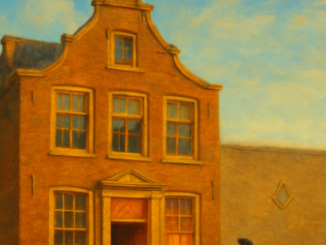
Historic Dutch Masonic lodge interior representing Freemasonry in the Netherlands
History

History of Freemasonry in the Netherlands: Three Centuries

The history of Freemasonry in the Netherlands is a fascinating journey through more than three centuries of brotherhood, Enlightenment ideals, and civic engagement. From the founding of the first Dutch lodge in the early eighteenth century, Freemasons have played a remarkable role in the cultural, intellectual, and social life of the country. While the story mirrors broader European developments, Dutch Freemasonry has a distinctive character of its own — shaped by the Netherlands’ deep-rooted traditions of tolerance, commerce, and civic idealism. The Earliest Roots: Freemasonry in Europe Before the Netherlands To understand the history of Freemasonry in the Netherlands, it helps to first consider its European origins. Modern Freemasonry is typically traced back to the founding of the Grand Lodge of London in 1717 — widely regarded as the official beginning of speculative or symbolic Freemasonry. Before that pivotal moment, guilds of operative masons — skilled craftsmen who built the great cathedrals and castles of Europe — had already established traditions, symbols, and rituals that would form the foundation for a new, more philosophically oriented movement. The English Enlightenment fostered a climate of rational thinking, religious tolerance, and scientific curiosity. In that spirit, intellectuals, nobles, and merchants came together in […]

No Picture
History

History of Freemasonry in the Netherlands

The history of Freemasonry in the Netherlands is a fascinating journey through centuries of intellectual curiosity, civic engagement, and brotherhood. Since the first Dutch lodge was established in the early eighteenth century, Freemasonry has woven itself into the cultural, philosophical, and social fabric of the Low Countries. From the Golden Age salons of The Hague to the clandestine wartime meetings during the German occupation, Dutch Freemasonry has endured and evolved — shaped by enlightenment ideals, political upheaval, and an enduring commitment to the moral and spiritual development of its members. Understanding this history offers valuable insight not only into the Craft itself, but also into the broader story of Dutch society. The Origins of Freemasonry in the Netherlands To understand the history of Freemasonry in the Netherlands, one must first appreciate the broader European context from which it emerged. Modern speculative Freemasonry traces its institutional origins to the founding of the United Grand Lodge of England in London in 1717. The movement spread rapidly across Europe, carried by merchants, diplomats, military officers, and intellectuals who were drawn to its emphasis on reason, tolerance, and fraternal virtue. The Netherlands — a mercantile republic with strong ties to England and a tradition […]

Historical illustration representing the Enlightenment and Freemasonry connection
History

The Enlightenment and Freemasonry: Two Related Movements

When people learn you’re a Freemason, the same question often comes up: doesn’t that have something to do with those secret societies from the eighteenth century? It’s an understandable question. The Enlightenment and Freemasonry emerged during the same period and shared similar ideals. Yet the two movements are frequently conflated or even treated as one and the same. In this article, I’ll clearly explain what each movement represents, where they intersect, and where they fundamentally differ — because placing them side by side is one of the best ways to understand what Freemasonry truly is. The Enlightenment: An Intellectual Revolution The Enlightenment was a philosophical movement that emerged across Europe during the seventeenth and eighteenth centuries. Thinkers such as Voltaire, Jean-Jacques Rousseau, Immanuel Kant, and John Locke challenged superstition, religious dogma, and absolute power. They believed that through reason and science, humanity could arrive at a better understanding of the world. Kant’s motto — Sapere aude, or “dare to think” — captured this attitude perfectly. This intellectual movement led to concrete societal changes. The separation of church and state, the rise of democratic ideals, and the emphasis on human rights can all be traced directly back to Enlightenment thinkers. It […]

Historic Zutphen cityscape symbolizing the meeting of royal and Masonic traditions
History

Charles of Sweden and Zutphen: Two Worlds, One Quest

The name Charles of Sweden surfaces in the archives of Zutphen, a historic Dutch city deeply intertwined with European royal history. But what connects a Scandinavian crown prince with a small trading town on the River IJssel? And perhaps more importantly, what can we learn when we compare the world of royal succession with the fraternal tradition of Freemasonry? Both traditions feature initiations, rituals, and a profound sense of continuity — yet they differ fundamentally in how they view access to wisdom and responsibility. Charles of Sweden and His Historical Ties to Zutphen Over the centuries, Sweden’s royal Charleses maintained kinship lines with the House of Orange and various German princely families. Zutphen, as a strategic Hanseatic city on the IJssel, played a notable role in the political and military history of the Low Countries. It is no coincidence that the names of Scandinavian monarchs appear in the archives of this region. Trade routes, dynastic marriages, and military alliances wove an intricate web of connections between Northern Europe and the cities of Gelderland. For the historian, this connection is a matter of documentation — family trees and treaties. But for those who look with different eyes, a deeper layer reveals […]

Skull and candle in a Masonic chamber of reflection symbolizing mortality
History

End of Life and the Art of Living: Two Perspectives

France recently passed a law permitting assisted dying under strict conditions — a decision that strikes at the very heart of how a society thinks about life, death, and human dignity. As public debate intensifies, this moment invites deeper reflection: how did people in earlier centuries approach the end of life, and how does that compare to our modern outlook? Freemasonry, rooted in centuries-old traditions of self-examination, offers a uniquely illuminating perspective on this timeless question. The Past: Death as a Daily Companion For our ancestors, death was not a topic to be avoided. In the medieval world, the end of life was ever-present: infant mortality was staggeringly high, epidemics swept through communities without regard for wealth or status, and average life expectancy was a fraction of what we know today. This reality produced a culture that did not hide from death but placed it squarely at the center of daily awareness. The ars moriendi — the art of dying — flourished as a literary genre in the fifteenth century. Countless manuals appeared to prepare people for a “good death.” This good death had nothing to do with pain management or medical intervention. It was about spiritual readiness. People died […]

A painter in a Masonic lodge contemplating a canvas at twilight
History

When Time Catches Up: Lessons From Vanished Worlds

A lodge painter sets down his brush and stares at the canvas. He has just learned that an actor has died — someone who once played a paleontologist surrounded by prehistoric creatures. How strange, he thinks, that certain people remind us of forgotten ages, of what once was and will never return. In the silence of his studio, a question lingers: what remains when the last echo of a voice fades away? The Echo of Extinct Worlds There is something deeply fascinating about stories of extinct creatures. When we immerse ourselves in prehistoric times, we realize just how brief our human existence truly is. Millions of years passed before the first humans ever set foot on this earth. And yet, generation after generation, we strive to leave behind something that outlasts us. This longing for a legacy that defies time touches the very heart of what Freemasons have contemplated for centuries. Freemasonry has always maintained a special relationship with the past. Lodges preserve traditions stretching back to the medieval stonemasons’ guilds — and perhaps even further. Not because the past was better, but because there is wisdom in continuity. Every Freemason who enters a lodge joins a chain of brothers […]

An empty chair in a Masonic lodge symbolizing remembrance and legacy
History

When Statesmen Pass: History and the Empty Chair

Imagine opening the news tomorrow morning to learn that a prominent statesman has died unexpectedly. That empty seat in a chamber, that sudden void in public discourse. If you’ve ever felt that strange mixture of disbelief and reflection upon hearing such news, you’ve touched something deeply human — the question of what a person leaves behind when life ends abruptly. In the history of Freemasonry, this question has always occupied a central place. The Sudden Absence When a prominent figure is suddenly gone, a peculiar emptiness takes hold. It reaches beyond the political arena or the public sphere — it settles into our collective consciousness. Someone who was fully present yesterday is simply no longer among us today. That confrontation with finality touches something universal. It doesn’t matter whether you admired or criticized the person in question: death observes no party lines. In Masonic lodges around the world, this reality has been confronted for centuries. Not as morbid fascination, but as a fundamental part of life’s journey. The central question is never how long someone lived, but what they left behind for the world. Historical Echoes of Impermanence The history of Freemasonry is threaded with moments when influential members departed […]

A moment of tribute connecting victory to those who came before us
History

Dedicating Victory to Those You Lost: A Masonic Reflection

Perhaps you’ve experienced it yourself: a moment of triumph, of completion, where your first thought didn’t go to yourself but to someone who is no longer here. Someone who shaped you, who set you on your path, but who never got to see you cross the finish line. When a young tennis player dedicates her greatest title to her late mother — moving a former champion in the audience to tears — it touches something far deeper than sport. It touches the age-old question: how do we honor those who came before us? The Power of the Gesture On the Centre Court of one of the world’s most famous tennis tournaments, a scene recently unfolded that transcended athletic achievement. A young champion, still trembling from the intensity of the match, directed her first words not to sponsors or coaches, but to the mother she had lost years ago. It was a moment of radical vulnerability on the highest stage. And it was contagious: a former champion sitting in the crowd, herself hardened by years of elite competition, could not hold back her tears. What makes such a gesture so powerful? It breaks through the logic of the present moment. It […]

Polar bear resting peacefully, symbolizing devotion, care, and Masonic reflection
History

Farewell to a Polar Bear: Lessons in Care and Devotion

Imagine a creature that spent 36 years surrounded by dedicated caretakers, that amazed generations of visitors, and that ultimately departed this world in peace. The passing of the oldest polar bear ever held in captivity stirs something deep within us — perhaps because her remarkably long life raises questions we rarely ask ourselves. What does it truly mean to live well? And what do we leave behind when our time comes? A Life Beyond the Statistics Polar bears in captivity typically live to around twenty years of age. The fact that this particular bear reached thirty-six makes her story extraordinary. Her keepers spoke of her not merely as an animal of unusual longevity but as a creature of remarkable character. She was headstrong, recognized familiar faces, and seemed to form bonds — in her own way — with the people around her. Perhaps you recognize the feeling that arises when you hear about an animal that has lived so far beyond expectations. A kind of respect emerges, an acknowledgment that this being experienced something most of its kind never will. And it is precisely that recognition that invites deeper reflection on what a long life actually means. Time as a […]

Thessaloniki cityscape symbolizing historical reflection on political violence
History

Thessaloniki and Political Violence: Lessons from History

When news breaks of attacks on politicians in Thessaloniki — attacks that claim the lives of innocent bystanders — an unavoidable question surfaces: why does violence keep returning to the political arena? And perhaps more importantly, what can centuries of human civilization teach us about the roots of such acts? Why Does Political Violence Strike So Deep? The answer lies in what violence against political figures represents. It does not merely harm individuals — it tears at the very fabric of society. When someone attacks an elected representative, they are indirectly attacking the voice of every citizen that representative serves. And the innocent victims caught in the crossfire represent something equally disturbing: the sheer randomness of blind violence, the tragic collateral damage of ideological rage. Freemasonry has reflected on these dynamics for centuries. Not as a political movement, but as a philosophical tradition that seeks to understand the causes of human conflict. In the Lodge, Brethren regularly contemplate a fundamental question: how do we build a civilization in which violence no longer has the final word? What Does the History of Thessaloniki Reveal? Thessaloniki is no stranger to political violence. This Greek port city was the scene of a series […]

A single candle flame symbolizing brief life, loss, and Masonic light
History

Prenatal Loss: How Grief Has Taken Shape Through the Ages

There is a kind of loss that has no grave, no farewell ceremony, and yet leaves a lifelong scar. When a child dies before it is born, it touches the deepest layers of human existence. History teaches us that every culture and every era has grappled with this particular grief — often in silence, sometimes through rituals that seem foreign to us today. Freemasonry, with its long tradition of engaging symbolically with life, death, and rebirth, offers a surprisingly meaningful perspective on this unspoken sorrow. The Paradox of Grief Without Memory How do you mourn someone you never knew, yet loved completely? This is the paradox that parents face after prenatal loss. In our contemporary culture, we are gradually becoming more open about this subject — but that was not always the case. For centuries, this kind of loss was dismissed, denied, or simply not recognized as legitimate grief. Yet history shows that people have always sought ways to give shape to this sorrow. In medieval monastic archives, we find references to special prayers for unbaptized children. Midwives had their own rituals, handed down from generation to generation, to help mothers cope with their grief. The need to mark loss […]

Rough ashlar being shaped into a perfect cube symbolising steadfastness
History

Twenty-Three Years of Criticism: Steadfastness as the Art of Living

Twenty-three years. It is a number that carries tremendous weight when it refers to criticism — relentless judgment from millions. A veteran of the football pitch spoke these words after a historic match, not as a complaint, but as a simple statement of fact. Within that plain observation lies a profound truth that reaches far beyond the sporting arena and touches one of humanity’s oldest questions: how do we build our character when the world never stops measuring us? The Number as a Mirror of Time Twenty-three years span nearly a quarter of a century. In that time, children become adults, kingdoms rise and fall, and the tectonic plates of collective consciousness shift beneath our feet. When someone says that criticism has been his constant companion for twenty-three years, he is not merely describing opposition. He is describing a shadow as faithful as the light that drives him forward. In the building art of the inner life, we know the principle of the rough ashlar that must be hewn into a perfect cube. Every blow of the hammer, every critical touch, contributes to the refinement of the material. But what happens when those blows never cease? When the chisel keeps […]

Football captain wearing armband leading team symbolizing Masonic leadership
History

The Captain as Master Builder: Leadership on the Field

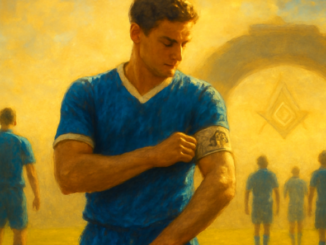
A green pitch, twenty-two players, and somewhere among them a figure who sets the direction. When a nation achieves a historic victory, all eyes turn to the captain — the armband, the gesture toward teammates, the calm gaze amid the chaos. In those moments, an ancient pattern unfolds, one that Freemasons recognize instinctively: the captain as Master Builder, someone who does not merely play but builds something far greater than any individual could alone. The Armband: A Symbol of Responsibility Anyone who has watched a football match knows the image of the captain’s armband. A simple strip of fabric, usually in the colors of the nation or the club, worn around the upper arm. At first glance, it seems unremarkable. But look deeper. That band distinguishes one player from the other ten. It is not a decoration — it is a commission. The one who wears it takes responsibility for the whole. In Freemasonry, we have comparable symbols of responsibility. The apron, worn by every Brother, serves as a reminder of labor and dedication. But the officers of a Lodge wear additional insignia: jewels, collars, specific regalia. These are not status symbols in the worldly sense. They are reminders of […]

Vrijmetselarij - Bekende vrijmetselaars: laat je inspireren door grootse denkers en doeners
History

Famous Freemasons: Inspiring Thinkers and Leaders Through History

What do Mozart, Churchill, and George Washington have in common? They were all Freemasons. Though they lived in different eras and moved through vastly different worlds, they shared a common pursuit: becoming a better version of themselves while making a positive impact on the world around them. In this deep dive, we explore the lives and ideals of famous Freemasons — men who didn’t just make history, but who actively shaped their own character along the way. What Makes Someone a Famous Freemason? Not every lodge member becomes famous — and that’s perfectly fine. Freemasonry is fundamentally about inner growth, not outward glory. Yet some individuals have managed to walk both paths. They became role models because they translated the core values of Freemasonry — honesty, self-reflection, and service to others — into concrete action. You can see it in their work, their conduct, and their lasting impact on society. Wolfgang Amadeus Mozart — Musical Genius and Symbolic Builder Mozart was initiated into a lodge in Vienna at a young age. His compositions are filled with references to Masonic symbolism, most notably in his celebrated opera The Magic Flute. In this work, he wove in themes of enlightenment, purification, and […]

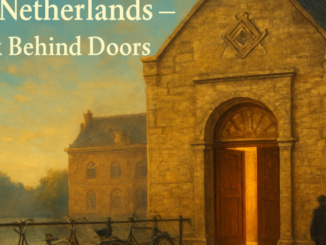
Vrijmetselarij - Freemasonry in the Netherlands – A Look Behind the Doors
History

Freemasonry in the Netherlands – A Look Behind the Doors

To many people, Freemasonry conjures up images of secrecy and mystery — an ancient society of rituals, symbols, and closed doors. But did you know that Freemasonry in the Netherlands is remarkably open and very much alive? Across the country, lodges bring together men of all ages and backgrounds who share a common purpose: working on themselves, on their connections with others, and on making the world a better place. For more than three centuries, Freemasonry in the Netherlands has been a source of inspiration, connection, and personal depth. It is not a religion. It is not a political movement. It is a practice ground for those who want to live more consciously. In this article, you’ll discover how Freemasonry took root on Dutch soil, what it means today, and — most importantly — what it could mean for you. A Centuries-Old History on Dutch Soil The first Masonic lodge in the Netherlands was established in 1734 in The Hague. It didn’t take long before lodges followed in Amsterdam, Rotterdam, and other cities. Freemasonry quickly resonated with freethinkers, artists, philosophers, and idealists. It offered a space for people seeking deeper meaning beyond the dogmas of church and politics. Today, Freemasonry […]

Vrijmetselarij - The History of Freemasonry: From Medieval Builders to Modern
History

The History of Freemasonry: From Medieval Builders to Modern

Freemasonry has long sparked a sense of mystery and fascination. What happens behind the doors of a lodge? Where does this centuries-old tradition come from? And why does it continue to inspire men around the world to work on themselves and strive for a better society? In this article, we take a deep dive into the history of Freemasonry — not as dry historians cataloguing facts, but as curious explorers searching for meaning, inspiration, and connections that have stood the test of time. Medieval Roots: From Master Builders to Brotherhood The origins of Freemasonry are layered with symbolism, myth, and historical complexity. Most historians trace its roots back to the Middle Ages — specifically to the stonemason guilds that built Europe’s great cathedrals. These guilds were far more than trade organizations. They passed on not only technical skills but also cultivated moral and ethical values among their members. The construction of Gothic cathedrals was no simple undertaking. It required cooperation, dedication, and above all: vision. The symbolism of building — shaping rough stones into a harmonious whole — remains at the very heart of Freemasonry today. The only difference is that the “building site” has become an inner one. From […]

Symbolic image representing the future of Freemasonry and modern Masonic traditions
History

The Future of Freemasonry: Challenges and Opportunities Ahead

Freemasonry boasts a long and storied history, but what does its future look like? As the world evolves through technological innovation, societal shifts, and globalization, the Craft faces pivotal decisions about how to move forward. In this post, we explore the challenges and opportunities that lie ahead for one of the world’s oldest fraternal orders. Technology and Digitalization Technology is set to play a defining role in the future of Freemasonry. Lodges are already leveraging digital platforms for communication, virtual meetings, and knowledge sharing. As technologies like virtual reality and augmented reality continue to mature, they could open the door to innovative ritual experiences or even fully digital lodges accessible to Brethren around the globe. Blockchain technology offers possibilities for secure and transparent membership records, while artificial intelligence could support deeper research into Masonic history, symbolism, and philosophy. The question is not whether technology will reshape the Craft, but how thoughtfully it will be integrated. Diversity and Inclusivity Freemasonry continues to evolve toward becoming a more inclusive organization. Lodges across the world are working to welcome a broader spectrum of members, regardless of gender, religion, ethnicity, or sexual orientation. This movement makes the order more accessible and ensures that its […]