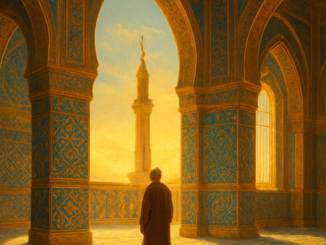
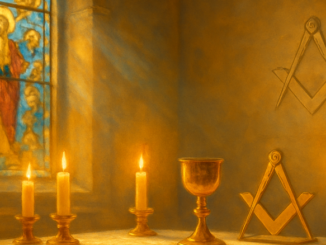
Open Quran alongside Masonic rough ashlar symbolizing repentance and transformation
Islam

Repentance in the Quran: Inner Transformation and Freemasonry

What does it truly mean to repent? Not as a fleeting pang of guilt, but as a profound inner turning that transforms your entire being? The ninth surah of the Quran, known as At-Tawbah — The Repentance — confronts the reader with precisely this question. Its themes of self-examination, broken promises, and the courageous return to one’s deepest values carry striking parallels with the spiritual journey at the heart of Freemasonry. Why Does This Surah Break With Tradition? The very first thing that sets At-Tawbah apart is its opening — or rather, the absence of one. It is the only surah in the entire Quran that does not begin with the customary invocation, “In the name of God, the Most Gracious, the Most Merciful.” Islamic scholars have debated this omission for centuries. Some believe the gravity of its content warrants the departure. Others view it as a continuation of the preceding surah. Whatever the explanation, the effect is immediate: the reader senses that something weighty is about to be discussed, something that tolerates no gentle preamble. The surah was revealed during a turbulent period, shortly before the death of the Prophet Muhammad. It addresses loyalty, broken covenants, and the possibility […]
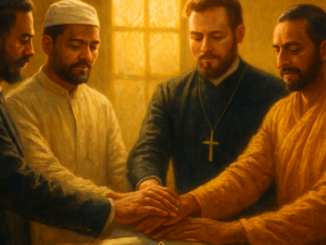
A symbolic table set for a shared meal representing Masonic and spiritual brotherhood
Islam

The Table as Spiritual Symbol: Surah Al-Ma’ida & Brotherhood

There is a curious paradox at the heart of human spirituality: the deepest truths are often expressed through the most ordinary images. A table set for a meal. Bread being broken. Guests gathering around a shared dish. In the fifth surah of the Quran — known as Al-Ma’ida, or The Table — we encounter just such a deceptively simple image, one that reveals extraordinary layers of meaning upon closer examination. For Freemasons, who are intimately familiar with ritual meals and the symbolism of fraternal communion, this ancient text opens a fascinating dialogue about what it truly means to sit together at one table. The Heavenly Table: More Than a Miracle Story Surah Al-Ma’ida takes its name from a remarkable narrative in which the followers of Jesus — known as Isa in the Islamic tradition — ask for a table to descend from heaven as a sign of divine grace. At first glance, the request seems strange. Why would people who had already witnessed miracles need yet another sign? The text itself suggests that the table is not so much intended as proof, but as confirmation of a covenant. The heavenly feast becomes a space where the earthly and the transcendent […]

Symbolic light passing through generations representing spiritual heritage
Islam

The Family of Imran: Two Perspectives on Spiritual Heritage

When a Muslim opens the third chapter of the Quran, they encounter the story of the Family of Imran — a lineage that produced prophets and passed faith from generation to generation. When a Freemason enters the lodge, they step into a tradition that likewise speaks of spiritual ancestors, of builders who transmitted wisdom to those who followed. Two worlds, seemingly separate, yet united by a shared question: how do we pass the light to those who come after us? The Surah Through the Eyes of the Believer For the Islamic reader, the Family of Imran is a story of divine election and responsibility. The surah describes how the family of Imran was elevated by God above all peoples, how Mary emerged from this lineage, and how she gave birth to Jesus — recognized in the Quran as a prophet and messenger. It is a text that speaks to the continuity of revelation: from Adam to Noah, from Abraham to the prophets of Israel, and ultimately to Muhammad. Each generation receives the light and carries it forward. The believing reader sees in this surah a confirmation of God’s plan unfolding through human generations. It is not merely about individual piety, […]

Vrijmetselarij - Freemasonry and Religion – A Bridge, Not a Wall
Spiritual Traditions

Freemasonry and Religion – A Bridge, Not a Wall

In a world where religion often draws dividing lines, Freemasonry offers something rare: a space where differences are not obstacles but invitations to dialogue. Freemasonry is not a religion. Nor is it a counter-movement. It is a centuries-old brotherhood where people — believers and non-believers alike — come together to work on themselves, their values, and their contribution to the world. This naturally raises questions. If Freemasonry isn’t a religion, why does spiritual symbolism play such a central role? And how can a community that prescribes no particular belief still be so profoundly meaningful and morally grounded? Let’s take a closer look at the unique relationship between Freemasonry and religion — and what it means for your personal development and ethical growth. No Dogma, But Genuine Depth Freemasonry makes no demands on your faith. Whether you are Christian, Muslim, Jewish, Hindu, humanist, or agnostic — as long as you believe in something greater than yourself, you are welcome. That “higher power” doesn’t need a name. What matters is that you recognize that humanity is not the center of everything, but part of a larger whole. There is no theological debate, no creed to recite, no prescribed path. Instead, Freemasonry offers […]

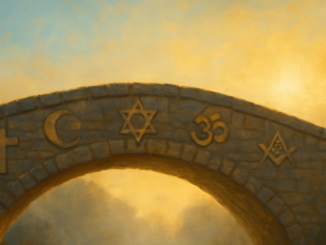
Freemasonry symbols representing unity and respect among world religions
Religion

Freemasonry and Religion: A Bridge of Connection and Respect

Freemasonry is an ancient fraternity built on universal values such as truth, brotherhood, and morality. While it is not a religion, it maintains a unique and fascinating relationship with religions around the world. How does Freemasonry position itself in relation to faith traditions, and what makes its spiritual vision so distinctive? Freemasonry: Not a Religion, But Deeply Spiritual One of the most common misconceptions about Freemasonry is that it is a religion. It is not. Freemasonry does not require its members to hold any specific religious belief. What it does ask is that members believe in a Supreme Being — often referred to as the “Grand Architect of the Universe” — a universal concept of a higher power that transcends any single faith tradition. This openness allows people from all religious backgrounds to participate and find common ground. The rituals and symbols used in Freemasonry are not religious in the traditional sense. Instead, they serve as tools for self-reflection and moral growth. This approach provides a shared foundation for members who may hold vastly different religious convictions, creating a space where spiritual exploration is encouraged without imposing any doctrine. How Freemasonry Relates to World Religions Respect for Diversity: Freemasonry recognizes […]

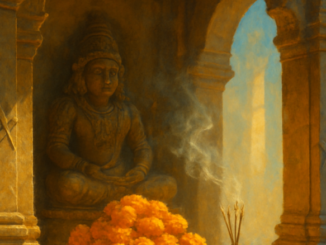
Hindu temple symbolism alongside Freemasonry symbols representing spiritual harmony
Religion

Hinduism and Freemasonry: Rituals and Spiritual Harmony

Hinduism is one of the oldest religions in the world, carrying with it a vast tradition of ritual, philosophy, and spiritual depth. Freemasonry, an age-old fraternity built on universal values, shares a remarkable number of principles with this rich spiritual heritage. Where these two traditions meet, a fascinating dialogue emerges — one rooted in symbolism, self-improvement, and the pursuit of higher truth. Hinduism: A Philosophy of Life Steeped in Ritual Hinduism is far more than a religion — it is an all-encompassing philosophy and way of life. At its heart lie foundational concepts such as karma (the law of cause and effect), dharma (righteous duty), and moksha (liberation from the cycle of rebirth). Rituals are central to Hindu practice, from the daily puja (prayer and devotion) to grand festivals like Diwali and Holi. Each ritual serves as a symbolic bridge between the earthly and the divine. Hindu temples are stunning sanctuaries filled with symbolism, where deity statues, flower offerings, and incense create a profoundly spiritual atmosphere. These temples are not only places of worship but also community centers where traditions are preserved and passed from one generation to the next. Freemasonry: A Universal Approach to Spiritual Growth Like Hinduism, Freemasonry […]

Catholic church interior with symbolic elements related to Freemasonry
Religion

Roman Catholicism and Freemasonry: Rituals and Spirituality

In an age of growing secularism, Roman Catholicism remains one of the most enduring pillars of Western culture. But how does this ancient tradition relate to Freemasonry — an organization that defines itself not as a religion, but as a brotherhood with deep spiritual roots? The answer reveals surprising parallels, historical tensions, and a shared quest for meaning that continues to resonate today. Roman Catholicism: A Tradition Built on Ritual Roman Catholicism has deep historical roots across Europe and the wider world. Despite declining church attendance in many countries, the faith continues to shape the cultural and spiritual landscape. At its heart lie the sacraments, the celebration of the Eucharist, and a strong emphasis on tradition. The interior of a Catholic church reflects this beautifully — richly decorated altars, candles burning as prayers made visible, and stained-glass windows that tell the stories of Scripture. What makes Catholicism particularly distinctive is its ritual nature. From baptism to marriage and the funeral rite, every significant moment in life is framed by ceremony. These rituals provide structure, a sense of belonging, and something many regard as a spiritual compass — guiding the faithful through life’s most profound transitions. Freemasonry: Ritual in a Different […]