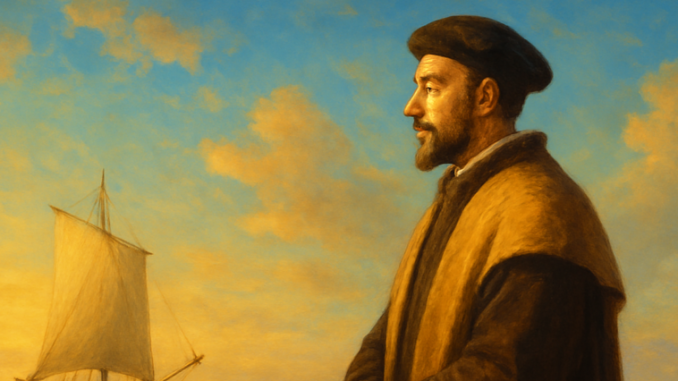
When Michel de Montaigne penned his twentieth essay on the power of imagination, he was drawing from a deep well of philosophical tradition. His observations on how the mind shapes the body were not born in isolation. They stand at a crossroads where ancient wisdom, medieval scholasticism, and Renaissance humanism converge. By exploring the philosophical sources behind this essay, we uncover not only the intellectual landscape of the sixteenth century but also timeless questions about the relationship between mind and matter — questions that continue to resonate today.
The Stoic Legacy: The Mind as Shaper of Reality
For the Stoics — thinkers like Seneca, Epictetus, and Marcus Aurelius — the human mind was not a passive receiver of impressions but an active shaper of experience. Their central thesis, that it is not events themselves that disturb us but our judgments about them, is a direct precursor to Montaigne’s observations. When he describes how people fall ill merely by thinking about illness, or how the fear of impotence can actually bring it about, the echoes of Stoic insight are unmistakable.
Seneca, whom Montaigne read and quoted extensively, wrote at length about how the mind can torment or elevate itself. In his letters to Lucilius, he emphasizes how the anticipation of suffering is often worse than the suffering itself. Montaigne absorbs this insight but gives it a more empirical character, gathering concrete examples from everyday life. Where Seneca prescribes, Montaigne observes.
Skepticism as a Method of Inquiry
The skeptical tradition, which reached Montaigne through Sextus Empiricus and the Academic school of Plato, provides another crucial element. The Skeptics questioned whether our senses and reason could reliably represent reality. If our perception is already so uncertain, how much more unreliable must our imagination be? Montaigne embraces this doubt — not to despair, but to cultivate intellectual humility.
Imagination is not the enemy of reason, but a mirror that reveals how deeply our beliefs can shape our bodies and our fate.
Skepticism enables Montaigne to describe, without judgment, how people are healed or made ill by their imagination. He neither condemns nor praises, but records with the curiosity of a natural philosopher. This attitude of suspended judgment — the epochè of the Skeptics — transforms his essay into an open investigation rather than a moralistic lecture.
Plutarch and the Art of the Example
No ancient author influenced Montaigne as profoundly as Plutarch. His Moralia and Lives provided an inexhaustible source of anecdotes, character studies, and moral reflections. Plutarch’s method — philosophizing through vivid examples and comparisons — became Montaigne’s own. In the essay on imagination, this is plainly evident: there are no abstract treatises, only concrete cases of people shaped by their own mental images.
Plutarch also explicitly addressed the relationship between body and soul, and the way emotions can produce physical effects. His writings on superstition and on the daimon of Socrates touch on themes that Montaigne later revisits. The Greek writer demonstrated that philosophy does not stand apart from ordinary life but dwells in the very midst of it. This democratizing gesture — philosophy for anyone willing to think — is something Montaigne adopted wholeheartedly.
Renaissance Humanism: Rediscovering the Human Being
Montaigne wrote during an era when humanists like Erasmus, Petrarch, and Pico della Mirandola were placing the human being back at the center of intellectual inquiry. No longer was humanity regarded merely as sinful creatures in need of redemption; instead, people were seen as complex beings endowed with dignity and potential. The study of the human condition — in all its contradictions and peculiarities — became a legitimate subject of investigation.
This humanist impulse explains why Montaigne is so fascinated by the vagaries of imagination. He wants to understand people as they truly are, not as theologians or philosophers prescribe them to be. The power of imagination, with all its dangers and possibilities, belongs to human nature. By examining it, Montaigne examines himself — and through himself, all of humanity.
Two Perspectives: The Scholar and the Seeker
We can approach this essay from two distinct vantage points: that of the academic scholar and that of the seeker of self-knowledge. The scholar sees a masterfully woven tapestry of sources and influences — an intellectual achievement of synthesis. The seeker perceives something different altogether: an invitation to take one’s own imagination seriously as a formative force in life.
Both perspectives have their value and their limitations. The scholar can become so focused on tracing sources that the living truth slips through the net. The seeker can read so personally that historical context falls away. Montaigne himself would likely have recognized both approaches and rejected neither outright. His essay invites us to move back and forth between detached analysis and engaged self-reflection — a practice that anyone on a path of inner development will find familiar.
What the Philosophical Sources Reveal
Understanding the philosophical background of this essay helps us appreciate what Montaigne was trying to accomplish. He did not write as an original thinker building new systems, but as an heir to traditions he processed both critically and creatively. His originality lies not in the individual components but in their composition and his uniquely personal tone.
The Stoics taught him that the mind holds power over our experience. The Skeptics taught him humility about that power. Plutarch taught him to write with examples and warmth. The humanists taught him that the human being is the most important subject of study. Together, these influences form the fertile ground from which Montaigne’s unique voice emerged — a voice that, after more than four centuries, still speaks to anyone willing to listen.
Montaigne’s essay on imagination is far more than a catalogue of curious anecdotes. It is the meeting point of centuries of philosophical inquiry — Stoic discipline, Skeptic humility, Plutarchian warmth, and humanist curiosity all woven together by a singular mind. For those who seek to understand how thought shapes reality, how belief molds the body, and how self-knowledge begins with honest observation, Montaigne remains an indispensable guide. His invitation to examine the power of imagination is, ultimately, an invitation to examine ourselves.
Copyright text & image: devrijmetselaar.nl
Texts are based on the ideas and content of the author of devrijmetselaar.nl, reviewed, corrected, and supplemented with the assistance of OpenAI. Images are created based on the ideas of the author of devrijmetselaar.nl using OpenAI/DALL-E.
Frequently Asked Questions
What is the connection between Stoicism and Montaigne's essay on imagination?
Montaigne drew heavily from Stoic philosophers like Seneca, Epictetus, and Marcus Aurelius, who believed the mind actively shapes experience rather than passively receiving it. The Stoic idea that our judgments about events, not the events themselves, disturb us directly influenced Montaigne's observations about how imagination can cause physical illness or psychological effects. However, while Seneca prescribed philosophical remedies, Montaigne took a more empirical approach by gathering concrete everyday examples.
How did skepticism influence Montaigne's approach to studying imagination?
Montaigne adopted the skeptical tradition through thinkers like Sextus Empiricus and Plato's Academy, which questioned whether our senses and reason could reliably represent reality. This skeptical method, called epochè or suspended judgment, allowed Montaigne to describe how imagination affects people without moral judgment. Rather than condemning or praising, he observed with the curiosity of a natural philosopher, transforming his essay into an open investigation of how beliefs shape the body and fate.
What was Montaigne's overall philosophical position on imagination?
Montaigne viewed imagination not as an enemy of reason, but as a mirror that reveals how deeply our beliefs can shape our bodies and our fate. He synthesized ancient wisdom, medieval scholasticism, and Renaissance humanism to explore the fundamental relationship between mind and matter, showing that imagination is a powerful force capable of causing both illness and healing through the power of belief and expectation.

Be the first to comment