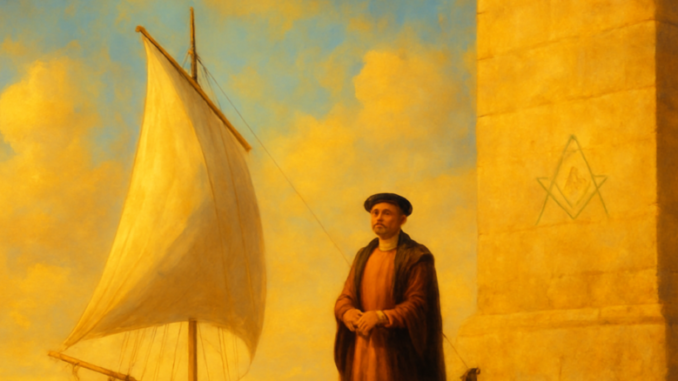
Why would a sixteenth-century French thinker devote an essay to the battle tactics of a long-vanished Persian cavalry? What could the Parthians — famous for shooting arrows at their enemies while appearing to retreat — possibly have to do with philosophy, self-knowledge, or personal growth? Far more than you might expect at first glance. In his essay ‘On Parthian Weapons,’ Michel de Montaigne touches on themes deeply rooted in ancient philosophy — themes that still resonate in traditions dedicated to the inner life of the individual.
The Art of Retreat as Strategy
The essay — the ninth in the second book of the Essais — appears on the surface to address a purely military question: is it more effective to attack an enemy head-on, or to strike while retreating? The Parthians, the ancient horse-riding people from what is now Iran, were legendary for their tactic of the feigned withdrawal. They would turn in the saddle and loose their arrows while seemingly fleeing — a strategy that drove the Romans to despair on more than one occasion, as Plutarch describes in his life of Marcus Licinius Crassus.
But Montaigne uses this military example the way he so often does: as a springboard toward deeper questions. The real issue is not simply how to win a war, but how we relate to strength, vulnerability, and the unexpected. In his eyes, retreat is not necessarily cowardice. Sometimes it is the most effective course of action. That insight has ancient philosophical roots.
Plutarch and Seneca as Whispering Guides
When reading this essay, you immediately notice the influence of two thinkers Montaigne considered his most important guides: Plutarch and Seneca. Plutarch, the Greek biographer and moral philosopher, supplied Montaigne not only with the historical material about the Parthians but also with a particular way of thinking. Plutarch compared lives, weighed virtues against faults, and always sought the moral lesson behind historical events. Montaigne followed the same method: a concrete example from history becomes the starting point for an investigation of human behavior.
Seneca, the Roman Stoic, is present in a different way. His influence can be felt in the tone of the essay: sober, direct, and unadorned. Seneca taught that one should not cling blindly to a single strategy. Flexibility and inner freedom are greater virtues than brute steadfastness. When Montaigne admires the Parthians for their ability to show strength in what appears to be weakness, Seneca’s voice echoes through the text. The truly wise person adapts without losing his core.
Stoicism and Skepticism: Two Streams, One River
Montaigne is often associated with skepticism, and rightly so. His famous motto Que sais-je? — What do I know? — expresses his fundamental stance: distrust every certainty, including your own judgment. In ‘On Parthian Weapons,’ that skepticism is subtly present. Montaigne refuses to render a final verdict on which method of combat is superior. He weighs arguments, cites contradictory sources, and ultimately leaves the question open. This is classic skepticism: the suspension of judgment, just as the Greek philosopher Pyrrho of Elis would have advocated.
At the same time, there is a clear Stoic undercurrent. The Stoics — from Zeno of Citium through Epictetus to Marcus Aurelius — taught that true strength lies not in controlling the external world, but in mastering yourself. The Parthians master their fear and their pride. They do not flee out of panic, but out of calculation. They let go of their ego to become more effective. This is a deeply Stoic principle: distinguishing between what you can influence and what you cannot, and aligning your actions accordingly.
The philosophical heart of Montaigne’s essay on the Parthians is this: true strength is not always visible in the attack. Sometimes it resides precisely in the ability to let go and to consciously change course.
Renaissance Humanism: The Human Being as Measure
This essay cannot be fully understood without placing it in the broader current of Renaissance humanism. Montaigne lived in an era when Europe was rediscovering the texts of classical antiquity. Thinkers like Erasmus, Petrarch, and Marsilio Ficino had paved the way for a renewed appreciation of the human being as a rational, searching creature. Montaigne went a step further. Where many humanists placed classical virtues on a pedestal, he subjected them to personal investigation. He did not ask: what does tradition say? He asked: what do I myself experience?
You can see this at work in ‘On Parthian Weapons.’ Montaigne takes the historical material seriously, but he bends it toward his own experience and observations. He writes not as a detached scholar, but as someone who asks himself: how would I react? What does my own nature tell me about courage, about retreat, about strategy? That personal turn makes him a true humanist — not in the academic sense, but in the deepest meaning: someone who takes the human experience as his starting point.
What This Means for Those Who Seek Self-Knowledge
Imagine you find yourself in a situation where every instinct tells you to stand your ground, to fight, to never let go. The Parthians teach you that there is another possibility. Retreat need not be defeat — it can be a deliberate choice, an expression of insight. Montaigne translates that military lesson into everyday life, into the inner struggle that every person wages with their own convictions, fears, and habits.
That translation is precisely what traditions like Freemasonry also pursue. The rough stone you work on is not the outer world — it is yourself. The tools are not physical instruments but inner faculties: reflection, self-criticism, the ability to suspend judgment and look again with fresh eyes. Montaigne does nothing else in his essays. He takes up the chisel, not to build a wall, but to shape the stone of his own understanding.
In both Montaigne’s philosophical practice and in Masonic tradition, the same truth emerges: genuine strength often reveals itself not in rigid resistance but in the wisdom to withdraw, reconsider, and return with greater clarity. The Parthian archer who turns in the saddle is not running away — he is finding the angle from which his aim is truest. And so it is with the work of self-knowledge: sometimes the most courageous thing you can do is to step back, let go of certainty, and allow a deeper understanding to take shape.
Montaigne’s essay on Parthian weapons may seem like a brief meditation on ancient military tactics, but beneath the surface lies a rich philosophical conversation that spans centuries. Drawing on Plutarch’s moral insight, Seneca’s Stoic flexibility, the skeptic’s suspension of judgment, and the humanist’s trust in personal experience, Montaigne crafts a vision of strength that is anything but obvious. For anyone engaged in the lifelong work of self-improvement — whether through philosophical inquiry or through the symbolic labor of Freemasonry — the lesson of the Parthians endures: true mastery is not about never retreating, but about knowing when and how to change course without losing yourself.
Copyright text & image: devrijmetselaar.nl
Texts are based on the ideas and content of the author of devrijmetselaar.nl, reviewed, corrected, and supplemented with the assistance of OpenAI. Images are created based on the ideas of the author of devrijmetselaar.nl using OpenAI/DALL-E.
Frequently Asked Questions
What is the main topic of Montaigne's essay 'On Parthian Weapons'?
Montaigne's essay examines the Parthian military tactic of the feigned withdrawal—shooting arrows while appearing to retreat. However, beyond the surface military question, Montaigne uses this historical example to explore deeper philosophical themes about strength, vulnerability, retreat as strategy, and the relationship between apparent weakness and true effectiveness.
Why did Montaigne choose to write about ancient Persian cavalry tactics?
Montaigne used the Parthian example as a springboard to investigate fundamental questions about human behavior and decision-making. The concrete historical example allowed him to explore how retreat is not necessarily cowardice, but sometimes the most effective course of action—a insight with deep roots in ancient philosophy that remains relevant to personal growth and self-knowledge.
What ancient philosophers influenced Montaigne's approach in this essay?
Montaigne's two most important philosophical guides were Plutarch and Seneca. Plutarch provided historical material and a method of comparing lives and extracting moral lessons from events. Seneca, the Roman Stoic, influenced the essay's tone and philosophy, teaching that flexibility and inner freedom are greater virtues than rigid steadfastness, which aligns with Montaigne's admiration for the Parthians' ability to demonstrate strength through apparent weakness.

Be the first to comment