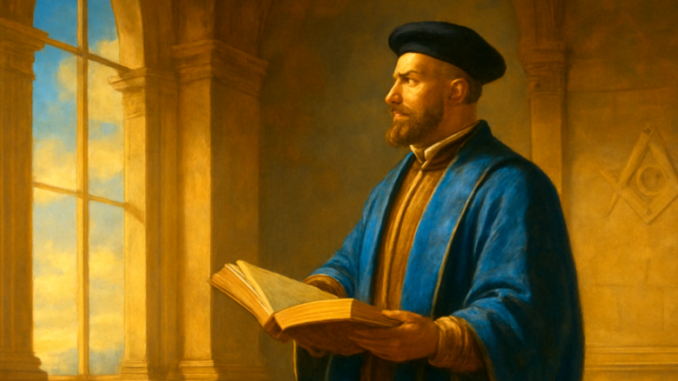
In 50 BC, the Roman general Marcus Licinius Crassus suffered a devastating defeat at Carrhae in present-day Turkey. His heavily armored legions, trained for frontal assault, were annihilated by Parthian horsemen who fired their deadliest arrows while seemingly retreating. That paradox — that the greatest strength can reside in what looks like withdrawal — became the starting point for one of Michel de Montaigne’s shorter but most incisive essays. In Book II, Essay 9 of his famous Essays, Montaigne examines how peoples and individuals choose their weapons, and what those choices reveal about their character. On the surface, it is a text about warfare. Read more carefully, it unveils something profound about the way human beings defend themselves against the uncertainties of existence.
The Heart of the Essay: Attack or Defense?
Montaigne opens Essay II,9 with an observation that is as much philosophical as it is military. He describes how the Parthians, an ancient Persian people, had developed an entirely distinctive art of war. While the Romans sought strength in direct combat — advancing shield to shield, overwhelming the enemy head-on — the Parthians chose a radically different approach. Their famous tactic was to appear to retreat and then, riding backward, fire their arrows with lethal precision. The so-called “Parthian shot” became proverbial throughout the classical world.
Montaigne does not use this image merely as a historical anecdote. He raises a fundamental question: is it wiser to enter battle heavily armed, or to remain light and agile, ready to respond to whatever the situation demands? The Parthians chose mobility over armor. They did not trust in the impregnable wall of their equipment but in their ability to fight on their own terms.
Historical Examples as Mirrors
As in so many of his essays, Montaigne draws richly from classical history. Beyond the Parthians, he discusses the Roman experience under Julius Caesar, who trained his soldiers to strike at close quarters and use the weight of their equipment to advantage. He references the Greeks, who found in their phalanx a compromise between protection and striking power. And he examines the chivalric traditions of his own era, noting how the heavy plate armor of the medieval knight had long since given way to a lighter, more maneuverable type of soldier.
But Montaigne does not confine himself to the battlefield. He extends the comparison into everyday life. The question of how we arm ourselves is not merely a matter of steel and leather — it is also a matter of attitude and spirit. Some people cloak themselves in unshakeable convictions as though wearing a suit of armor. Others remain flexible and open, willing to adjust their position when new insights warrant it. Montaigne lets us glimpse that he himself inclines toward the latter attitude, true to his celebrated motto: “Que sais-je?” — What do I know?
The Armor of Character
The essay touches on a theme that recurs throughout Montaigne’s work: the relationship between inner and outer strength. He warns against blind faith in external protection. Armor that is too heavy slows the person who wears it. It creates a false sense of invincibility and blinds the wearer to the real danger. Montaigne suggests that true resilience comes not from piling up defensive mechanisms but from self-knowledge — from the ability to recognize one’s own weaknesses and deal with them wisely.
Those who entrench themselves exclusively behind external protection forget to cultivate the inner suppleness that makes all the difference when the armor finally cracks.
This insight resonates far beyond the sixteenth century. In the Stoicism of Marcus Aurelius, whom Montaigne knew well, a similar thought rings true: it is not the external world that wounds us, but our judgment of it. And in Seneca, another of Montaigne’s beloved sources, we find the idea that true freedom lies in releasing fear, not in stacking up fortifications. For anyone engaged in the pursuit of self-knowledge — whether through philosophy, contemplative practice, or the structured introspection found in traditions like Freemasonry — this principle carries particular weight. The work of refining one’s character is never accomplished by building thicker walls around the self, but by developing the courage to meet life with openness and honesty.
What the Parthian Arrow Teaches Us Today
Essay II,9 is one of the shorter texts in Montaigne’s body of work, but its theme is remarkably current. In an age when people are inclined to entrench themselves in rigid opinions and digital trenches, the Parthian approach is an invitation to adopt a different posture. The strength to withdraw from a stalemate, to conduct a conversation thoughtfully rather than frontally, is not a sign of weakness. It is, as Montaigne shows us, perhaps the most refined form of the art of engagement.
The great lesson of this essay is that the way we defend ourselves says as much about us as whatever we are defending against. The Parthians deliberately chose a style suited to their landscape, their culture, and their horses. Montaigne invites us to look at our own achievements and defense mechanisms with the same honesty. Are we wearing armor that protects us — or armor that imprisons us?
This question is especially relevant within Freemasonry, where the symbolic work of the Craft centers on chipping away at the rough stone of the self. The working tools of a Mason are not weapons of attack or defense but instruments of refinement. The lesson of the Parthian arrow aligns beautifully with the Masonic principle that strength of character is built through adaptability, humility, and the willingness to examine oneself without flinching.
Montaigne’s Legacy in Thinking About Resilience
Montaigne wrote this essay during a period of religious wars, political uncertainty, and personal vulnerability. He had served as mayor of Bordeaux, witnessed the plague at close quarters, and known the full weight of public responsibility. His choice to write about weapons and armor was anything but casual. It was a way of thinking through the question of how to remain standing in a world no less unpredictable than our own.
Later thinkers such as Blaise Pascal and Jean-Jacques Rousseau would build upon Montaigne’s insights into human vulnerability and self-knowledge. The idea that true strength lies not in armor but in adaptability echoes through the centuries into contemporary thinking about resilience, emotional intelligence, and personal growth. For those who walk the Masonic path, Montaigne’s reflections serve as a powerful reminder that the greatest battle is always the one waged within — and that the wisest warriors are those who know when to lower their shields and let the light in.
Montaigne’s short essay on the Parthian weapons is ultimately not about warfare at all. It is about the choices we make when confronted with uncertainty, conflict, and the limits of our own understanding. The Parthian horseman, lethal in retreat, embodies a truth that runs through Stoic philosophy, Montaigne’s humanism, and the symbolic teachings of Freemasonry alike: real strength is not rigidity but responsiveness, not the thickness of one’s armor but the depth of one’s self-knowledge. In a world that constantly tempts us to fortify and entrench, the Parthian arrow reminds us that sometimes the most powerful move is the one that looks like stepping back.
Copyright text & image: devrijmetselaar.nl
Texts are based on the ideas and content of the author of devrijmetselaar.nl, reviewed, corrected, and supplemented with the assistance of OpenAI. Images are created based on the ideas of the author of devrijmetselaar.nl using OpenAI/DALL-E.

Be the first to comment