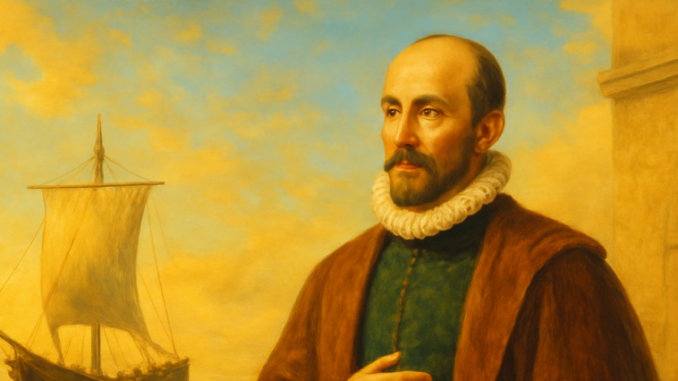
You’re stuck in traffic when someone cuts you off, and irritation flares instantly. At work, a colleague dismisses your idea, and your thoughts drift toward resentment. These are small moments, but they reveal something larger: how quickly we harden ourselves against others. Michel de Montaigne addressed this very mechanism in the sixteenth century in his essay “Of Cruelty.” His conclusion? Cruelty is not a sign of strength — it is a sign of weakness. And compassion is not softness — it is the highest form of human civilization. For Freemasons, who dedicate themselves to moral refinement and brotherhood, Montaigne holds up a practical mirror: how gentle are we, really, in our daily conduct?
What Montaigne Teaches Us About Cruelty
In his essay, Michel de Montaigne examines why human beings are cruel — not only to one another, but also to animals. He observes that cruelty often grows from habit and indifference. Once a person becomes accustomed to inflicting pain, he argues, the capacity for empathy gradually erodes. This is not some abstract philosophical puzzle. It speaks directly to how we treat colleagues, family members, strangers on the street, and even ourselves.
Montaigne notes that hunters who kill animals without hesitation often become less sensitive to human suffering as well. He sees a slippery slope at work: whoever hardens himself toward one living being will inevitably harden himself toward others. This insight carries immediate practical value. It invites us to pay close attention to the moments when we respond with indifference, and to ask ourselves honestly: is this the person I want to be?
The Freemason as a Practitioner of Compassion
At the heart of Freemasonry lies the continuous labor upon the rough ashlar — the unfinished stone that symbolizes our own imperfections. The work of shaping it is a lifelong exercise in self-improvement. Montaigne’s perspective on cruelty aligns seamlessly with this pursuit. He does not view compassion as an innate trait that you either possess or lack. Instead, he sees it as a skill that can be cultivated. Every time you choose understanding over judgment, you chip away at the rough edges of your own character.
Compassion is not weakness — it is the practical expression of inner refinement.
The Masonic lodge functions as a training ground for exactly this attitude. Brethren meet as equals, regardless of background or social standing. This requires the suspension of judgment, the discipline of listening before speaking, and a genuine concern for the well-being of others. Montaigne would recognize this as precisely the antidote to the hardening he describes in his essays.
Three Practical Steps to Cultivate Gentleness
Montaigne’s insights only become valuable when you put them into practice. Here are three ways to do so in your everyday life:
1. Watch your first reaction. When someone irritates you, pause for three seconds before responding. That brief pause creates space for compassion to enter.
2. Look for the person behind the behavior. The aggressive driver who cut you off may have a sick child at home. The distracted colleague might be wrestling with worries you know nothing about. Assuming the best in others is not naivety — it is a conscious moral choice.
3. Practice small acts of kindness. A sincere compliment, holding a door open, offering a patient ear to someone who needs to talk. These seemingly minor gestures shape your character over time, and they ripple outward in ways you may never fully see.
The Brotherhood as a School for Living
What makes Freemasonry distinctive is that it provides a structure for this kind of inner work. In the lodge, you encounter people you might never meet in your ordinary life. The rituals remind you that you are part of something greater than yourself. The quest for light and knowledge — so central to the Masonic tradition — encompasses the light of human understanding as well: the ability to truly see others for who they are.
Montaigne would feel at home here. His essays are steeped in a deep respect for human dignity and a thorough distaste for dogma. Like Freemasonry, he invites self-examination without final verdicts. We are never finished learning, never perfect in our gentleness — but it is precisely that ongoing process that gives life its meaning.
Why This Matters Now More Than Ever
In an age of social media, where harsh judgments circle the globe in seconds, Montaigne’s message is more relevant than ever. It is easy to forget, behind a screen, that every post, every comment, every message has a human being behind it — someone with their own story, their own vulnerabilities, their own hopes. The hardening that Montaigne described threatens to accelerate in our digital environment, where empathy is often the first casualty of speed.
The Masonic values of brotherhood and genuine connection offer a counterweight. They remind us that we are, first and foremost, human beings with a responsibility to care for one another. Not as an abstract ideal inscribed on a temple wall, but as a daily practice. Every encounter, every conversation, every interaction is an opportunity to demonstrate the gentleness that Montaigne valued so highly.
Michel de Montaigne wrote five centuries ago, but his words still cut deep. Cruelty begins small — in carelessness and habit. Compassion demands conscious choices, made fresh every single day. For Freemasons, this is not a side note to the Craft — it is the very core of the work. The rough ashlar does not smooth itself. That requires effort, patience, and above all the willingness to look at yourself honestly. You can start today: with one moment of patience, one instant of understanding, one deliberate choice for gentleness. That is how brotherhood becomes reality.
Copyright text & image: devrijmetselaar.nl
Texts are based on the ideas and content of the author of devrijmetselaar.nl, reviewed, corrected, and supplemented with the assistance of OpenAI. Images are created based on the ideas of the author of devrijmetselaar.nl using OpenAI/DALL-E.
Frequently Asked Questions
How does Montaigne's essay on cruelty relate to Freemasonry?
Montaigne's insights on compassion align perfectly with Freemasonry's commitment to moral refinement and self-improvement. Both teach that hardening ourselves against others—through indifference or cruelty—weakens our character, while cultivating compassion represents the highest form of human civilization and Masonic development.
Is compassion considered a weakness in Freemasonry?
No—quite the opposite. Freemasonry teaches that compassion is not softness but a sign of inner strength and refinement. Montaigne similarly argues that cruelty stems from weakness and indifference, while genuine compassion is the practical expression of a truly cultivated character.
What does the 'rough ashlar' symbolize in Masonic practice?
The rough ashlar represents our own imperfections and is a symbol of the lifelong work of self-improvement that every Mason undertakes. This continuous labor of refining ourselves—much like Montaigne's teaching on compassion—is central to becoming a better man and a better brother.
How can I practice compassion in my daily life as suggested by this article?
The article recommends pausing for three seconds before reacting when irritated, which creates space for compassion to emerge. By choosing understanding over judgment and practicing genuine concern for others' well-being—principles at the heart of Masonic lodge work—you gradually refine your character and become less prone to hardening yourself against others.



Be the first to comment