It is late in the evening. A man sits in a dimly lit room, surrounded by brethren he has known for years. Some wear suits, others a simple shirt. A banker sits beside a carpenter, a teacher next to a surgeon. No one here measures themselves by rank or title. In that stillness, just before the ritual begins, he feels something that Michel de Montaigne tried to capture in words more than four centuries ago: that the true worth of a person is never visible on the outside.
What Montaigne Teaches Us About Human Inequality
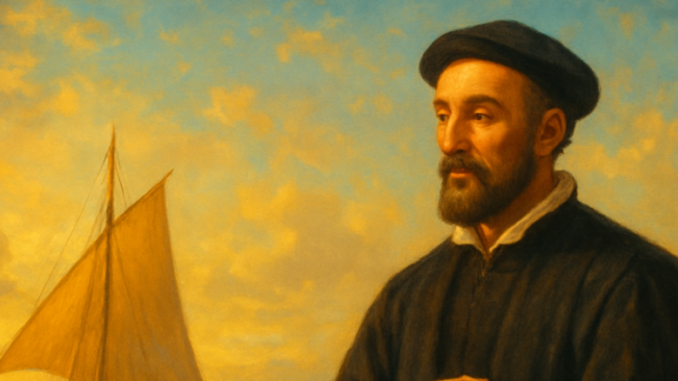
In his forty-second essay from the first book of the Essays, Michel de Montaigne examines the inequality that exists among human beings. His argument seems simple on the surface, but it cuts deep. Montaigne argues that we are constantly misled by appearances. We attribute power, wealth, and prestige to individuals, forgetting that these things have nothing to do with a person’s inner quality. A king in magnificent robes, once those robes are stripped away, is not inherently more than the beggar on the street.
Montaigne draws on Seneca, who argued in his letters that virtue is the only possession that truly belongs to us. It is a thought echoed by Plato and Aristotle before him: outward distinctions say very little about the soul.
But Montaigne goes beyond philosophical theory. He offers concrete examples of rulers who, stripped of their retinue and their throne, turned out to be utterly ordinary — or even pitiable — figures. He describes how Roman emperors maintained an illusion of grandeur while their inner lives were impoverished and anxious. The essay is therefore not merely an intellectual exercise, but a moral appeal: judge a person by what they are, not by what they own or represent.
The Lodge as a Space Beyond Appearances
Anyone familiar with Freemasonry will recognise in Montaigne’s argument a principle that is practised in the lodge from the very first moment. When a candidate is initiated, they are deliberately stripped of outward signs of status. Metals are set aside. Clothing is simplified. This is no casual ritual gesture — it is a deeply rooted conviction: the person entering the lodge is invited to meet themselves without the protection of social roles. Exactly as Montaigne describes when he says we must look at a person as they truly are, “down to the shirt.”
In Freemasonry, brotherhood is not an abstract ideal. It is a daily practice that requires setting aside precisely the inequalities Montaigne dissects. The banker and the carpenter meet on the level — a concept that in Masonic tradition refers to equality of worth. Not equality in the sense of uniformity, but the recognition that every person’s inner journey has equal value, regardless of the outward circumstances in which that journey takes place.
Virtue as the Only True Measure
Throughout this essay, Montaigne returns again and again to a single core idea: the only real measure of a person’s worth is their virtue. He cites the Stoic tradition, particularly Seneca, who held that fortune can give us much and take much away, but it can never determine our inner disposition. This conviction runs like a thread through all of Freemasonry. The pursuit of moral perfection — however unattainable it may seem — lies at the heart of Masonic labour. Not perfection as a destination, but as a direction. Not flawlessness, but the continuous striving to become a better human being.
Freemasonry teaches what Montaigne already knew: that true connection only becomes possible when we have the courage to look beyond rank, possessions, and titles, and see the person standing before us.
Montaigne describes how people tend to confuse the lustre of an office with the person who holds it. In the lodge, this tendency is consciously broken. During ritual work, members address each other as Brother, regardless of whatever position they may hold outside the lodge walls. This creates a space that is rare in modern society: a space where you are seen for who you are, not for what you represent.
Self-Reflection: The Bridge Between Montaigne and the Freemason
One of the most striking parallels between Montaigne’s thinking and Freemasonry lies in the practice of self-reflection. Montaigne did not write his Essays to lecture others — he wrote them to examine himself. “I am myself the matter of my book,” he declared in his preface. This radical honesty about one’s own shortcomings, vanities, and blind spots is precisely what Freemasonry asks of its members. The rough ashlar — that powerful image of the unworked self — is not shaped by someone else. It is labour that each person must undertake for themselves.
Where Montaigne used the pen as his tool for self-knowledge, the Freemason uses ritual. Both methods aim at the same goal: honestly confronting one’s own limitations, and growing from there. Montaigne would have perhaps felt at home in a lodge — not in spite of his doubts and questions, but precisely because of them. For in Freemasonry, doubt is not a weakness. It is the beginning of wisdom.
Connection Beyond Difference
Montaigne’s essay on inequality is ultimately not a cynical treatise. It is an invitation to look deeper — to seek the person behind the mask. In Freemasonry, that invitation is offered anew at every meeting. Brothers and sisters from diverse backgrounds, with different convictions and life stories, come together around shared values: a love of truth, charity toward others, and the desire for inner growth.
This is not naïve idealism. It is a deliberate choice to seek connection beyond difference — a choice that requires effort, vulnerability, and the willingness to see past the surface. In a world increasingly defined by division and outward markers of status, both Montaigne’s wisdom and Freemasonry’s practice offer something genuinely countercultural: the belief that what makes us truly human lies within.
Montaigne’s reflections on inequality remain as relevant today as they were in the sixteenth century. His insistence that we look beyond appearances and judge people by their character rather than their circumstances is a message the world still needs to hear. Freemasonry, in its own quiet and deliberate way, has been practising this principle for centuries — creating spaces where the rough stone of the self can be worked, where rank dissolves, and where the only thing that truly matters is the quality of the person you are becoming. In the meeting of these two traditions — the philosophical and the fraternal — we find a powerful reminder that genuine human connection begins where pretence ends.
Copyright text & image: devrijmetselaar.nl
Texts are based on the ideas and content of the author of devrijmetselaar.nl, reviewed, corrected, and supplemented with the assistance of OpenAI. Images are created based on the ideas of the author of devrijmetselaar.nl using OpenAI/DALL-E.
Frequently Asked Questions
What is Montaigne's main argument about human inequality?
Montaigne argues that we are misled by outward appearances such as wealth, power, and prestige when judging human worth. He contends that a person's true value lies in their inner qualities and virtue, not in external status symbols. He illustrates this by noting that a king without his robes is not inherently superior to a beggar, and that even Roman emperors often had impoverished inner lives despite their outward grandeur.
How does Freemasonry practice Montaigne's philosophy on inequality?
Freemasonry deliberately strips initiates of outward signs of status during the initiation ritual. Metals are set aside and clothing is simplified, allowing candidates to meet themselves without social roles and protections. This practice embodies Montaigne's principle of looking at a person as they truly are, creating a space where brotherhood is based on inner character rather than external distinctions.
Which philosophers influenced Montaigne's views on inequality and virtue?
Montaigne drew on the ideas of Seneca, who argued that virtue is the only true possession that belongs to us. These thoughts were echoed by earlier philosophers Plato and Aristotle, who similarly believed that outward distinctions reveal very little about a person's soul or inner character.

Be the first to comment