A rough ashlar stone beside an open book symbolizing humility and seeking
Islam

A Lesson on Pride from the Quran: When the Prophet Frowned

There is a moment in the Quranic tradition that is unforgettable in its simplicity. A blind man seeks spiritual guidance, but is ignored in favor of powerful dignitaries. The Prophet frowns and turns away. It is precisely this gesture — this frown — that lies at the heart of Surah 80. A holy book that corrects its own messenger opens a rare window onto a universal human theme: the temptation of pride and the necessity of humility. It is a theme that resonates as powerfully within the spiritual tradition of Islam as it does within the ritual practice of Freemasonry. The Voice of the Surah: When the Powerful Turn Away Surah 80, known as Abasa (“He Frowned”), is one of the shorter chapters of the Quran, consisting of 42 verses revealed during the early Meccan period. The verses describe an encounter in which the Prophet Muhammad is deep in conversation with influential leaders of the Quraysh tribe. At that very moment, a blind man named Abdullah ibn Umm Maktum approaches with sincere questions about the faith. The Prophet, absorbed in his effort to persuade the powerful, frowns and turns away from the blind man. The divine response is immediate and […]
Dimly lit Masonic lodge interior symbolising equality and self-reflection
Michel de Montaigne – Freemasonry & Connection

Montaigne on Inequality and Its Connection to Freemasonry

It is late in the evening. A man sits in a dimly lit room, surrounded by brethren he has known for years. Some wear suits, others a simple shirt. A banker sits beside a carpenter, a teacher next to a surgeon. No one here measures themselves by rank or title. In that stillness, just before the ritual begins, he feels something that Michel de Montaigne tried to capture in words more than four centuries ago: that the true worth of a person is never visible on the outside. What Montaigne Teaches Us About Human Inequality In his forty-second essay from the first book of the Essays, Michel de Montaigne examines the inequality that exists among human beings. His argument seems simple on the surface, but it cuts deep. Montaigne argues that we are constantly misled by appearances. We attribute power, wealth, and prestige to individuals, forgetting that these things have nothing to do with a person’s inner quality. A king in magnificent robes, once those robes are stripped away, is not inherently more than the beggar on the street. Montaigne draws on Seneca, who argued in his letters that virtue is the only possession that truly belongs to us. It […]

Ancient Roman chariot race arena symbolizing Masonic lessons on status and equality
Freemasonry & Society

Chariot Races as a Mirror: What Circuses Teach About Status

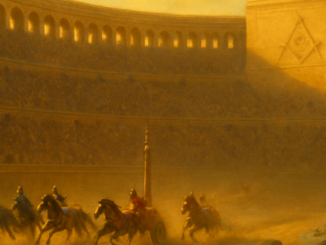
On a sweltering afternoon in Barcelona, drivers battled for the best starting position while thousands of spectators held their breath. The scene was strikingly reminiscent of one that played out two thousand years ago in Rome’s Circus Maximus: charioteers risking their lives under a blazing sun in pursuit of glory and honor. The parallels between ancient chariot racing and modern motorsport are remarkable — but what can these contests truly tell us about our views on status, community, and the society we live in? The Circus Maximus: Arena of Heroes and Symbols In ancient Rome, the Circus Maximus was the beating heart of public life. Up to 250,000 people would gather here to witness chariot races. The four racing stables, known as factiones, were identified by color: blue, green, red, and white. These colors represented far more than sporting rivalry — they symbolized the seasons, the elements, and the cosmic order. The race itself was a ritual, a symbolic battle between the forces of nature fought again and again in the dust of the arena. The charioteers, called aurigae, were often slaves or freedmen who could rise to the status of folk heroes through sheer courage and skill. Their position […]