
There are moments in life when you can no longer look away. Moments when truth presents itself, whether or not you feel ready for it. The sixty-ninth chapter of the Quran carries a name that captures exactly that feeling: Al-Haqqah — The Inevitable. It is a chapter that does not demand belief in a specific doctrine, but something far more universal: the willingness to face yourself honestly. And it is precisely in that willingness that this ancient text touches the very core of what Freemasonry asks of its members.
What Is The Inevitable About?
Surah 69, known in Arabic as Al-Haqqah, opens with a striking threefold rhetorical question: What is the Inevitable? And what will make you understand what the Inevitable is? The chapter then references historical peoples who were destroyed because they ignored the warnings given to them. The peoples of Thamud and Aad, and the people of Pharaoh, are cited as examples of communities that sealed themselves off from reality. The surah then describes the moment of ultimate reckoning — a day when every person receives their book of life, either in the right hand or the left. Those who receive it in their right hand have cause for joy. Those who receive it in their left wish they had lived differently.
It is tempting to read this purely as an eschatological text — a story about the end of times. But the real power of this surah lies in a deeper theme: personal responsibility. The inevitable truth is not something that only arrives after death. It is the confrontation with who you truly are, and it can present itself at any moment.
The Book of Life: A Mirror You Cannot Escape
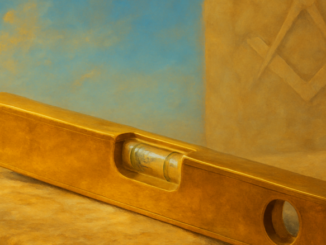
Imagine receiving a small book at the end of each day containing every choice you made. Not just your actions, but also your thoughts, the decisions you postponed, and the moments you looked away. That is essentially the image Surah 69 paints. In Freemasonry, there is a closely related concept: the rough ashlar. Every brother is invited to view himself as an unworked block of stone that can be shaped into a purer form through honest self-reflection and moral effort. The book of life from The Inevitable functions as just such a mirror. It is not about condemnation — it is about clarity.
The inevitable truth is not a punishment but an invitation: look honestly at your life and begin building today toward the person you want to become.
Ignoring Warnings: A Universal Pitfall
One of the most practical lessons from this surah is the importance of recognizing warnings. The peoples mentioned in The Inevitable did not perish due to a lack of knowledge. They had prophets and messengers among them. Their downfall came because they refused to listen. Does that sound familiar? In daily life, we constantly receive signals that we would rather ignore. A friend telling you that you are working too hard. An inner voice whispering that you need to resolve a conflict. A sense of unease about a choice you know is not right.
The philosopher Aristotle wrote extensively about the importance of phronesis — practical wisdom: the ability to recognize the right course of action in concrete situations and to act accordingly. The Inevitable aligns seamlessly with this idea. It is not about abstract virtue but about the daily courage to take signals seriously before they produce inevitable consequences.
Concrete Steps: How to Apply This in Your Life
The power of a spiritual text lies not only in reading it but in translating its message into action. Here are four concrete ways to weave the message of The Inevitable into your daily life:
First, at the end of each day, write down three choices you made. Not to judge yourself, but to become aware of your patterns. This is your own book of life in practice.
Second, ask yourself weekly: what warning did I ignore this week? It might be a physical signal, a remark from a colleague, or a gut feeling. Take it seriously and formulate one concrete action in response.
Third, seek out a conversation with someone you trust. In Freemasonry, this happens within the lodge, where brethren reflect on their inner growth in a safe and supportive space. But you can do this outside the lodge as well — choose a friend or mentor and speak honestly about your blind spots.
Fourth, begin your morning with a moment of silence in which you ask yourself: if today were the day I had to give an account of my life, would I be satisfied with the direction I have chosen? Not as a heavy burden, but as a compass.
The Connection to Masonic Ritual
Within the rituals of Freemasonry, the theme of inevitable confrontation plays a significant role. During initiation, the candidate is literally confronted with darkness and light, with questions about his intentions and his willingness to improve himself. This is no coincidental parallel with the message of Surah 69. Both traditions pose the same fundamental question: are you willing to receive the truth about yourself, even when it is uncomfortable?
The Quran is placed on the altar in many lodges around the world, alongside the Bible, the Torah, and other sacred texts, as one of the Great Lights. This is not a decorative gesture. It reflects the conviction that wisdom flows from many sources and that no single tradition holds a monopoly on truth. The Inevitable reminds us that truth is not selective — it comes to everyone, regardless of background or belief.
Why This Matters Now
We live in an age of information overload and a scarcity of reflection. It is easier than ever to swipe away warnings, to dismiss feedback, and to postpone the uncomfortable. Surah 69 was written in a different era, but its urgency is timeless. The philosopher Plato described in his Allegory of the Cave how people prefer to stare at shadows rather than turn toward the light. The Inevitable asks precisely that of us — to turn around, face the light, and accept what we see. For Freemasons and seekers alike, this is not a distant theological exercise. It is the work of today, of this very moment, and of every honest glance into the mirror we dare to take.
The Inevitable is not a threat — it is a gift. It is the recognition that truth will find you, whether or not you go looking for it. The question is not whether the moment of reckoning will come, but how you will meet it when it does. Freemasonry and Surah 69 share a profound and enduring message: begin the work of self-improvement now. Write your own book of life with intention, listen to the warnings you are given, and never stop refining the rough stone of your character. The inevitable truth is already here. What matters is what you choose to do with it.
Copyright text & image: devrijmetselaar.nl
Texts are based on the ideas and content of the author of devrijmetselaar.nl, reviewed, corrected, and supplemented with the assistance of OpenAI. Images are created based on the ideas of the author of devrijmetselaar.nl using OpenAI/DALL-E.
Frequently Asked Questions
What is Al-Haqqah (The Inevitable) and how does it relate to Freemasonry?
Al-Haqqah, the 69th chapter of the Quran, refers to the inevitable confrontation with truth and personal responsibility. It relates to Freemasonry through the concept of self-reflection and moral development. Both traditions emphasize the willingness to face yourself honestly and take responsibility for your choices, rather than demanding adherence to specific doctrines.
What does the 'Book of Life' in Surah 69 represent?
The 'Book of Life' in Surah 69 represents a complete record of one's choices, actions, thoughts, and decisions—both those made and those postponed. In Freemasonry, this concept parallels the 'rough ashlar,' an unworked stone that can be shaped through honest self-reflection. It functions as a mirror for clarity rather than condemnation, inviting individuals to build toward their best selves.
How does Surah 69 address the consequences of ignoring warnings?
Surah 69 cites historical examples—the peoples of Thamud, Aad, and Pharaoh—who were destroyed because they ignored warnings and sealed themselves off from reality. This teaches a universal lesson about the dangers of denial and avoidance. The surah emphasizes that ignoring the truth about ourselves and our circumstances has real consequences, making personal honesty and accountability essential principles.


Be the first to comment