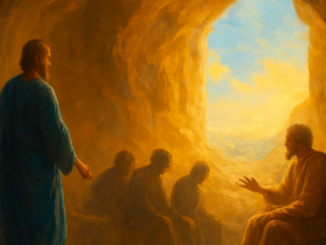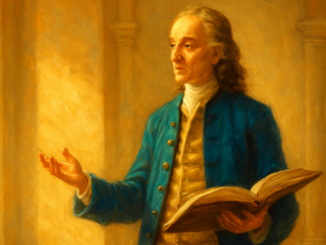
Ancient Greek dialogue scene representing Plato's Meno and the pursuit of virtue
Plato – Content & Summary

Plato’s Meno: Virtue and Knowledge as Foundations for Growth

In fifth-century Athens, a young aristocrat named Meno posed a question that philosophers have grappled with ever since: can virtue be taught, or is it an innate quality? Plato recorded this exchange in a dialogue that not only explores the foundations of ethics but also introduces a revolutionary theory of knowledge. The Meno remains one of the most accessible yet profoundly deep works in Western philosophy — a text that compels us to reflect on what we truly know and how we can become better people. For those on the Masonic path, where self-improvement and the pursuit of wisdom stand at the very heart of the Craft, this ancient dialogue holds remarkable resonance. The Central Question of the Dialogue The Meno opens with a direct and seemingly simple question from its title character to Socrates: is virtue something that can be taught, does it come through practice, or is it naturally present in human beings? True to his method, Socrates refuses to answer the question before first establishing what virtue actually is. This leads to an inquiry characteristic of Plato’s early dialogues — the dismantling of false certainties to create space for genuine understanding. Meno makes several attempts at a […]

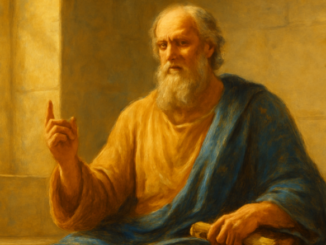
Ancient Greek philosopher Socrates discussing the immortality of the soul
Plato – Content & Summary

Plato’s Phaedo: The Soul and Its Immortality Explained

What happens to the soul when the body dies? Is death the final chapter, or does it mark a transition to something greater? These questions are not merely philosophical curiosities — they touch the very core of human existence. In the Phaedo, one of his most profound dialogues, Plato invites us into the final hours of Socrates, who is about to drink the hemlock. What follows is not a eulogy steeped in sorrow, but a lucid argument for the immortality of the soul. Why Did Plato Write This Dialogue? The Phaedo is far from an abstract treatise detached from real life. On the contrary, Plato situates his most profound reflections on the soul precisely within the context of his master Socrates’ death. This deeply personal setting lends the question of immortality an emotional urgency that no theoretical exercise could achieve. Socrates’ friends are gathered in his cell, torn between grief and an almost desperate curiosity. They want to know: is this truly the end? Plato uses this dramatic setting to weave philosophy together with existential reality. The dialogue demonstrates that wisdom is not an escape from life, but rather a way of confronting death head-on. Socrates does not speak as […]

Open Bible showing the Epistle to the Romans with Masonic square and compasses
Christianity

The Epistle to the Romans: Practical Lessons for Your Inner Work

You’re facing a difficult choice. Everyone around you is doing things differently, but deep down you know there’s a better path. How do you find the courage to walk it? The Epistle to the Romans, written by the apostle Paul to the early community in Rome, offers surprisingly practical guidance for moments like these. As the sixth installment in our series on the New Testament, this article explores how the core message of Romans connects with principles that lie at the heart of Freemasonry: moral growth, inner transformation, and the ongoing work of building a better self. The Heart of Romans: Renewal From Within Paul wrote this letter around the year 57 AD to a community he had never visited. Yet the text contains his most fully developed thoughts on what it truly means to change. The central message is not about following rules — it’s about a fundamental reorientation of your inner compass. In chapter 12, Paul writes his famous exhortation about the renewing of the mind, so that you may discern what is truly good. This theme of inner transformation resonates immediately within Freemasonry. Where the rough ashlar symbolizes the unrefined self, the Epistle to the Romans points […]

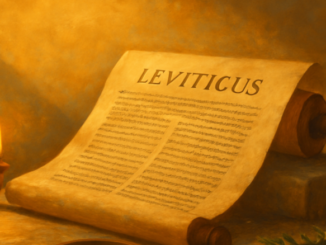
Open Bible showing the Book of Leviticus with Masonic symbolism
Spiritual Traditions

Leviticus: A Moral Guide for Spiritual Purification

The Book of Leviticus, the third book of the Old Testament, stands as one of the most complex and symbolically rich texts in the Bible. Focused on rituals, laws, and offerings designed to promote a holy way of life, Leviticus holds a particular fascination for Freemasons. Its themes of discipline, dedication, and purification resonate deeply with the Masonic journey toward spiritual enlightenment. In this article, we explore how Leviticus can inspire personal and moral growth — not just as a religious text, but as a timeless guide for those walking the path of self-improvement. What Is the Book of Leviticus? Leviticus is the third book of the Bible and contains the rules and ordinances that Moses conveyed to the Israelites. At first glance, many of these laws appear strictly ritualistic or culturally specific to the ancient world. Yet beneath the surface, they carry universal lessons about purity, devotion, and justice — themes that transcend time and culture. For the thoughtful reader, and especially for Freemasons, Leviticus offers far more than a historical code of conduct; it provides a framework for understanding the relationship between outward discipline and inward transformation. Holiness and Purification One of the central themes running through Leviticus […]