
Imagine a child who is not taught to obey, but to think independently. A child who is not stuffed with facts, but invited to ask questions. In the sixteenth century, Michel de Montaigne wrote an essay outlining precisely this vision of education. What he put to paper over four hundred years ago touches on something every Freemason recognizes: the conviction that true growth begins with the development of an independent mind and a virtuous character. In this article, we explore how Montaigne’s pedagogical ideas connect with the core values of Freemasonry.
The Heart of Montaigne’s Educational Philosophy
In his essay ‘On the Education of Children,’ Montaigne pushes back against the educational practices of his era, which he considered mechanical and superficial. Teachers crammed students full of trivia without paying attention to understanding or application. Montaigne argued for something radically different: an education that sharpens judgment rather than merely filling the memory. The child must learn to weigh, compare, and draw conclusions independently. This is not a passive process, but an active quest for insight.
What does this look like in practice? Montaigne advises that an educator should confront the child with a variety of viewpoints and encourage them to choose their own position. Truth is not handed over like a parcel — it must be discovered through personal effort. This resonates directly with the way Freemasons describe their path toward knowledge: not as something you receive, but as something you must seek.
Self-Reflection as the Foundation
Montaigne regards self-knowledge as the foundation of all wisdom. A child must learn to look inward, to examine their own thoughts and motives. This is not vanity — it is necessity. Those who do not know themselves cannot truly understand the world. Montaigne frequently cites classical thinkers such as Socrates and Seneca, who shared this same conviction: know thyself.
For Freemasons, this self-reflection is not an abstract ideal but a daily practice. In the lodge, the candidate is invited to regard himself as a rough ashlar that must be worked and refined. This image speaks powerfully to the imagination: you are not finished at birth — you are shaped through conscious effort. Montaigne’s educational ideal fits seamlessly into this framework. The child, like the Freemason, is a work in progress.
Education in the spirit of both Montaigne and Freemasonry means: not filling, but awakening; not forcing, but inviting the individual toward their own discovery.
Virtue Above Learning
One of the most striking aspects of Montaigne’s essay is his emphasis on character over knowledge. A scholar without virtue is, in his eyes, worthless — perhaps even dangerous. The goal of education is not to produce walking encyclopedias, but to form good human beings. This idea belongs to a long tradition reaching back to Aristotle and Plato, both of whom considered the development of virtue the highest aim of human endeavor.
Freemasonry shares this priority entirely. The fraternity does not focus primarily on intellectual achievement, but on moral perfection. A Freemason strives to become a better person, day after day. The rituals and symbols of the lodge serve this purpose: they are constant reminders of values such as integrity, courage, and charity. Montaigne would undoubtedly have felt at home in such an environment.
Practical Applications for Today
How can Montaigne’s insights be applied concretely, whether you are a parent, an educator, or a Freemason? Here are several principles that follow directly from his essay:
Ask questions instead of giving answers. Invite reflection rather than demanding memorization. Offer different perspectives and allow the other person to choose for themselves. Value character above achievement — ask not only what someone knows, but who someone is. Encourage self-reflection and make time for silence and contemplation. Be the example yourself, for Montaigne emphasizes that educators must embody what they teach.
These principles are timeless. They apply in the home, in schools, in the lodge, and in every community where people help each other grow.
The Quest for Light and Knowledge
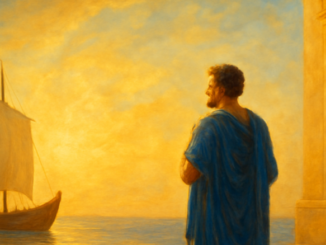
Montaigne describes education as a journey, not a destination. This image resonates powerfully with the Masonic path, which is likewise presented as a continuous journey toward light. The candidate who enters the lodge does not do so expecting all answers to be handed to him. He knows he must seek, question, and discover for himself.
This is perhaps the deepest connection between Montaigne’s educational philosophy and Freemasonry: both acknowledge that growth demands effort, patience, and an open mind. No one becomes wise through instruction alone. Wisdom arises when someone is willing to doubt, to investigate, and ultimately to choose for themselves.
Brotherhood and Shared Growth
Finally, Montaigne emphasizes the importance of community in education. A child does not learn only from books, but above all from interaction with others. Travel, conversation, friendship — these are the real teachers. Freemasonry recognizes this principle through its emphasis on brotherhood. In the lodge, you do not learn alone — you learn together. Dialogue with fellow brethren sharpens thinking and deepens understanding.
Montaigne would have found in the Masonic lodge a place where his ideas are lived out — not as theory, but as practice; not as obligation, but as invitation.
Montaigne’s essay on the education of children remains remarkably relevant after more than four centuries. His emphasis on self-reflection, virtue, and the active pursuit of knowledge forms a natural bridge to the core values of Freemasonry. Whether you are raising children, developing yourself, or walking the Masonic path toward light, the lesson remains the same. Do not fill — awaken. Do not force — invite. Begin today with one question, directed at yourself or at someone you guide: what have you truly learned today, and who have you become because of it?
Copyright text & image: devrijmetselaar.nl
Texts are based on the ideas and content of the author of devrijmetselaar.nl, reviewed, corrected, and supplemented with the assistance of OpenAI. Images are created based on the ideas of the author of devrijmetselaar.nl using OpenAI/DALL-E.
Frequently Asked Questions
How does Montaigne's educational philosophy differ from the teaching practices of his time?
Montaigne rejected the mechanical and superficial educational practices of the sixteenth century, which focused on cramming students with facts and trivia without regard for understanding or application. Instead, he advocated for an education that sharpens judgment and encourages independent thinking. Rather than passively receiving information, students should actively engage with a variety of viewpoints, weigh them carefully, and draw their own conclusions. Truth, according to Montaigne, must be discovered through personal effort, not simply handed over.
What is the connection between Montaigne's concept of self-knowledge and Freemasonry?
Montaigne viewed self-knowledge as the foundation of all wisdom, arguing that those who do not know themselves cannot truly understand the world. This aligns directly with Freemasonry's central practice of self-reflection. In the lodge, candidates are invited to see themselves as a rough ashlar—an unfinished stone that must be deliberately worked and refined through conscious effort. Both Montaigne and Freemasonry treat the individual as a work in progress, emphasizing that personal growth and wisdom come through examining one's own thoughts and motives.
How do both Montaigne and Freemasonry approach the process of learning and growth?
Both Montaigne and Freemasonry reject passive, mechanical approaches to learning. Instead, they emphasize awakening and inviting rather than filling and forcing. Both traditions recognize that true growth begins with the development of an independent mind and virtuous character. The learner or initiate must actively seek knowledge and insight rather than simply receiving it, and this journey of self-discovery and refinement is understood as an ongoing process rather than a destination that can be quickly reached.

Be the first to comment