Masonic brotherhood symbolizing connection and community resilience
Personal Development & Leadership

Leipzig Airport Explosives: Why Brotherhood Is Our Best Defense

Yesterday, the discovery of an explosive-laden drone at Leipzig airport dominated the headlines. While security services investigate who is responsible, a deeper question emerges: how do we build communities that are resilient against such threats? The answer doesn’t lie solely in better technology or stricter controls. It lies in something Freemasons have practiced for centuries — the active cultivation of brotherhood as the foundation of a safer society. When Trust Evaporates Imagine standing in an airport terminal. Thousands of people surround you, each with their own destination, their own story. And somewhere in that crowd is someone who doesn’t seek connection — but destruction. This is the reality we live in. The incident in Leipzig is not an isolated event. It is a symptom of a deeper problem: the erosion of mutual trust in our society. The question is not merely how we detect drones or disarm explosives. The real question is how we build a world in which fewer people are driven to such acts in the first place. And here, Freemasonry offers a surprisingly practical perspective. Brotherhood as a Concrete Practice In Masonic lodges around the world, people come together who might never cross paths in everyday life. […]
Vrijmetselarij - Wat is vrijmetselarij?
General

What is Freemasonry?

“`json { “meta_desc”: “What is Freemasonry? Discover its history, values, symbols, and rituals in this comprehensive guide. Learn what Freemasons believe and do.”, “content”: “ What Is Freemasonry? A Comprehensive Guide n What is Freemasonry? It is one of the oldest and most widely recognised fraternal organisations in the world — a brotherhood dedicated to moral development, mutual support, and charitable service. Freemasonry brings together men of good character from every background, profession, and belief system under a shared commitment to self-improvement and the betterment of society. With lodges in virtually every country on earth and a history stretching back several centuries, it remains one of the most enduring institutions of civil society. n Yet despite its long presence in public life, Freemasonry is also one of the most frequently misunderstood organisations. Popular culture often portrays it as secretive or conspiratorial, but the reality is far more straightforward. Freemasonry is, at its heart, a system of moral philosophy taught through allegory and symbolism — using the tools of the medieval stonemason as metaphors for building a virtuous life. This pillar page aims to provide a thorough, factual, and accessible answer to the question “what is Freemasonry?” — covering its origins, […]

Vrijmetselarij - Symbolism and Rituals in Freemasonry: Why They Matter
Symbolism & Rituals

Symbolism and Rituals in Freemasonry: Why They Matter

In a world obsessed with speed, directness, and measurable results, symbolism operates on an entirely different wavelength. A symbol doesn’t explain — it invites. It says: “Feel, experience, ask questions.” This is precisely why symbolism and rituals hold such a central place in Freemasonry, and why their impact runs far deeper than most people expect. Why Symbolism Is Anything but Optional Freemasons work with symbolism the way artists work with color — not to decorate, but to build layers of meaning. The compasses are not a measuring instrument. They are an invitation to examine your own boundaries. The rough ashlar is not just a stone. It represents your character, your potential, your ongoing process of growth. Symbolism functions as a mirror. And mirrors are rarely comfortable — but they are always valuable. When you stand before a symbol and allow it to speak to you without rushing toward a single interpretation, something shifts. You move from passive observation to active self-inquiry. That shift is at the heart of the Masonic experience. Rituals as Consciousness Training A ritual in Freemasonry is neither a theatrical performance nor a “secret act.” It is a carefully constructed process in which you literally take the […]

Hindu temple symbolism alongside Freemasonry symbols representing spiritual harmony
Religion

Hinduism and Freemasonry: Rituals and Spiritual Harmony

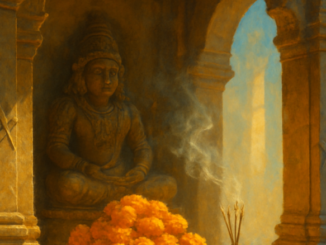
Hinduism is one of the oldest religions in the world, carrying with it a vast tradition of ritual, philosophy, and spiritual depth. Freemasonry, an age-old fraternity built on universal values, shares a remarkable number of principles with this rich spiritual heritage. Where these two traditions meet, a fascinating dialogue emerges — one rooted in symbolism, self-improvement, and the pursuit of higher truth. Hinduism: A Philosophy of Life Steeped in Ritual Hinduism is far more than a religion — it is an all-encompassing philosophy and way of life. At its heart lie foundational concepts such as karma (the law of cause and effect), dharma (righteous duty), and moksha (liberation from the cycle of rebirth). Rituals are central to Hindu practice, from the daily puja (prayer and devotion) to grand festivals like Diwali and Holi. Each ritual serves as a symbolic bridge between the earthly and the divine. Hindu temples are stunning sanctuaries filled with symbolism, where deity statues, flower offerings, and incense create a profoundly spiritual atmosphere. These temples are not only places of worship but also community centers where traditions are preserved and passed from one generation to the next. Freemasonry: A Universal Approach to Spiritual Growth Like Hinduism, Freemasonry […]

Islamic geometric patterns alongside Masonic symbols representing shared spirituality
Religion

Islam and Freemasonry in the Netherlands: Ritual & Spirit

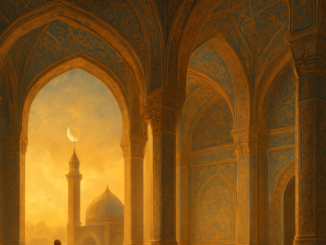
The Netherlands is a mosaic of cultures and religions, and Islam plays a prominent role in this diverse landscape. With over one million Muslims, the faith is deeply woven into Dutch society. At the same time, Freemasonry offers a non-dogmatic space for spiritual growth and moral reflection. How do these two traditions complement each other, and what can they learn from one another? Islam: A Way of Life Rich in Ritual Islam is far more than a religion — it is a complete way of life. Built on the Five Pillars — the declaration of faith, prayer, charity, fasting, and pilgrimage — Islam provides its followers with structure, purpose, and direction. The daily prayers (salat) and the annual observance of Ramadan instill discipline and deep devotion to God. Mosques serve as centers of both community and worship, spaces where spirituality and human connection come together. They are often adorned with intricate geometric patterns and calligraphy that are not merely beautiful but carry profound symbolic meaning — pointing toward the infinite nature of the divine. Freemasonry: A Space for Universal Truths While Freemasonry is not a religion, it shares notable parallels with spiritual traditions like Islam. Freemasons use rituals and symbolism […]

Catholic church interior with symbolic elements related to Freemasonry
Religion

Roman Catholicism and Freemasonry: Rituals and Spirituality

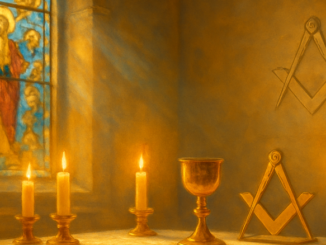
In an age of growing secularism, Roman Catholicism remains one of the most enduring pillars of Western culture. But how does this ancient tradition relate to Freemasonry — an organization that defines itself not as a religion, but as a brotherhood with deep spiritual roots? The answer reveals surprising parallels, historical tensions, and a shared quest for meaning that continues to resonate today. Roman Catholicism: A Tradition Built on Ritual Roman Catholicism has deep historical roots across Europe and the wider world. Despite declining church attendance in many countries, the faith continues to shape the cultural and spiritual landscape. At its heart lie the sacraments, the celebration of the Eucharist, and a strong emphasis on tradition. The interior of a Catholic church reflects this beautifully — richly decorated altars, candles burning as prayers made visible, and stained-glass windows that tell the stories of Scripture. What makes Catholicism particularly distinctive is its ritual nature. From baptism to marriage and the funeral rite, every significant moment in life is framed by ceremony. These rituals provide structure, a sense of belonging, and something many regard as a spiritual compass — guiding the faithful through life’s most profound transitions. Freemasonry: Ritual in a Different […]

Historic Masonic lodge interior symbolizing the history of Freemasonry
History

The Official History of Freemasonry: Origins to Today

Freemasonry is an ancient organization steeped in mystery, ritual, and symbolism. What began as a brotherhood of stonemasons in the Middle Ages has evolved into a worldwide community with deep spiritual and philosophical dimensions. This article traces the official history of Freemasonry, from its earliest origins to its present-day form. The Origins of Freemasonry The roots of Freemasonry reach back to the Middle Ages, when stonemasons and master builders organized themselves into guilds. These skilled craftsmen didn’t just construct cathedrals and churches — they also worked according to strict codes of ethics and craftsmanship. The guilds protected their trade secrets through passwords and symbols, which later became core elements of Masonic ritual. During the 17th century, the nature of these organizations began to shift. The guilds started admitting members who had no direct connection to the building trades. This marked the crucial transition from “operative” to “speculative” Freemasonry. The focus moved away from physical construction toward a symbolic quest for wisdom and self-improvement. The Rise of Modern Freemasonry The year 1717 is widely regarded as a turning point in the history of Freemasonry. In London, four lodges came together to form the first Grand Lodge of England. This moment is […]

Freemason in contemplation with square and compasses symbolizing mindfulness
Spiritual Traditions

Mindfulness in Freemasonry: The Art of Inner Awareness

In a world dominated by speed and distraction, mindfulness offers a powerful counterbalance. While Freemasonry doesn’t explicitly label it as such, mindfulness plays a crucial role in the practice of rituals, symbolism, and reflection within the Craft. It invites Freemasons to be fully present in the moment and to consciously work on the rough ashlar of their character. Mindfulness in Masonic Rituals One of the most striking aspects of Freemasonry is its use of ritual. Masonic rituals are carefully designed to draw Brethren out of their daily routines and guide them into a concentrated, almost meditative state of mind. The tracing board at the center of the lodge, the checkered floor, and the lesser lights all symbolize a balance between opposing forces — light and darkness, good and evil. Freemasons are encouraged to seek this balance not only in the world around them but also within themselves. This is the very essence of mindfulness: awareness of one’s inner processes and the pursuit of harmony. Symbolism as a Guide to Awareness Freemasons work on themselves through the language of symbolism. The square and compasses remind us of measure and justice, while the rough ashlar represents the ongoing journey of personal refinement. […]