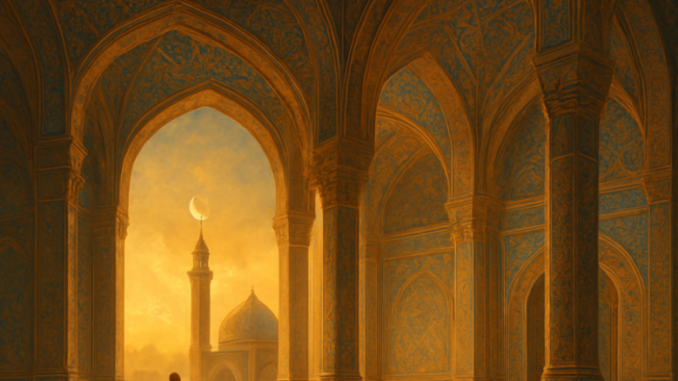
The Netherlands is a mosaic of cultures and religions, and Islam plays a prominent role in this diverse landscape. With over one million Muslims, the faith is deeply woven into Dutch society. At the same time, Freemasonry offers a non-dogmatic space for spiritual growth and moral reflection. How do these two traditions complement each other, and what can they learn from one another?
Islam: A Way of Life Rich in Ritual
Islam is far more than a religion — it is a complete way of life. Built on the Five Pillars — the declaration of faith, prayer, charity, fasting, and pilgrimage — Islam provides its followers with structure, purpose, and direction. The daily prayers (salat) and the annual observance of Ramadan instill discipline and deep devotion to God.
Mosques serve as centers of both community and worship, spaces where spirituality and human connection come together. They are often adorned with intricate geometric patterns and calligraphy that are not merely beautiful but carry profound symbolic meaning — pointing toward the infinite nature of the divine.
Freemasonry: A Space for Universal Truths
While Freemasonry is not a religion, it shares notable parallels with spiritual traditions like Islam. Freemasons use rituals and symbolism to encourage inner growth and moral improvement. The emphasis lies on universal values such as brotherhood, justice, and the pursuit of truth.
One of the most significant aspects of Freemasonry is that it does not require any specific religious belief. It welcomes people of all faiths, including Islam. Many Muslims who are members view Freemasonry as a complement to their religious practice — a space where they can explore the broader dimensions of spirituality alongside Brothers from different backgrounds.
Striking Parallels Between Islam and Freemasonry
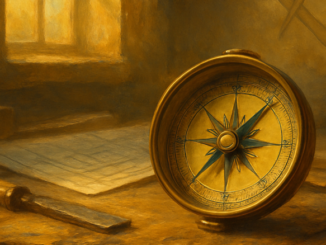
Symbolism and Ritual: In Islam, symbols such as the crescent moon and star, along with rituals like the daily prayers, are essential to the faith. Similarly, Freemasonry is built on a rich symbolic language — from the square and compasses to the rituals of the three degrees. In both traditions, these symbols carry deeper meaning and serve as gateways to spiritual reflection.
Community and Fellowship: Both traditions place great importance on community. Mosques and Masonic lodges alike are places where members gather to learn, grow, and support one another. The sense of belonging and mutual responsibility runs deep in both worlds.
Ethics and Morality: Islam emphasizes justice, compassion, and charitable action — values that sit at the very heart of Freemasonry as well. Both systems offer a moral compass that guides their members toward becoming better human beings, serving not only themselves but the wider world around them.
Tensions and the Path Toward Dialogue
Historically, the relationship between Islam and Freemasonry has been complex. Some Muslim-majority countries have viewed Freemasonry with suspicion, citing its perceived secrecy and Western origins. In certain regions, Masonic lodges have been banned outright. Yet at the individual level, many Muslims have found in Freemasonry a space where they can deepen their faith and spirituality in ways that complement their religious practice.
The key to bridging this gap lies in honest dialogue and mutual understanding. When misconceptions are addressed openly and both traditions are approached with respect, the common ground between them becomes far more visible than the differences.
Collaboration in Diversity
In the Netherlands, Muslims and Freemasons share more common ground than many might expect. The shared focus on personal development, ethical living, and community engagement offers rich opportunities for dialogue and collaboration. By respecting and seeking to understand each other’s traditions, both groups can contribute to a more harmonious and connected society.
Dutch Freemasonry, with its long tradition of tolerance and intellectual openness, is particularly well-positioned to foster this kind of interfaith exchange. And for Muslim members of the Craft, the lodge offers a unique environment where spiritual curiosity is encouraged and diversity is celebrated.
Islam and Freemasonry each offer, in their own way, a path toward spiritual growth, moral refinement, and a deep sense of community. For Muslims who are open to broader spiritual exploration, Freemasonry can serve as a source of inspiration and fellowship. For Freemasons, Islam provides a powerful example of discipline, devotion, and commitment to higher values. In an increasingly diverse world, these two traditions remind us that there is profound strength in ritual, community, and a shared search for truth.
Copyright text & image: devrijmetselaar.nl
Texts are based on the ideas and content of the author of devrijmetselaar.nl, reviewed, corrected, and supplemented with the assistance of OpenAI. Images are created based on the ideas of the author of devrijmetselaar.nl using OpenAI/DALL-E.
Frequently Asked Questions
Can Muslims join Freemasonry?
Yes, Freemasonry welcomes people of all faiths, including Muslims. Many Muslim Freemasons view Freemasonry as a complement to their religious practice, offering a space to explore spirituality and universal values like brotherhood and justice alongside members from different backgrounds. Freemasonry does not require any specific religious belief, making it inclusive and non-dogmatic.
What are the similarities between Islam and Freemasonry?
Both Islam and Freemasonry share deep parallels in symbolism, ritual, community, and ethics. They both use symbols and rituals as gateways to spiritual reflection, emphasize the importance of community gathering and mutual support, and place strong emphasis on moral values such as justice, compassion, and charitable action. Both traditions guide their members toward becoming better human beings.
Is Freemasonry a religion?
No, Freemasonry is not a religion. It is a fraternal organization that uses rituals and symbolism to encourage inner growth and moral improvement, focusing on universal values rather than religious dogma. This non-religious approach allows Freemasons of all faiths, including Muslims, Christians, Jews, and those of other beliefs, to come together in brotherhood.
What is the purpose of Masonic rituals and symbols?
Masonic rituals and symbols, such as the square and compasses, serve as gateways to spiritual reflection and inner development. Like the symbols in Islam, these carry deeper meaning and encourage members to pursue truth, justice, and personal moral improvement. The rituals create a framework for learning and growth within a supportive community.
How does Freemasonry promote community like Islam does?
Both Masonic lodges and mosques serve as gathering places where members learn, grow, and support one another. Freemasonry emphasizes brotherhood, mutual responsibility, and fellowship among its members, creating a strong sense of belonging and shared purpose—values that are equally central to Islamic community life.

Be the first to comment