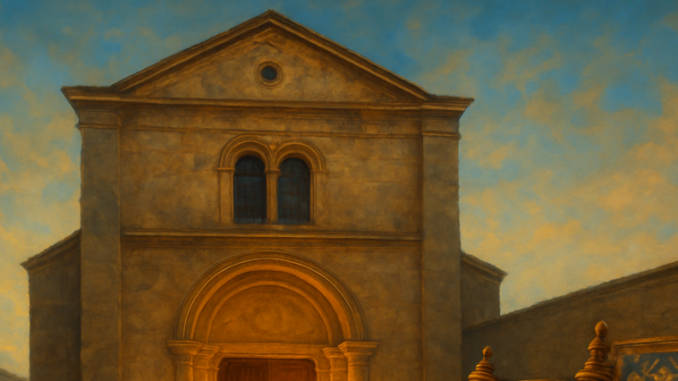
Judaism has a long and rich history in the Netherlands. From the first Sephardic Jews who fled the Inquisition to the diverse communities that thrive today, Jewish culture is woven into the fabric of Dutch society. But what connects this ancient faith to Freemasonry — an organization built on spiritual growth and universal values? As it turns out, quite a lot.
Judaism: Rituals as the Backbone of Faith
Rituals lie at the very heart of Judaism. Every stage of life is marked by ceremony — from the bar or bat mitzvah to the wedding canopy, from circumcision to mourning rites. The weekly Sabbath, a sacred day of rest and reflection, serves as a cornerstone ritual that draws Jewish families together across generations.
Synagogues — houses of prayer, study, and community — are sanctuaries where spiritual and intellectual growth go hand in hand. The Torah, with its rich symbolism and ancient wisdom, remains an inexhaustible source of inspiration, guiding ethical conduct and philosophical inquiry alike.
Freemasonry: Ritual Parallels with Jewish Tradition
Freemasonry shares with Judaism a deep appreciation for ritual and symbolism. Masonic ceremonies, such as the initiation degrees, contain elements that bear striking resemblance to Jewish practices: a quest for inner illumination, the use of sacred texts, and a strong emphasis on personal transformation.
While Freemasonry is religiously neutral and welcomes men of all faiths, many of its symbols and concepts have roots in Jewish tradition. The construction of King Solomon’s Temple serves as a central allegory in Masonic ritual, and the idea of a universal “Great Architect of the Universe” echoes themes found throughout Jewish theology. These connections make Judaism a particularly rich source of inspiration for Freemasons.
Key Similarities Between Judaism and Freemasonry
Symbolism and Sacred Texts: Both the Torah and Masonic ritual employ layered symbolism to explore deeper truths about life, morality, and the nature of the universe. In both traditions, symbols are not mere decoration — they are teaching tools designed to unlock understanding over a lifetime of study.
Community and Brotherhood: Jewish communities and Masonic lodges alike provide a space where individuals come together to learn, grow, and support one another. The sense of belonging and mutual obligation runs deep in both traditions, creating bonds that extend well beyond the walls of the synagogue or lodge room.
An Ethical Way of Life: Judaism places a powerful emphasis on justice, charity, and righteous living — values known collectively as tzedakah and tikkun olam (repairing the world). Freemasonry mirrors this commitment through its own moral teachings, urging members to act with integrity and contribute to the betterment of society.
Historical Tensions and Ongoing Dialogue
The relationship between Judaism and Freemasonry has not always been without tension. Historically, some Jewish communities viewed Freemasonry with suspicion, concerned that its universalist philosophy might conflict with religious observance or dilute Jewish identity. On the other side, periods of antisemitism within certain European societies sometimes complicated Jewish participation in the Craft.
Yet despite these challenges, many Jewish men have embraced Freemasonry as a space for intellectual and spiritual enrichment. In the Netherlands especially, Jewish Freemasons have played notable roles in lodge life, contributing their perspectives and helping to shape the broader Masonic tradition.
Collaboration in a Diverse Society
In the modern Netherlands, Jewish communities and Freemasonry offer a unique opportunity for collaboration. Both share a deep respect for tradition while remaining open to innovation and growth. Their mutual focus on education, ethical development, and personal responsibility can serve as a powerful model for wider society.
In an era when interfaith dialogue and mutual understanding are more important than ever, the intersection of Judaism and Freemasonry demonstrates how different traditions can find common ground without sacrificing their distinct identities.
Judaism and Freemasonry each offer, in their own way, a path toward ethical and spiritual growth. For Jewish men, Freemasonry can serve as a complement to their faith — deepening their understanding of universal values and connecting them with like-minded seekers from diverse backgrounds. For Freemasons, Judaism offers a treasury of tradition, symbolism, and moral wisdom that enriches the Craft at every level. In a time when genuine human connection matters more than ever, both traditions remind us that rituals, symbols, and a strong sense of community can help us lead lives of deeper purpose and meaning.
Copyright text & image: devrijmetselaar.nl
Texts are based on the ideas and content of the author of devrijmetselaar.nl, reviewed, corrected, and supplemented with the assistance of OpenAI. Images are created based on the ideas of the author of devrijmetselaar.nl using OpenAI/DALL-E.
Frequently Asked Questions
What is the connection between Judaism and Freemasonry?
Both Judaism and Freemasonry share deep roots in ritual, symbolism, and spiritual growth. They emphasize sacred texts, community brotherhood, and ethical living, with Freemasonry drawing particular inspiration from Jewish traditions, including the symbolism of King Solomon's Temple. While Freemasonry welcomes men of all faiths, these shared values create a natural affinity between the two traditions.
Are there similar rituals in Judaism and Freemasonry?
Yes, both traditions use rituals as powerful tools for spiritual transformation and teaching. Jewish ceremonies like bar mitzvah and the weekly Sabbath parallel Masonic initiation degrees in their emphasis on personal illumination and inner growth. In both, rituals serve to mark important life transitions and deepen understanding of deeper truths through symbolic practice.
Can Jewish men join Freemasonry?
Absolutely. Freemasonry is religiously neutral and welcomes men of all faiths, including Judaism. Many Jewish Freemasons find that Masonic teachings complement their own spiritual traditions, as both emphasize ethical conduct, community service, and the pursuit of wisdom and self-improvement.
What shared values do Judaism and Freemasonry promote?
Both traditions are built on ethical foundations emphasizing justice, charity, and service to others. Judaism's concepts of tzedakah (charity) and tikkun olam (repairing the world) align closely with Freemasonry's moral teachings, which urge members to live with integrity and contribute to the betterment of society.
Why is King Solomon's Temple important in Freemasonry?
King Solomon's Temple serves as a central allegory in Masonic ritual and teaching, representing the spiritual work of self-building and enlightenment. This symbol has deep roots in Jewish tradition, making it a natural bridge between Judaism and Freemasonry in exploring themes of wisdom, craftsmanship, and divine inspiration.

Be the first to comment