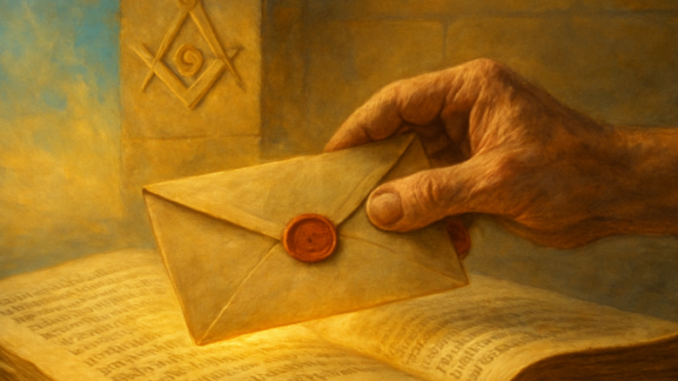
It’s a question that surfaces regularly whenever people delve into the mysterious world of Freemasonry: are Freemasons actually Gnostics? Rather than offering a dry academic essay, this article is a personal exploration of the theme — written by someone who has wrestled with the same question and is still searching for answers. Because perhaps the truth lies not in a definitive answer, but in the way we search together.
Why This Question Strikes a Nerve
When I first encountered the idea that some people regard Freemasons as Gnostics, I felt a curious mixture of recognition and resistance. Recognition, because there is indeed something in Freemasonry that speaks of inner knowledge — a wisdom that comes not from books but from lived experience. Resistance, because I know how easily labels oversimplify reality.
You may recognize the feeling. You come across an article claiming that Freemasons follow a secret Gnostic doctrine, or you hear someone insist categorically that there is no connection whatsoever. The truth, as so often, is more nuanced. And it’s that nuance I want to share — like a brother sitting across the table from you, thinking aloud.
What Do We Actually Mean by Gnosis?
Before we can answer whether Freemasons are Gnostics, we need to pause at what gnosis actually means. The word comes from Greek and simply means “knowledge.” But not the kind of knowledge you extract from a textbook. The Gnostic tradition speaks of a direct, inner knowledge of the divine — an insight that cannot be transmitted by someone else but must be experienced firsthand.
Historically, the Gnostics were a diverse group of thinkers in the first centuries of the Common Era. They did not share a uniform doctrine, but they did share a common conviction: that true salvation comes through self-knowledge, through the awakening of a divine spark within the human being. Some of their writings were condemned as heretical; others influenced the mystical traditions of various religions for centuries to come.
The Kinship I See Between Freemasonry and Gnosis
As I write this, I notice that I cannot answer the question “are Freemasons Gnostics” with a simple yes or no. What I can say is this: there is a deep kinship in the way both traditions approach knowledge.
In Freemasonry, knowledge is never imposed from the outside. No one tells you what to believe. Instead, you are invited — through rituals, symbols, and conversation — to develop your own insights. The rough ashlar that you must shape is not an external project; it is a metaphor for yourself. This resonates powerfully with the Gnostic idea that true knowledge must arise from within.
“Know thyself” was inscribed above the Temple of Delphi. Those words echo through both the Gnostic tradition and Freemasonry with equal force.
Brotherhood as a Path to Insight
Here I want to share something that has touched me personally. In Gnostic writings, the emphasis is often on the solitary seeker — the individual soul that must find its way back to the light. Freemasonry adds something essential to this picture: brotherhood.
We do not search alone. We search together. In the lodge, brethren meet as equals regardless of their background, profession, or religious conviction. This brotherhood is not an incidental feature; it is an essential part of the path. For how can you truly come to know yourself without the mirror that another holds up before you?
This communal dimension of seeking is one of the most distinctive and beautiful aspects of Freemasonry. It transforms the solitary quest for self-knowledge into a shared journey, one enriched by the perspectives, experiences, and wisdom of fellow travelers on the path.
Where the Paths Diverge
Yet I must be honest about the differences, because they are significant. The historical Gnostics often held specific cosmologies — elaborate narratives about how the world came into being through a flawed creation, about archons who held humanity captive in ignorance. Freemasonry has no such mythology. It prescribes no worldview and leaves room for brethren of all religious backgrounds.
Where many Gnostic currents viewed the material world as a prison, Freemasonry celebrates the craft — the working with one’s hands, the act of building in this world. The symbols of the gavel, chisel, and compasses point to concrete work: the shaping of both stone and character. This is a fundamentally different orientation toward physical existence.
Consider these key distinctions: Gnostics sought liberation from the material world, while Freemasons work toward improvement within it. Yet both traditions value inner knowledge above dogmatic doctrine, and both see self-knowledge as the path to wisdom.
An Invitation to Keep Searching
Returning to the original question, I find that my answer has evolved. Are Freemasons Gnostics? No, not in the strict historical sense. Freemasonry is not a continuation of the ancient Gnostic schools, and it has no Gnostic creed.
But do Freemasons share something essential with the Gnostic attitude? Absolutely. The conviction that wisdom must come from within. The wariness toward ready-made answers. The reverence for the mystery that can never be fully explained.
And perhaps that is the most beautiful thing of all: Freemasonry does not tell you what to think about gnosis, about knowledge, about the divine. It invites you to seek for yourself, together with others who are asking the same questions — in brotherhood, with respect for each other’s path.
Whether you are inclined to see Freemasonry as Gnostic or not, the most important thing is that you keep asking questions. The question “are Freemasons Gnostics” is ultimately less important than the question beneath it: how do I arrive at genuine knowledge of myself and the world? That question connects seekers across all centuries, regardless of the name they give their path. And in that search, you are welcome — as a brother or as a guest — to seek together the light that lies dormant within each of us.
Copyright text & image: devrijmetselaar.nl
Texts are based on the ideas and content of the author of devrijmetselaar.nl, reviewed, corrected, and supplemented with the assistance of OpenAI. Images are created based on the ideas of the author of devrijmetselaar.nl using OpenAI/DALL-E.
Frequently Asked Questions
Are Freemasons actually Gnostics?
Rather than a simple yes or no, there is a deep kinship between the two traditions in how they approach knowledge. Both Freemasonry and Gnosticism emphasize inner, experiential wisdom that cannot be imposed from outside but must be discovered through personal insight and self-knowledge. The connection lies in their shared conviction that true understanding comes from within, not from external authority.
What does 'gnosis' mean in relation to Freemasonry?
Gnosis is a Greek word meaning knowledge, but specifically refers to direct, inner knowledge of the divine that must be experienced firsthand rather than learned from books or lectures. In Freemasonry, this concept manifests through rituals, symbols, and personal reflection that invite each member to develop their own insights and understanding. The Masonic principle of self-improvement through the metaphor of shaping the rough ashlar reflects this same pursuit of inner wisdom.
Do Freemasons follow a secret Gnostic doctrine?
Freemasonry does not prescribe a specific Gnostic doctrine or belief system that members must accept. Instead, Freemasonry invites members to explore truth and knowledge through their own experience, much as Gnosticism emphasizes personal spiritual discovery. No member is told what to believe; rather, the rituals and teachings provide a framework for individual growth and enlightenment.
What does 'Know Thyself' mean in Freemasonry?
This famous maxim inscribed at the Temple of Delphi resonates powerfully through both Gnostic tradition and Freemasonry, emphasizing the importance of self-knowledge and personal development. In Freemasonry, it represents the journey of understanding oneself more deeply through reflection, ritual, and brotherhood. This principle encourages members to examine their own lives and character as a path to greater wisdom and spiritual growth.
How does Freemasonry view personal knowledge and experience?
Freemasonry deeply values personal experience and self-directed discovery, believing that true knowledge cannot be simply handed down but must be lived and experienced by each individual. Through symbolic rituals and fraternal dialogue, Freemasons are invited to develop their own insights rather than accept dogmatic teachings. This approach respects the individual's capacity for wisdom and encourages lifelong learning and spiritual development.

Be the first to comment