
Picture a lodge draped in silence, candlelight flickering across the black-and-white checkered floor. A brother reads aloud from the Book of Exodus — the story of a people who cast off their chains in the dead of night and set out into the wilderness, moving toward something they cannot yet name. The words hang in the air, and everyone in the temple feels it: this story is not merely about an ancient people in a distant land. It is about us.
What makes the story of Exodus so indelible? Why does this tale of slavery, liberation, and an endless trek through the desert still move us, thousands of years after it was first told? And what does a Freemason gain by returning to this ancient narrative again and again — not as a historical document, but as a mirror for the soul?
Egypt as Inner Captivity
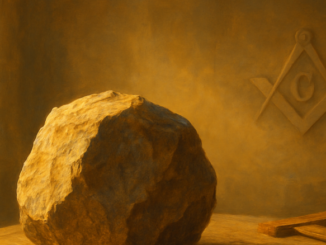
In the Book of Exodus, everything begins with slavery. The Israelites groan under the yoke of Pharaoh, trapped in a system that reduces them to mere instruments. Within Freemasonry, this image is far more than a historical fact — it is a powerful allegory. Egypt symbolizes every form of inner captivity: the chains of ignorance, of fear, of habits that keep us small. The rough ashlar, one of the most recognizable symbols in the Masonic tradition, represents precisely this unrefined state of the human being. We all begin as rough stone, shackled to patterns we never chose for ourselves.
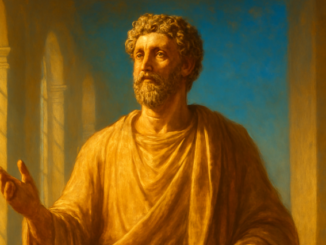
Moses, the central figure in Exodus, becomes more than a historical leader when viewed through this lens. He embodies the archetype of the inner voice that says: there is more. He hears the call at the burning bush — a fire that burns but does not consume — and recognizes in it a truth greater than himself. For the Freemason, this raises a pointed question: when did you last hear that voice? And did you have the courage to listen?
Crossing the Threshold: The Moment of Departure
The Exodus itself is perhaps the most dramatic episode in the entire narrative. In a single night, an entire people breaks with everything it has ever known. That requires more than physical strength; it demands a fundamental trust in the unknown. In Freemasonry, we know this moment intimately. The candidate who enters the lodge for the first time — blindfolded, unaware of what lies ahead — makes symbolically the same crossing. He leaves the familiar behind and entrusts himself to a process whose outcome is uncertain.
The crossing of the Red Sea deepens this symbolism further. The waters part and then close again, making return impossible. Once you have taken the step toward awareness, there is no going back to the slumber of before. This is not a punishment but a gift: the impossibility of return compels us forward, toward growth.
Forty Years in the Wilderness: The Long Road of Trial
After liberation comes not celebration, but wilderness. For forty years, the people wander through a barren and inhospitable landscape, plagued by thirst, hunger, and doubt. This is the part of the story most people would rather skip — but for the Freemason, it may be the most valuable of all. The wilderness symbolizes the long, sometimes lonely path of inner work. It is the phase in which the novelty of liberation has faded and the real labor begins.
The wilderness is not punishment for leaving Egypt. It is the school that a free person needs in order to become truly free.
In the desert, the people fall back into old patterns. They dance around the golden calf, yearn for the fleshpots of Egypt, and grumble against their leaders. Sound familiar? For any Freemason willing to look honestly in the mirror, these moments of relapse are painfully recognizable. The temptation to reach back for old certainties — even when those certainties were essentially chains — is a universal human experience. The art is not in never falling, but in rising each time and continuing the journey.
The Ten Commandments: Moral Building Blocks
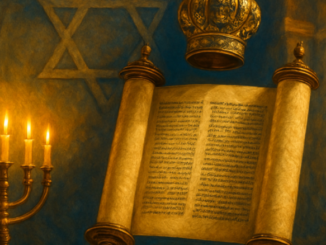
Midway through the wilderness journey, a turning point occurs at Mount Sinai. There, Moses receives the Ten Commandments — guidelines for a just life, hewn into stone. The symbolism is striking: the law is literally chiseled into stone, just as the Freemason works on his own rough ashlar with hammer and chisel. The commandments are not arbitrary rules but the foundations of a moral edifice. They contain universal principles of honesty, respect, fidelity, and responsibility that recur in virtually every great wisdom tradition.
Within Freemasonry, these principles are not imposed as dogma but offered as building blocks. Every brother and sister is invited to discover for themselves how these values take shape in their own life. That is the essence of the Masonic work: not the blind following of rules, but the internalization of principles until they become part of who you are.
The Promised Land: Destination or Horizon?
One of the most intriguing aspects of Exodus is that Moses himself never enters the Promised Land. He sees it from Mount Nebo but dies before crossing the border. This detail, which on the surface appears tragic, contains a profound wisdom. The Promised Land may not be intended as a final destination at all, but rather as a horizon — the direction that keeps us moving, the ideal that drives us, knowing all the while that the journey itself is the true reward.
For the Freemason, this is both a comforting and a challenging thought. The perfect ashlar may exist only as an ideal. But it is precisely the striving toward it — the daily chiseling and polishing — that gives life meaning and direction. The temple we build is never finished, and that is exactly the point.
A Story That Continues to Resonate
Exodus is more than a religious story. It is a blueprint of the human quest for liberation, meaning, and moral growth. The slavery in Egypt, the courage of departure, the trials of the wilderness, the reception of a moral compass, and the infinite horizon of the Promised Land — each of these elements maps directly onto the Masonic journey. The rough ashlar that yearns to become the perfect stone, the candidate who steps blindfolded into the unknown, the brother who wrestles with his own imperfections day after day — they are all walking the same road that the Israelites walked thousands of years ago.
What makes Exodus so enduringly powerful is its honesty. It does not promise a quick or easy transformation. It shows us that freedom is not a single moment but a lifelong process, that the path from bondage to authenticity runs straight through a wilderness of doubt and temptation. And it reminds us that even the greatest leaders never quite arrive — because arrival was never really the point.
The next time you encounter the story of Exodus — whether in a lodge reading, in quiet study, or in a moment of personal reflection — consider it not as ancient history but as a living map of your own inner journey. Every Freemason carries within them an Egypt to leave behind, a wilderness to cross, and a Promised Land to strive toward. The chisel is in your hand. The road lies ahead. And the only question that truly matters is the one Moses heard at the burning bush: are you willing to go?
Copyright text & image: devrijmetselaar.nl
Texts are based on the ideas and content of the author of devrijmetselaar.nl, reviewed, corrected, and supplemented with the assistance of OpenAI. Images are created based on the ideas of the author of devrijmetselaar.nl using OpenAI/DALL-E.
Frequently Asked Questions
What does the story of Exodus mean to Freemasons?
In Freemasonry, Exodus is understood as an allegory for personal spiritual transformation and liberation from inner captivity. Rather than merely a historical account, Masons view it as a mirror for the soul—representing the journey from ignorance and fear toward enlightenment and self-awareness. The story's themes of breaking free from chains and seeking higher truth resonate deeply with Masonic principles of growth and inner development.
What does Egypt symbolize in Masonic teachings?
Egypt represents every form of inner captivity—the chains of ignorance, fear, and limiting habits that keep us spiritually confined. Masons use this symbolism to reflect on the patterns and beliefs we inherit without choosing them, and to contemplate liberation from these self-imposed restrictions. This interpretation transforms Egypt from a historical location into a powerful psychological and spiritual concept.
How does the Masonic initiation relate to the Exodus story?
The candidate entering the lodge for the first time—blindfolded and uncertain—symbolically mirrors the Israelites departing Egypt into the unknown. Like the crossing of the Red Sea, which makes return impossible, the Masonic initiation represents a threshold that cannot be uncrossed; once awareness begins, one cannot return to previous ignorance. This parallel emphasizes the commitment and courage required for genuine spiritual growth.
What is the significance of the forty years in the wilderness for Masons?
The forty-year wilderness journey symbolizes the long, challenging path of personal development and spiritual refinement that continues after initial liberation. Freemasonry recognizes that the journey toward enlightenment is not instantaneous but requires patience, persistence through trials, and ongoing commitment to self-improvement. This teaches that true transformation is a gradual process of testing and growth.
What does the burning bush represent in Masonic interpretation?
The burning bush symbolizes the inner voice or divine spark within each person that calls us toward greater awareness and purpose. In Freemasonry, this represents that moment when one recognizes there is more to life than the familiar patterns of ignorance, inspiring the courage to seek transformation. It reminds Masons to listen to their inner truth and to answer the call toward self-discovery.

Be the first to comment