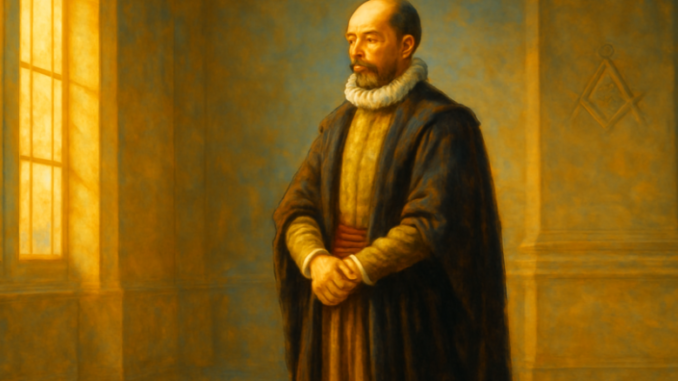
A man stands at the grave of his beloved. His eyes are dry, his face expressionless. Hours later, when he finds a lock of her hair tucked inside a forgotten drawer at home, he breaks down sobbing. Michel de Montaigne would nod knowingly at this scene. In his eighteenth essay from the first book of the Essays, he examines precisely this mystery: why our emotions so rarely appear when we expect them, and why laughter and tears are often far closer neighbors than we care to admit.
The Core Idea of the Essay
In this short but powerful essay, Montaigne argues that human emotions are fundamentally unpredictable and contradictory. We do not always weep when sorrow seems called for, and we sometimes laugh at the most unexpected moments. The very title contains a paradox: we do not respond uniformly to the same event. What moves us to tears today may leave us unmoved tomorrow. Montaigne investigates why this happens and what it reveals about the human mind.
The French philosopher contends that emotions are rarely pure. When someone weeps at a funeral, is it genuine grief alone, or is there also an element of relief that suffering has ended? When someone laughs upon hearing bad news, is it cynicism — or rather a defense mechanism against overwhelming feeling? Montaigne refuses to offer simple answers. Instead, he invites the reader to examine their own emotional landscape with honest curiosity.
Historical Examples Montaigne Draws Upon
As is typical of his essays, Montaigne draws liberally from classical antiquity. He references stories of Roman emperors and Greek heroes who displayed unexpected emotional reactions. A general surveys the battlefield dry-eyed after thousands have fallen, only to weep later upon learning that his horse has died. A king laughs when told his enemy has been defeated, yet bursts into tears upon seeing that same enemy brought before him in chains.
These anecdotes are not meant as historical proof but as mirrors for the reader. Montaigne uses them to show that emotional contradiction is not a weakness but a fundamental human trait. Even the towering figures of history — from Julius Caesar to Alexander the Great — displayed this kind of capriciousness. It is not something to hide or fight against, but something to understand.
The Philosophical Depth Behind the Observation
What makes this essay remarkable is Montaigne’s refusal to moralize about emotions. He does not prescribe how we ought to feel. Instead, he observes with the curiosity of a naturalist how the human psyche actually functions. This makes him a forerunner of modern psychology, centuries before the discipline came into existence.
Our emotions are not reliable measures of our values, but capricious waves on an ocean we ourselves do not fully fathom.
Montaigne suggests that the soul is composed of layers that do not always communicate with one another. The outermost layer — the social mask — reacts as expected. But the deeper layers operate on their own rhythm and timing. Sometimes the full impact of an event does not reach us until days or weeks later, when some seemingly insignificant detail opens the floodgates.
This layered understanding of the self resonates strongly with Masonic thought, where the work of self-knowledge is never considered complete. Just as Montaigne peels back the layers of emotional experience, the Freemason chips away at the rough ashlar — not to achieve perfection, but to develop a more honest relationship with the complexities within.
A Liberating Message for the Modern Reader
For anyone reading this essay today, Montaigne offers a profoundly liberating message. In a culture that often demands we control our emotions — or perform them on cue — he reminds us that feelings cannot be forced. The person who does not cry at a funeral is not heartless. The person who laughs during a crisis is not disrespectful. The human psyche simply does not operate like a machine with predictable output.
This essay fits seamlessly into Montaigne’s broader project of self-knowledge. By acknowledging that we do not fully understand ourselves, we become gentler — both toward ourselves and toward others. We learn to accept our own contradictions as part of what it means to be human, rather than treating them as flaws that need correction.
Montaigne’s Style in This Essay
In terms of style, this is one of Montaigne’s more compact essays. While some of his texts expand into long, meandering treatises, here he stays relatively focused on his central observation. Yet the unmistakable Montaigne voice is fully present: personal, questioning, and always willing to use his own experience as a starting point.
The reader notices how Montaigne does not exempt himself from his analysis. He admits that he, too, is sometimes surprised by his own reactions — that he laughs when weeping might be more appropriate, and vice versa. This honesty makes the essay accessible and relatable, even after more than four hundred years.
Key Insights at a Glance
Human emotions are inherently contradictory and unpredictable. The same event can provoke entirely different reactions at different moments. Laughter and tears are far closer to each other than we typically assume. Emotional capriciousness is not a weakness but a deeply human characteristic. And true self-knowledge begins with accepting our own contradictions rather than judging them.
Michel de Montaigne offers no solution to the capriciousness of our emotions in this essay — and that is precisely his point. The human mind will not be tamed by expectations or social conventions. By recognizing this, we do not become weaker but wiser. We learn to observe ourselves without judgment and to develop compassion for the apparent chaos within. That we do not laugh and cry at the same things, or at the expected times, is not a failing — it is an invitation to deeper self-examination. For the Freemason engaged in the lifelong craft of self-improvement, Montaigne’s insight serves as a gentle but powerful reminder: the inner temple is built not by suppressing complexity, but by embracing it.
Copyright text & image: devrijmetselaar.nl
Texts are based on the ideas and content of the author of devrijmetselaar.nl, reviewed, corrected, and supplemented with the assistance of OpenAI. Images are created based on the ideas of the author of devrijmetselaar.nl using OpenAI/DALL-E.
Frequently Asked Questions
What is the main argument of Montaigne's essay on laughter and tears?
Montaigne argues that human emotions are fundamentally unpredictable and contradictory. He contends that we do not always cry when sorrow is expected, and we sometimes laugh at unexpected moments. He explores why emotions are rarely pure and invites readers to examine their own emotional responses with honest curiosity rather than applying simple moral judgments.
What historical examples does Montaigne use to support his ideas?
Montaigne draws upon classical antiquity examples, such as a Roman general who remains dry-eyed after witnessing thousands of deaths in battle but weeps when learning his horse has died, and a king who laughs at news of his enemy's defeat yet cries when seeing the same enemy brought before him in chains. These anecdotes serve as mirrors for readers to recognize emotional contradiction as a universal human trait, not a weakness.
How does Montaigne approach the topic of emotions differently from other philosophers?
Rather than moralizing about how emotions ought to be, Montaigne observes human emotional responses with scientific curiosity. He refuses to offer simple answers or prescriptions, instead acknowledging that emotions are complex and often mixed (for example, grief at a funeral may contain relief that suffering has ended). His approach encourages self-examination and acceptance of emotional capriciousness as a fundamental human characteristic.

Be the first to comment