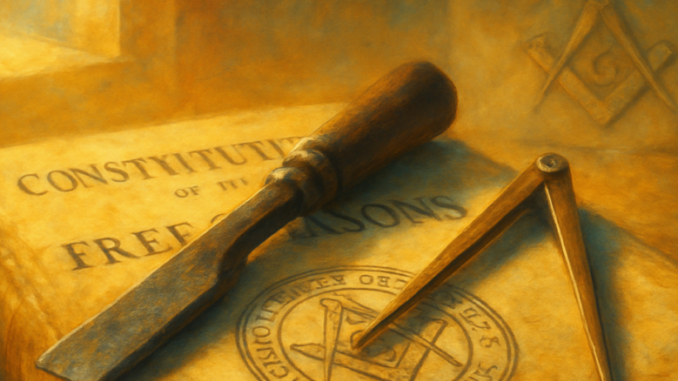
Freemasonry is an ancient organization steeped in mystery, ritual, and symbolism. What began as a brotherhood of stonemasons in the Middle Ages has evolved into a worldwide community with deep spiritual and philosophical dimensions. This article traces the official history of Freemasonry, from its earliest origins to its present-day form.
The Origins of Freemasonry
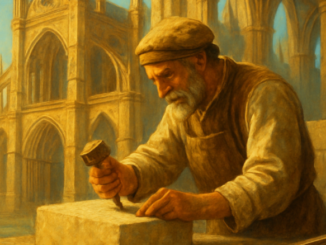
The roots of Freemasonry reach back to the Middle Ages, when stonemasons and master builders organized themselves into guilds. These skilled craftsmen didn’t just construct cathedrals and churches — they also worked according to strict codes of ethics and craftsmanship. The guilds protected their trade secrets through passwords and symbols, which later became core elements of Masonic ritual.
During the 17th century, the nature of these organizations began to shift. The guilds started admitting members who had no direct connection to the building trades. This marked the crucial transition from “operative” to “speculative” Freemasonry. The focus moved away from physical construction toward a symbolic quest for wisdom and self-improvement.
The Rise of Modern Freemasonry
The year 1717 is widely regarded as a turning point in the history of Freemasonry. In London, four lodges came together to form the first Grand Lodge of England. This moment is considered the official beginning of modern Freemasonry. The charter known as Anderson’s Constitutions laid the foundations of the order as we know it today: a brotherhood built on universal values such as equality, fraternity, and tolerance.
Throughout the 18th century, Freemasonry spread rapidly across Europe and beyond. It became a gathering place for philosophers, politicians, and artists who came together to exchange ideas and engage in debates about Enlightenment thought, science, and ethics. Many of the leading thinkers of the age were drawn to the fraternity’s ideals of intellectual freedom and moral development.
Freemasonry in the 19th and 20th Centuries
In the 19th century, Freemasonry extended its reach even further, with lodges being established across America, Africa, and Asia. However, this was also a period of significant challenge. The order frequently found itself at odds with authoritarian regimes and religious institutions that viewed its secrecy with deep suspicion.
The 20th century brought new trials, including two devastating world wars. In some countries, lodges were outright banned and their members persecuted, while in others, Freemasonry continued to flourish and contributed meaningfully to social and humanitarian causes. Through these turbulent decades, the order strengthened its commitment to equality and universal values.
The Structure and Rituals of Freemasonry
The structure of Freemasonry is built around a system of degrees and rituals. The three foundational degrees — Entered Apprentice, Fellow Craft, and Master Mason — symbolize the personal and spiritual growth of the individual. These degrees are conferred through initiation ceremonies in which symbolism and ritual guide the candidate on his journey toward enlightenment.
Beyond these three basic degrees, there are also higher degrees and appendant bodies, such as the Scottish Rite and the York Rite. Each offers its own distinct set of symbols and moral lessons, often drawing from Biblical narratives, mythology, and historical traditions. Together, they provide a rich and layered framework for personal reflection and development.
The Relevance of Freemasonry Today
Today, Freemasonry continues to inspire individuals who seek personal growth and wish to contribute to a better world. With lodges in nearly every country on earth, the fraternity functions as a truly global community — one that successfully bridges tradition and modernity. Its emphasis on moral improvement, charitable work, and brotherhood remains as compelling now as it was centuries ago.
The official history of Freemasonry reveals an organization that has continually adapted to the spirit of the times without ever abandoning its core values. It is a unique system of ethics, symbolism, and brotherhood that continues to fascinate and inspire. Beyond this official narrative, there also exists an alternative history of Freemasonry, where conspiracy theories and mystical tales take center stage — a subject worthy of its own exploration.
Copyright text & image: devrijmetselaar.nl
Texts are based on the ideas and content of the author of devrijmetselaar.nl, reviewed, corrected, and supplemented with the assistance of OpenAI. Images are created based on the ideas of the author of devrijmetselaar.nl using OpenAI/DALL-E.
Frequently Asked Questions
What is the difference between operative and speculative Freemasonry?
Operative Freemasonry refers to the medieval stonemason guilds that focused on physical construction and protecting trade secrets through passwords and symbols. Speculative Freemasonry, which emerged in the 17th century, shifted the focus from physical building to symbolic personal growth, wisdom, and self-improvement, welcoming members from all professions and backgrounds.
When did modern Freemasonry officially begin?
Modern Freemasonry officially began in 1717 when four lodges in London united to form the first Grand Lodge of England. This historic moment established the foundation for the worldwide fraternity we know today, guided by Anderson's Constitutions and principles of equality, fraternity, and tolerance.
What are the three foundational degrees in Freemasonry?
The three foundational degrees are Entered Apprentice, Fellow Craft, and Master Mason. These degrees symbolize the personal and spiritual growth of individual members as they progress through the organization and deepen their understanding of Masonic principles.
How did Freemasonry contribute during the Enlightenment period?
During the 18th century, Freemasonry became a vital gathering place for leading philosophers, politicians, and artists of the Enlightenment era. The fraternity fostered intellectual freedom and moral development, allowing these great thinkers to exchange ideas and debate important topics in science, ethics, and human progress.
What challenges has Freemasonry faced throughout history?
Freemasonry has faced significant challenges, particularly from authoritarian regimes and religious institutions suspicious of its secrecy and values. Despite being banned in some countries and persecuted during the world wars, the organization has persevered and strengthened its commitment to equality, humanitarian causes, and universal values.


Be the first to comment