Imagine opening the news tomorrow morning to learn that a prominent statesman has died unexpectedly. That empty seat in a chamber, that sudden void in public discourse. If you’ve ever felt that strange mixture of disbelief and reflection upon hearing such news, you’ve touched something deeply human — the question of what a person leaves behind when life ends abruptly. In the history of Freemasonry, this question has always occupied a central place.
The Sudden Absence
When a prominent figure is suddenly gone, a peculiar emptiness takes hold. It reaches beyond the political arena or the public sphere — it settles into our collective consciousness. Someone who was fully present yesterday is simply no longer among us today. That confrontation with finality touches something universal. It doesn’t matter whether you admired or criticized the person in question: death observes no party lines.
In Masonic lodges around the world, this reality has been confronted for centuries. Not as morbid fascination, but as a fundamental part of life’s journey. The central question is never how long someone lived, but what they left behind for the world.
Historical Echoes of Impermanence
The history of Freemasonry is threaded with moments when influential members departed unexpectedly. Consider the eighteenth and nineteenth centuries, when statesmen, generals, and thinkers who belonged to lodges sometimes died in the midst of important endeavors. Their brethren were left with pressing questions: How do we honor what they began? How do we carry their work forward without them?
These questions gave rise to a rich ritual life centered on remembrance. Many lodges hold an annual ceremony for departed brethren, during which their names are spoken and their contributions recalled. The purpose is not glorification, but acknowledgment — recognition that each brother formed part of a chain that extends far beyond any single lifetime.
We build not for ourselves alone, but for those who come after us.
The Empty Chair as Symbol
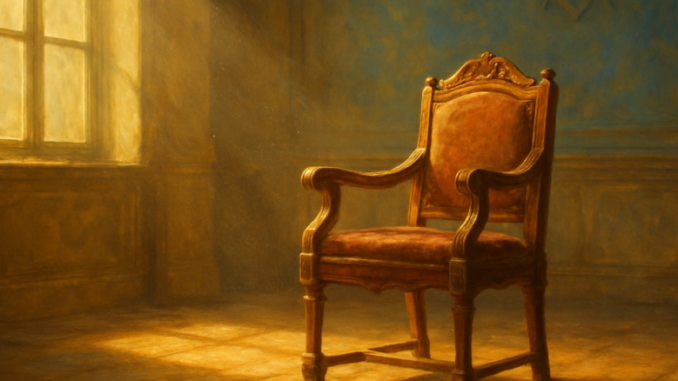
In some Masonic traditions, a chair is left empty during memorial gatherings. This simple gesture carries profound meaning. The empty chair represents not only the person who is gone, but also the space that opens for reflection. It invites those present to consider their own contributions, their own legacy.
You may recognize this from your own life. A family member who passed away, a colleague who was suddenly no longer there. That empty place at the table or in the meeting room confronts you with an unavoidable question: What would I leave behind if today were my last?
Legacy as a Living Concept
Freemasonry does not treat legacy as something that only takes shape after death. Quite the opposite: you build your legacy every day, with every action, every word, every choice. The metaphor of building is particularly apt here. Just as a mason lays stone upon stone to raise a structure, so you construct throughout your life an invisible edifice of relationships, deeds, and influence.
Historically, many Freemasons were involved in founding schools, hospitals, and charitable institutions. They did so not to immortalize their names, but from the understanding that true building means creating something that serves others — even when you yourself are no longer present to see it.
What History Teaches Us
Looking back across centuries of Masonic history, one theme returns with striking consistency. From the early speculative lodges in Scotland to the grand lodges that spread across continents, the same question surfaces again and again: What are we leaving behind for the next generation? It is a question bound to no single political movement, no single religion, no single culture.
How have my actions helped others? What knowledge have I shared that will live on? What relationships have I strengthened that will outlast me? Have I contributed to something greater than myself?
These are not questions you answer once and set aside. They return year after year, at every memorial, with every unexpected farewell you witness. And perhaps that is exactly the point — you are never finished with them. They remain a lifelong practice.
Today’s Invitation
When the news confronts us with the sudden passing of a public figure, it is also a moment of personal reflection. Not to judge what that person did or did not achieve, but to ask yourself: Am I building? Am I laying stones strong enough to support others when I am no longer here?
Freemasonry offers no ready-made answers to these questions. What it does offer is a space to ask them — a tradition that invites you to embrace impermanence not as something to avoid, but as motivation. Not tomorrow, not someday, but today.
Every empty seat, every unexpected absence reminds us that the time we have is finite. The history of Freemasonry teaches that this confrontation need not lead to paralysis — it can lead to action. To the daily laying of stones that remain in place long after the builder has departed. Perhaps today is a good moment to ask yourself: What stone am I laying today?
Copyright text & image: devrijmetselaar.nl
Texts are based on the ideas and content of the author of devrijmetselaar.nl, reviewed, corrected, and supplemented with the assistance of OpenAI. Images are created based on the ideas of the author of devrijmetselaar.nl using OpenAI/DALL-E.
Frequently Asked Questions
What does Freemasonry teach about dealing with the loss of prominent members?
Freemasonry has centuries-old traditions for honoring departed brethren through meaningful rituals and annual ceremonies where their names and contributions are remembered. Rather than viewing death as an ending, Masonic lodges focus on how members can carry forward the important work their brothers began and ensure their legacy continues. This approach helps brethren process loss while celebrating the lasting impact each person made during their lifetime.
What is the significance of the empty chair in Masonic memorial ceremonies?
The empty chair is a powerful symbol used in some Masonic traditions during memorial gatherings to represent both the departed member and the space left for reflection. This simple yet profound gesture invites those present to consider their own contributions and the legacy they are building through their daily actions. It serves as a meaningful reminder that we are all part of a chain extending far beyond ourselves.
How does Freemasonry view legacy and what members leave behind?
Freemasonry teaches that legacy is not something created only after death, but rather built every day through your actions, words, and choices. Like a mason laying stone upon stone, each member constructs throughout their lifetime an invisible edifice of relationships and deeds that impacts the world. This philosophy encourages Masons to recognize that their contributions matter and will continue to influence those who come after them.
Why do Masonic lodges focus on remembrance rather than glorification of deceased members?
Masonic lodges emphasize remembrance and acknowledgment because each brother is recognized as part of a greater chain of purpose that extends beyond any individual lifetime. The focus is on honoring what departed members contributed and learning from their example, rather than elevating them above others. This approach reinforces Freemasonry's core principle that we build not for ourselves alone, but for those who come after us.

Be the first to comment