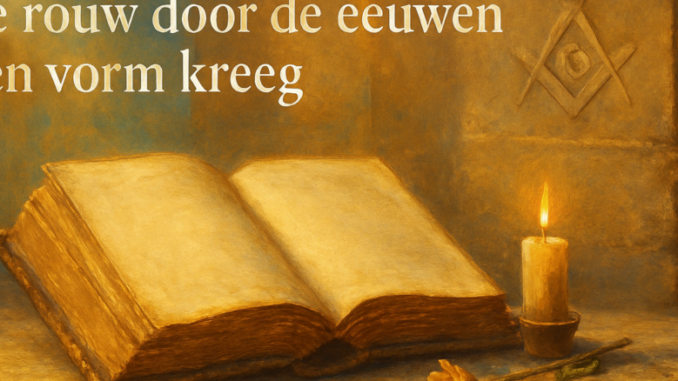
There is a kind of loss that has no grave, no farewell ceremony, and yet leaves a lifelong scar. When a child dies before it is born, it touches the deepest layers of human existence. History teaches us that every culture and every era has grappled with this particular grief — often in silence, sometimes through rituals that seem foreign to us today. Freemasonry, with its long tradition of engaging symbolically with life, death, and rebirth, offers a surprisingly meaningful perspective on this unspoken sorrow.
The Paradox of Grief Without Memory
How do you mourn someone you never knew, yet loved completely? This is the paradox that parents face after prenatal loss. In our contemporary culture, we are gradually becoming more open about this subject — but that was not always the case. For centuries, this kind of loss was dismissed, denied, or simply not recognized as legitimate grief.
Yet history shows that people have always sought ways to give shape to this sorrow. In medieval monastic archives, we find references to special prayers for unbaptized children. Midwives had their own rituals, handed down from generation to generation, to help mothers cope with their grief. The need to mark loss — even loss that remains invisible to the outside world — is deeply human.
Historical Perspectives on Unborn Life
The way societies have dealt with prenatal loss reveals much about their deepest beliefs. In ancient Egypt, it was believed that every soul — including that of an unborn child — embarked on a journey through the afterlife. Small amulets and figurines were placed with them for protection. The Romans held complex views about when exactly a fetus received a soul, which directly influenced their mourning rituals.
During the European Middle Ages, a theological question arose that occupied generations of philosophers and clergy: what happens to the soul of a child that dies before baptism? However strange this question may sound to modern ears, it bears witness to a profound concern for the fate of the smallest among us. It shows that people have always tried to find meaning in what seems incomprehensible.
The Rough Ashlar and the Unfinished Work
Within Freemasonry, the symbolism of the rough ashlar plays a central role. Every Freemason begins his journey as a rough stone — unworked but full of potential. The lifelong task consists of refining this stone, of working on oneself. But what does this symbolism mean when we consider a life that never had the chance to begin that work?
The rough ashlar represents not only what we can become, but also the mysterious value of what simply is — regardless of completion.
Perhaps a deeper truth lies hidden here. The value of a stone does not reside solely in its finished, polished form. The rough stone possesses its own beauty, its own dignity. In the same way, every life — however brief — carries an inherent meaning that does not depend on what was achieved or completed. This perspective offers consolation: value is not measured in time or accomplishment.
Brotherhood in Silence
One of the most valuable aspects of Freemasonry is the brotherhood that does not always require words. In the lodge, one learns that some experiences run too deep for speech — that presence sometimes means more than eloquence. This principle has helped men grieve throughout history, in eras when male emotion was barely accepted.
Historical records from lodges in the eighteenth and nineteenth centuries mention brethren who found support among their fellows after personal tragedies. Not through grand speeches, but through quiet presence, through the continuation of rituals that offered structure amid chaos. The temple became a space where grief was allowed to exist without explanation.
The Light That Shone No Less
In Masonic ritual, light plays a fundamental role. The search for light — for knowledge and wisdom — forms the very core of the initiatory path. But what does this teach us about loss? A candle that is extinguished before it has fully burned down has shone no less brightly. The light was there, even if only briefly.
This thought resonates with ancient philosophical traditions. Thinkers from classical antiquity argued that the value of a life lies not in its length, but in its intensity — in the love it brought forth. An unborn child has awakened love, created hope, and in doing so has left an indelible impression upon the hearts of its parents.
Making Room for the Unnameable
The power of ritual and symbol lies in their ability to express what words cannot. Throughout history, people have created rituals to mark loss — not to explain it, but to acknowledge it. Freemasonry stands firmly within this long tradition of finding meaning through symbolism.
Ritual acknowledges what everyday language cannot hold. Symbols carry meaning across generations. Community provides structure when individual grief becomes overwhelming. And silence can be more eloquent than words.
When loss strikes, we search for frameworks to place it within — not to diminish it, but to make it bearable. History offers us these frameworks: age-old rituals, symbolic language, and the knowledge that countless generations before us wrestled with the very same questions.
The question remains: how do we make room for loss that leaves no visible trace? History shows us that every culture, every tradition, has struggled with this mystery. Freemasonry offers no answers, but it does offer a space where the unnameable is allowed to exist. Perhaps that is ultimately what we need — not explanations, but acknowledgment. Not solutions, but presence. And the quiet understanding that even the briefest light was still, undeniably, light.
Copyright text & image: devrijmetselaar.nl
Texts are based on the ideas and content of the author of devrijmetselaar.nl, reviewed, corrected, and supplemented with the assistance of OpenAI. Images are created based on the ideas of the author of devrijmetselaar.nl using OpenAI/DALL-E.
Frequently Asked Questions
What does Freemasonry teach about the meaning of an unfinished life?
Freemasonry uses the symbolism of the rough ashlar (unworked stone) to teach that value and meaning are inherent, not dependent on completion or achievement. This perspective offers profound comfort to those grieving prenatal loss, suggesting that every life—however brief—carries intrinsic dignity and worth simply by existing. The Masonic tradition reminds us that a rough stone possesses its own beauty before any refining work begins.
How can Freemasonry's symbols help with grief after prenatal loss?
Freemasonry's long tradition of engaging symbolically with life, death, and rebirth provides a meaningful framework for processing the paradox of loving someone you never knew. Through symbols like the rough ashlar and rituals centered on transformation, Freemasonry offers a way to give shape to grief that often goes unacknowledged in society. This symbolic language can help mourning parents find meaning and create an internal memorial.
Is prenatal loss a new concern, or has Freemasonry always addressed it?
Prenatal loss is not new—history shows that every culture and era has grappled with this grief, often in silence or through rituals now unfamiliar to us. Medieval monastic archives contain prayers for unbaptized children, and midwives developed their own mourning practices passed down through generations. Freemasonry's ancient symbols and teachings about life's value, regardless of completion, connect modern grieving parents to this timeless human experience.
What makes Freemasonry's perspective on this grief different from other traditions?
Freemasonry's unique contribution lies in its symbolic system that separates inherent value from outward accomplishment or completion. While other traditions may focus on theological questions or ceremonial practices, Freemasonry teaches that the rough stone—unworked and unfinished—already possesses its own dignity and worth. This perspective offers consolation by affirming that a brief life need not be judged by what was or wasn't achieved.


Be the first to comment