
Picture yourself stepping into a lavish coach, surrounded by velvet and gold. As the wheels rattle across the cobblestones, you begin to wonder: what does all this splendour actually say about who you are? Michel de Montaigne posed exactly this question in his essay On Coaches. What appears at first glance to be a light-hearted discussion about modes of transport turns out to be a penetrating analysis of human vanity, the intoxication of power, and the ways in which civilisations judge themselves — and each other. For those on a path of self-improvement and moral reflection, this essay offers remarkably practical tools for looking beyond outward appearances.
The Deceptive Title
As is often the case with Montaigne, the title of this essay is deliberately misleading. Although he opens with personal anecdotes about coaches and his own motion sickness, the vehicle itself is merely a springboard into far larger themes. The coach serves as a symbol of outward status — the way human beings display their wealth and power for all to see.
Montaigne describes how Roman emperors organised increasingly extravagant vehicles and spectacles to dazzle the public. From Caligula to Nero, the pattern was consistent: the greater the power, the greater the compulsion toward display. But what does that display actually prove? Montaigne observes, with characteristic dryness, that the coach itself changes nothing about the person sitting inside it. A fool dressed in gold remains a fool.
This observation sounds simple, yet its implications are profound. It is an invitation to look beyond the surface — beyond titles, regalia, and ceremony — to the character of the individual beneath. For anyone engaged in the Masonic tradition of self-examination, this challenge will feel immediately familiar.
The New World as a Mirror
The most striking section of this essay has nothing to do with coaches at all. Montaigne devotes considerable space to the Spanish conquests in the Americas, describing in detail how the conquistadores subjugated the Aztec and Inca civilisations. Remarkably for his time, he portrays these indigenous cultures with genuine respect — their cities, their governance, their craftsmanship. At the same time, he condemns the European conquerors for their cruelty and greed.
Why is this relevant to an essay about coaches? Because Montaigne is showing how civilisations glorify themselves by diminishing others. The Spaniards justified their brutality by painting the indigenous peoples as barbarians. But who, Montaigne asks, was truly civilised? He turns the mirror around and reveals that genuine civilisation is not found in golden coaches or wars of conquest, but in justice and humanity.
This is a lesson that resonates powerfully with Masonic principles. True civilisation — true nobility of character — reveals itself not in what you possess or conquer, but in how you treat others when you hold all the power.
Practical Lessons for Everyday Life
What can we do with Montaigne’s insights in practical terms? First, he invites us to cast a critical eye on status symbols. The next time you find yourself impressed by someone’s car, house, or title, pause and ask: what does this actually tell me about this person? Outward display can mask inner emptiness. Conversely, modesty can conceal deep wisdom.
Second, Montaigne urges caution when judging other cultures or ways of life. His sympathetic portrayal of indigenous American peoples was revolutionary in the sixteenth century. He refused to accept the default assumption of European superiority. This remains a vital lesson today: do not rush to judge what you do not understand.
Consider these principles as guideposts:
- Examine your own need for outward display and ask what it truly serves.
- When encountering status symbols, look for the person behind them.
- Resist measuring other cultures by your own standards alone.
- Recognise that power corrupts without an inner moral compass to guide it.
These are not abstract philosophical ideals. They are daily practices — habits of thought that anyone committed to self-improvement can cultivate, one interaction at a time.
Developing the Inner Compass
Montaigne implicitly argues for what we might call an inner compass. While coaches, gold, and conquests pass away, the question of who you truly are remains. This theme resonates deeply with the philosophical quest for self-knowledge that stands at the heart of Freemasonry and many other wisdom traditions. The question is not how much you own, but how you act when no one is watching — how you wield power when you have it.
The essay does not end with a moralistic verdict. Instead, Montaigne offers a striking image. He describes how the indigenous kings of Mexico were carried on litters but would voluntarily step down to walk among their subjects, demonstrating their equality with the people they served. This gesture of humility contrasts sharply with the European obsession with ceremonial pomp. Who, Montaigne quietly asks, is the true nobleman here?
The Coach as Symbol
Ultimately, the coach functions in this essay as a rich and layered symbol. It is a shell that protects but also encloses, that elevates but also isolates. Montaigne invites us to step out of our own mental coaches — our comfort zones of settled beliefs and habitual judgements — and to see the world with fresh eyes. That is the real journey he proposes.
Written in 1580, this essay remains astonishingly relevant. In an age of social media, where outward appearance can seem more important than inner worth, Montaigne reminds us that the coach does not make the traveller. The question that lingers is a personal one: which coach are you riding in, and what would it feel like to step out of it for a while?
On Coaches is an essay that delivers far more than its title promises. Montaigne uses an everyday vehicle to raise fundamental questions about power, civilisation, and self-knowledge. His critique of outward display and his respect for unfamiliar cultures remain as relevant centuries later as they were when first written. The practical insight to carry forward is this: judge yourself and others not by the coach you ride in, but by the direction you choose and the manner in which you travel.
Copyright text & image: devrijmetselaar.nl
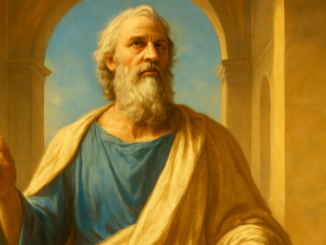
Texts are based on the ideas and content of the author of devrijmetselaar.nl, reviewed, corrected, and supplemented with the assistance of OpenAI. Images are created based on the ideas of the author of devrijmetselaar.nl using OpenAI/DALL-E.



Be the first to comment